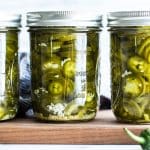
Pickled Jalapeño Peppers Recipe
A pantry staple, homemade Pickled Jalapeño Peppers are so easy to make! Whether you're canning jalapeños peppers or quick pickling them, this simple recipe will have you preserving jalapeños in no time! *You will need three 16oz Mason jars if canning the peppers. See blog post for more tips and links to pickling/canning supplies.Recipe Updates: noted above recipe card regarding 1. August 2021: soft canned jalapeños. 2. August 2024: canning, salt update.
Servings 3 16 oz Jars
Calories 130kcal
Ingredients
- 1 1/2 lbs (675g) Jalapeño Peppers
- 2 C (515g) Water
- 2 C (515g) 5% Distilled White Vinegar
- 2 Tbs Pickling and Canning Salt
- 2 Tbs Organic Cane Sugar
- 2 Fat Cloves of Garlic minced
Instructions
- Sterilize three, 16oz jars. The National Center for Home Food Preservation shares how. Wash lids (new if canning) in hot, soapy water and set aside with bands.
- Thoroughly wash the peppers and chop into rings. To protect hands from burning pepper oils, wear disposable gloves and wash your hands thoroughly after handling the peppers.
- In a medium stainless steel sauce pot, bring the vinegar, water, salt and sugar to a boil. Add the peppers and garlic to the vinegar water, stir then remove from heat. Allow the peppers to set, submerged, in the brine solution for 15 minutes. You'll notice the color of the peppers turn from bright green to a duller shade. Meanwhile, decide if canning or quick/refrigerator pickling the peppers and prepare for A or B below.
- A. For Canning: While the peppers are sitting in the pickling brine, keep your jars hot in the canner until you're ready to use them (you can turn off the heat if you've already sterilized the jars). This keeps the jars preheated.Remove the jars with a jar lifter, leaving the water behind in the canner, one jar at a time. Using your jar funnel and ladle, fill jars with peppers and brine, leaving 1/2 inch head space at the top of each jar. Release air bubbles by sliding a rubber spatula between the peppers and jar. Wipe jar rim with a tea towel. Center the lid on jar and adjust the band to fingertip tight. Return each jar to the water bath with your jar lifter. Once all the jars are in the bath, fill the canner with water one inch over the height of the jars. Lid, bring the canning water to a rolling boil, then process the jars for 10 minutes. Turn off heat, remove lid and let jars stand 5 minutes. Remove jars and cool for 12-24 hours. Check lids for proper seal. They should not flex when the center is pressed. Also, you can listen for the lid to pop - this means your jars are sealed. Once the seal is confirmed, remove the band so the jar rim and band can dry. If preferred, once clean and dry, the band can be reapplied. B. For Quick/Refrigerator Pickled Jalapeños:Transfer the hot peppers and brine to your sterilized jars using a jar funnel and ladle (the jars do not need to be preheated for quick pickling - just sterilized). Pack the peppers in the jar using a spoon or muddler and adjust the liquid as needed leaving 1/2 inch head space. Wipe the rim with a kitchen towel. Center the lid on the jar and tighten the band. Once cool, transfer the jars to the refrigerator, where they'll last for several months and be ready for snacking in about 24 hours, or in an hour for the quickest pickle! They taste better with a little time on them.
- Quick pickled jalapeños can last several months in the refrigerator. Canned pickled jalapeños, if properly canned, up to one year at room temperature. Once a canned jar is opened, store it in the refrigerator. An open jar of canned or quick pickled jalapeños will last months in the refrigerator. (update 3/22: this year my unopened quick pickled jalapeños lasted eight months in the fridge)
Notes
Inspect your Jars: inspect any previously used canning jars for nicks or cracks as this could result in breakage in the canner.
Check for Signs of Spoilage: Before enjoying your pickled peppers, check for any signs of spoilage. "With the jar at eye level, examine for streaks of dried food on the outside of the jar. Inside of the jar, look for cloudy canning liquid, rising air bubbles, or any unnatural color. While opening the jar, watch for spurting liquid or cotton-like mold growth on food surfaces or the underside of the lid. Smell for unnatural or off odors." For more information, see WSU Pickling Vegetables. If in doubt, throw it out.
Updated Pickling Guidance is From WSU Pickling Vegetables and Ball Complete Book of Home Preserving.
Nutrition
Serving: 1jar | Calories: 130kcal | Carbohydrates: 23g | Protein: 2g | Fat: 1g | Saturated Fat: 1g | Sodium: 4670mg | Potassium: 562mg | Fiber: 6g | Sugar: 17g | Vitamin A: 2445IU | Vitamin C: 270mg | Calcium: 46mg | Iron: 1mg