


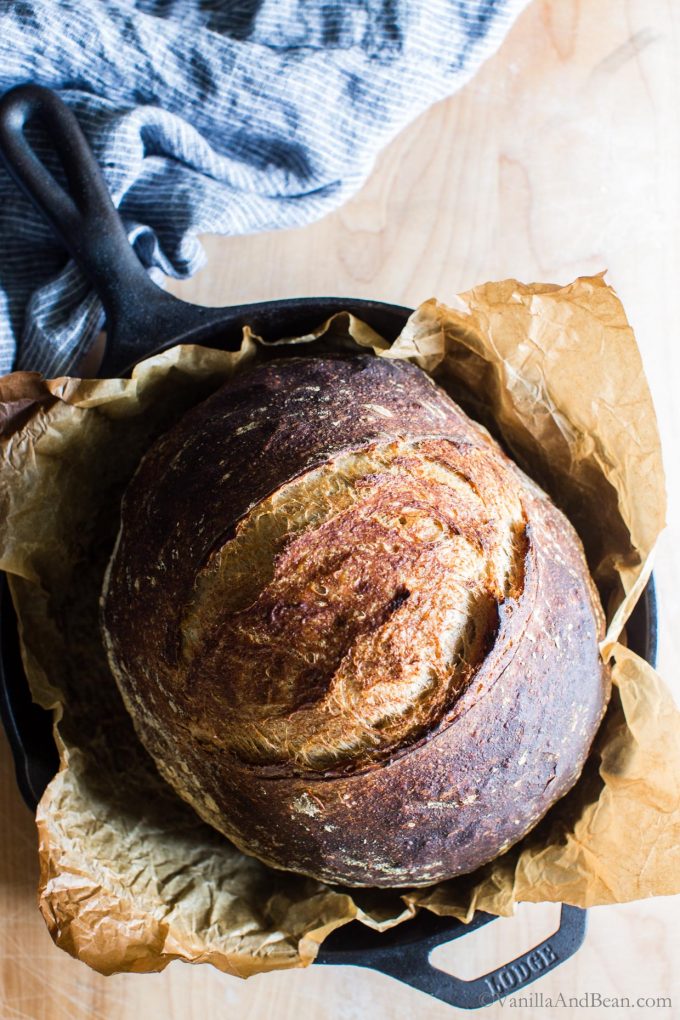
Making a homemade sourdough bread starter couldn’t be easier. With two ingredients, just minutes a day for about 7-10 days, and a little patience, you’ll be making delicious homemade artisan Multigrain Sourdough Bread, Homemade Sourdough Pizza, Sourdough Oatmeal Pancakes, and so much more in no time! 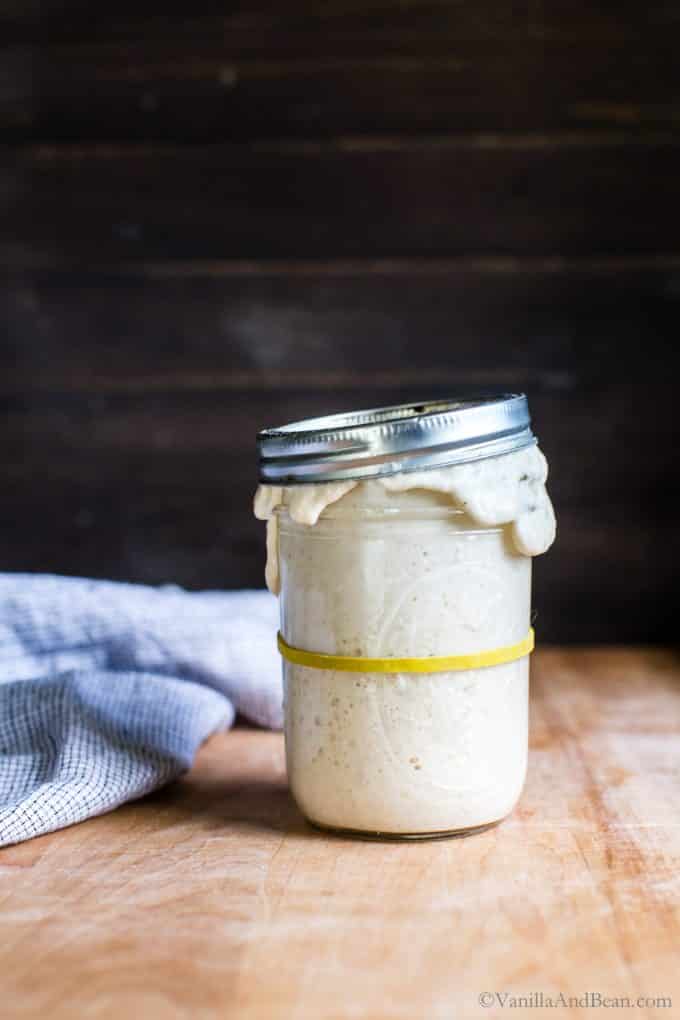
An Essential Start to Your Sourdough Journey
It’s true. Sourdough is a journey, but it starts with a strong and resilient sourdough bread starter. If you’re here, you may be just starting or perhaps you received a starter from a friend and aren’t sure what to do with it. I hope by sharing my experience, you’ll be able to create your own sourdough starter from scratch, maintain it and soon be making flavorful homemade sourdough bread and all the other good things that can be made with a sourdough starter.
When you create a sourdough starter, you gain an intimate look at the inter-workings of wild yeast and friendly bacteria and their interaction with water and flour. Too you’ll get to know how your starter changes over time and appreciate how a vibrant starter will help you produce the most delicious sourdough bread.
It’s not hard to do. Just a little attention and a few minutes a day for about seven to eight days (sometimes it takes longer) is all you need to get a starter going. A little flour, water and time are the ingredients to start your journey. Are you in?
What is a Sourdough Starter?
Sourdough starter is a cultured mixture of friendly yeast and bacteria, water and flour. We make it with just two ingredients: water and flour. These are the essential ingredients for cultivating a community of microbes into a form we can use to bake with. This fermented mixture of microbes, flour and water becomes the yeast needed to raise bread and gives baked goods their signature sourdough flavor.
The wild yeast needed for a sourdough bread starter is all around, but more specifically, it is found on the flour you’re making the starter with. So, there’s no need to add yeast to your starter. It’s naturally occurring.
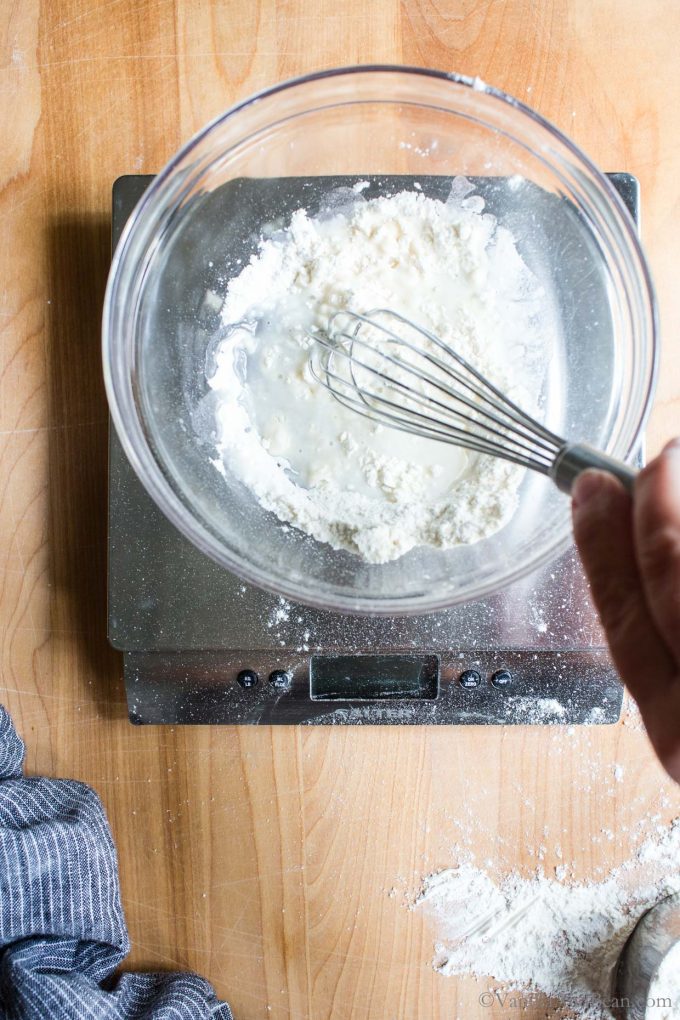
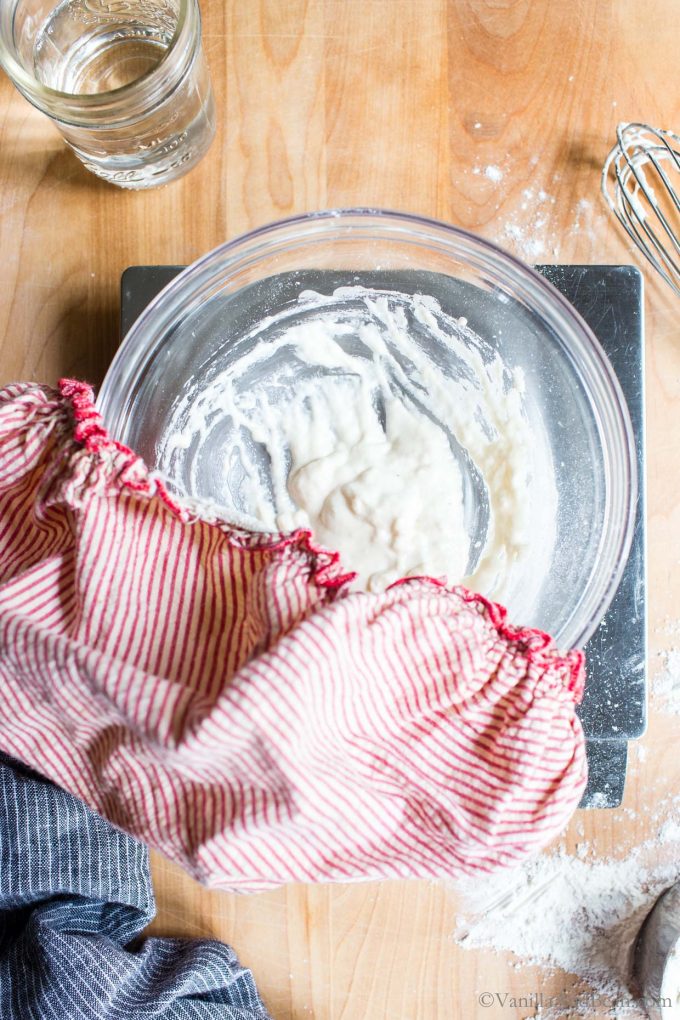
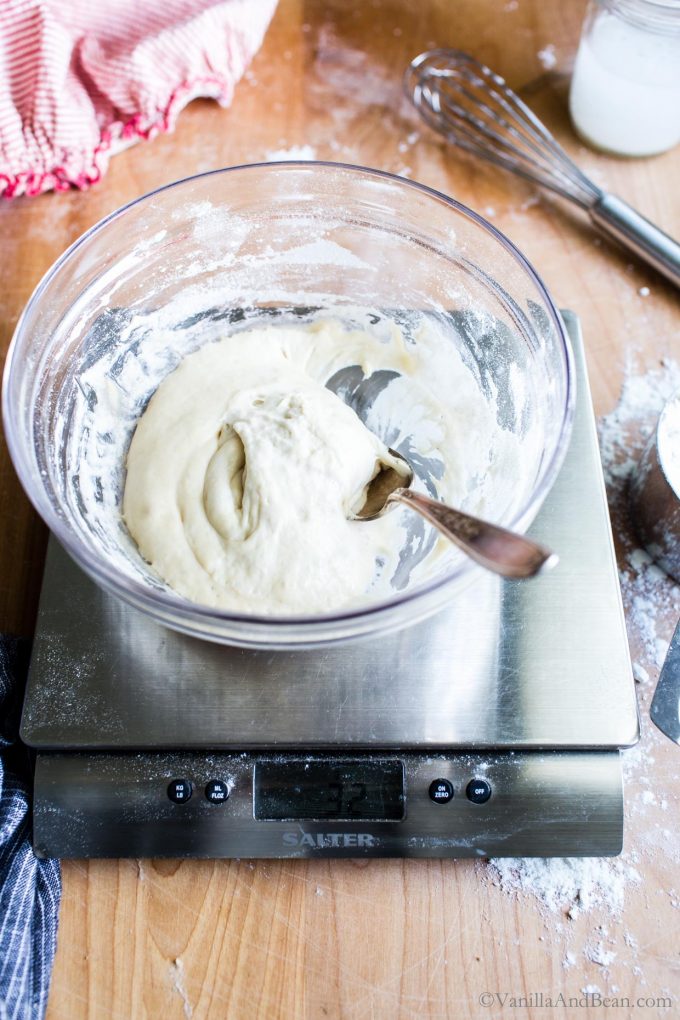
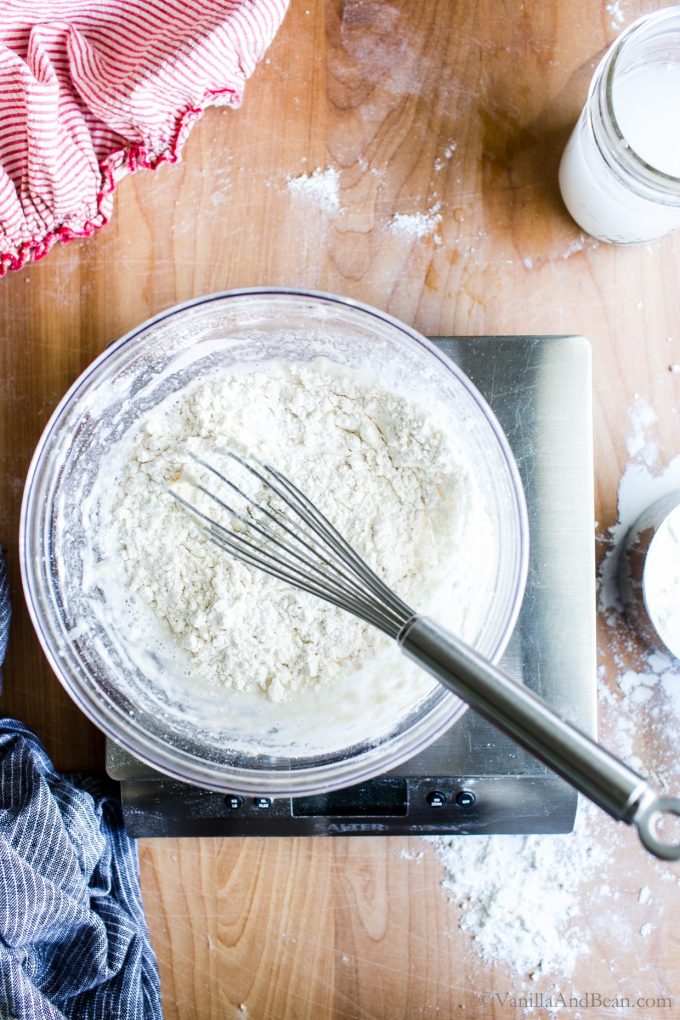
At a Glance: How to Make Sourdough Starter
Building a sourdough bread starter generally takes about seven to eight days to complete. It could take longer depending on available yeast and bacteria present in your flour, and environment. Ambient temperature will also be a determining factor in the progression of your starter. A cooler kitchen means a slower starter.
If you’re like me, you’ll probably think about it more than the time it takes to make it: checking on it periodically, looking for bubbles, taking a whiff for a bit of that sweet and sour aroma we’re after. The key is patience and consistency.
- DAY 1: whisk flour and water together. Lid and set aside at room temperature.
- DAY 2: Take a portion of the previous days mix (throw out the leftover), and in a clean jar or bowl whisk in the previous days mix, water and flour. Lid and set aside at room temperature.
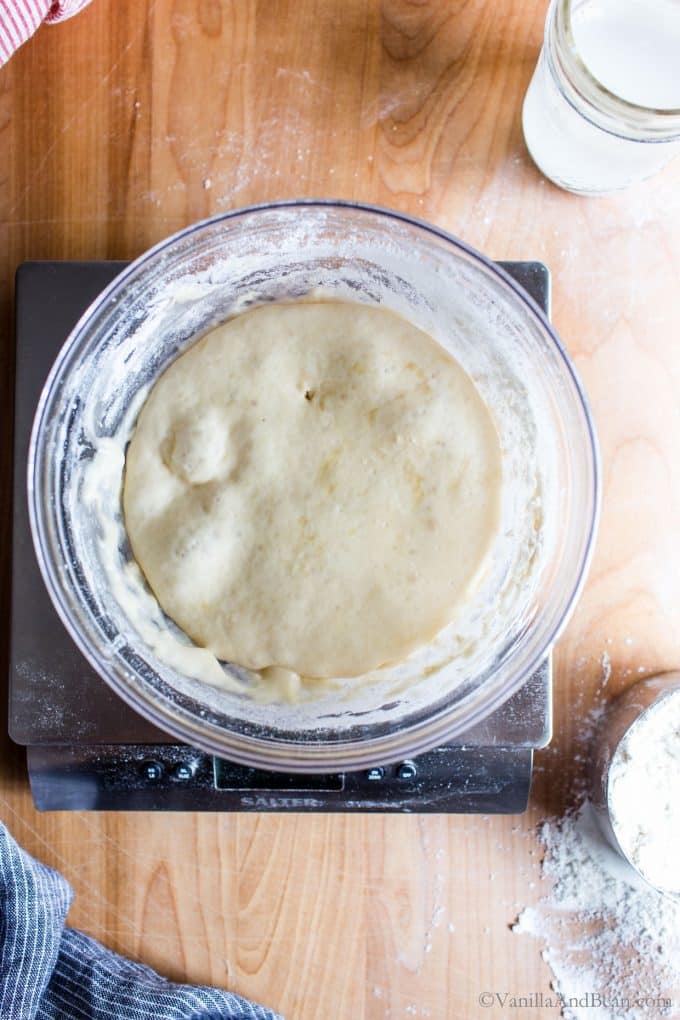
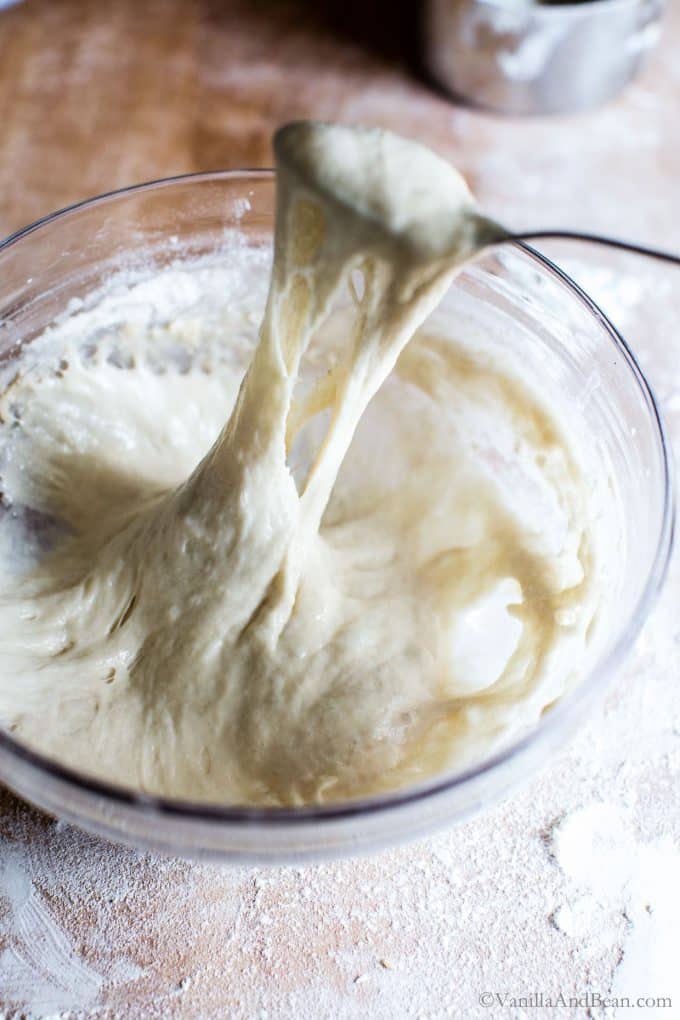
- DAY 3 through 6: Repeat day two until the mixture becomes elastic, has a pleasant sweet-sour aroma and bubbles begin to form under the surface. During these days of feeding you’ll notice how the aroma and texture changes from stinky to sour to sweet/sour, pasty to stringy to fluffy. Take note! Your starter is becoming something wonderful!
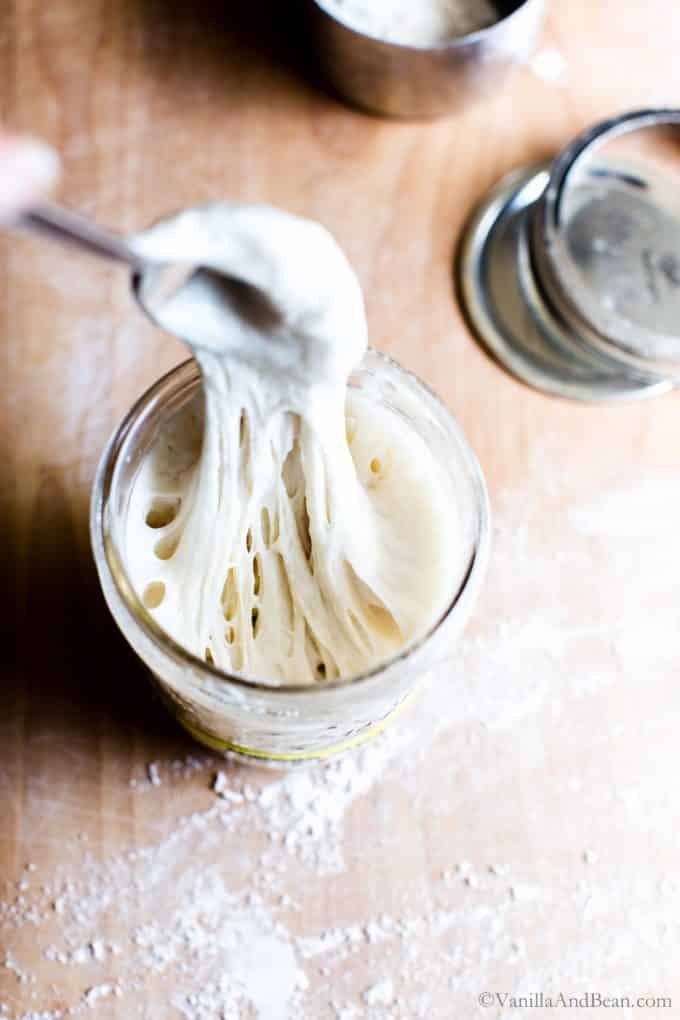
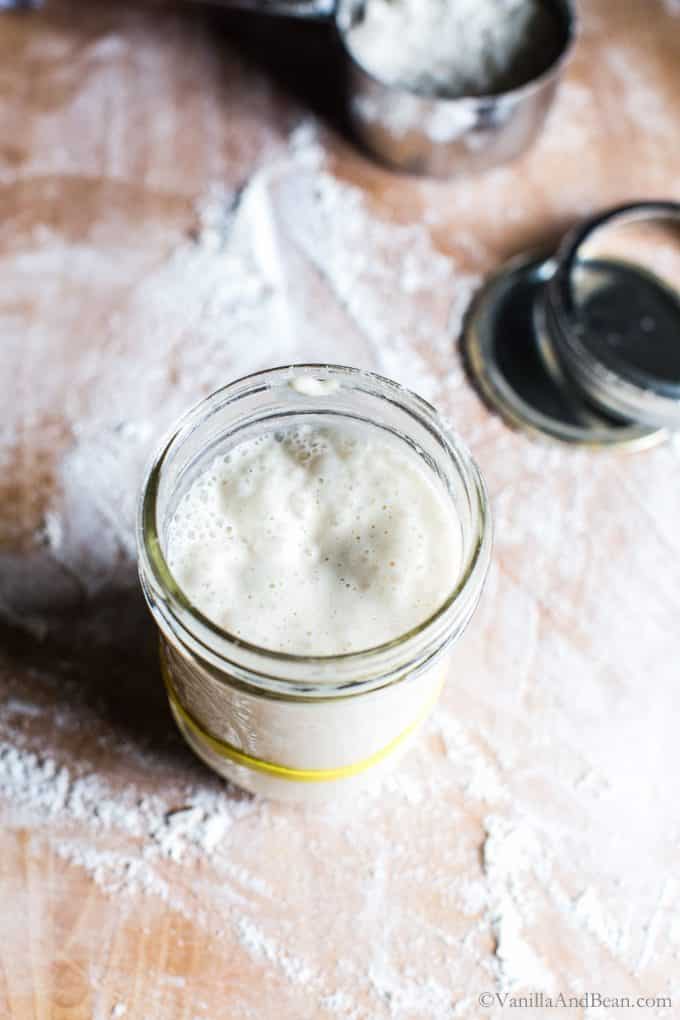
- DAY 7 and Beyond: Seven to eight days has been my experience for an established starter to emerge. But it can take longer. Keep repeating day two until you notice the signs of a ripe starter: the starter is elastic (not pasty) has a sweet-sour aroma, is light and fluffy, large and small bubbles are present under the surface and just breaking the surface (see pictures below).
- NOTE: Time mentioned here is a guide rather than a determining factor for when the starter is ready. Use the cues and your senses to determine when it’s ready. It may take longer than eight days.
It’s ready when it’s ready.
How to Feed Sourdough Starter
Now that you have established a starter, you’ll need to feed it to maintain it and to use it in sourdough bread. Refreshing a sourdough starter keeps it balanced and strong.
Feeding your starter is very similar to how you built your starter. The main difference is you don’t have to feed it every day and for this recipe, I use just a bit more flour and water to feed it so that I’ll have enough to use in a recipe and enough discard to collect for making pancakes, biscuits and/or waffles. I feed my refrigerator stored starter every week, usually 8-10 hours before I’m ready to mix sourdough – but this is in my cool kitchen of about 68F.
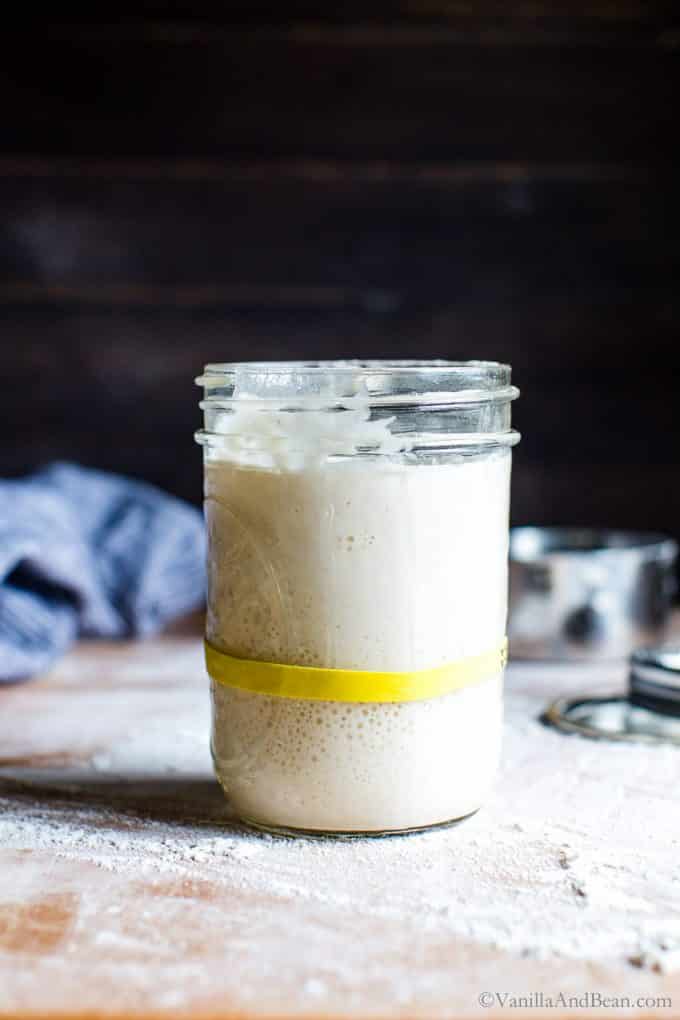
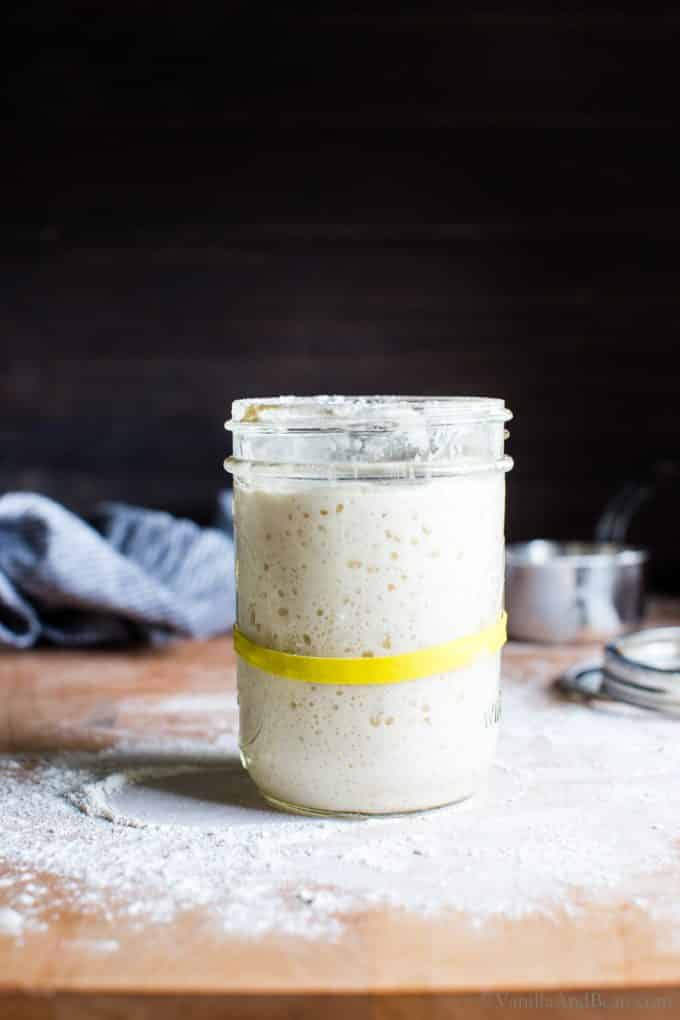
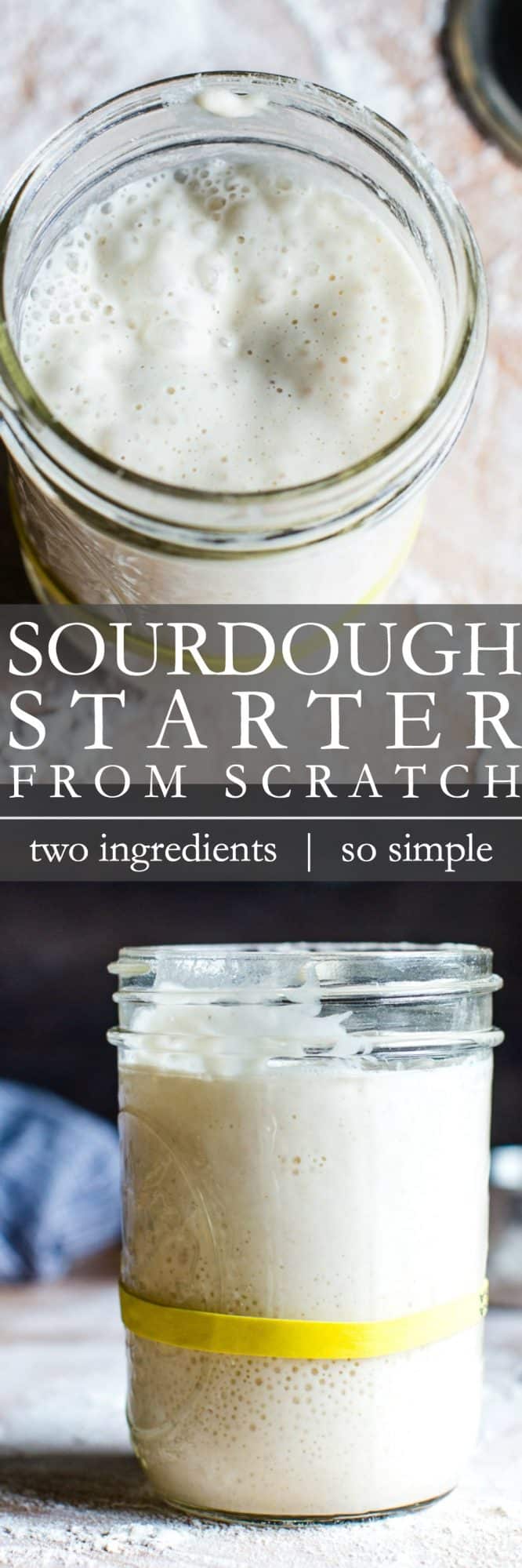
Keep the starter in a glass jar with a rubber band around the starting level. Doing this shows a visual indication of how much the starter has grown as it grows to double in size.
Also, I use a ratio of 1:1:1 (by weight) when refreshing the starter for a 100% hydrated starter. You may have read about using other ratios like 1:2:2 or 1:4:4, and those do have a place in maintaining a starter. However, for the purposes of establishing a starter, I begin with a 1:1:1 ratio.
Pro Tip: your starter is ready when it doubles in size, but you’ll find, it may triple in size!
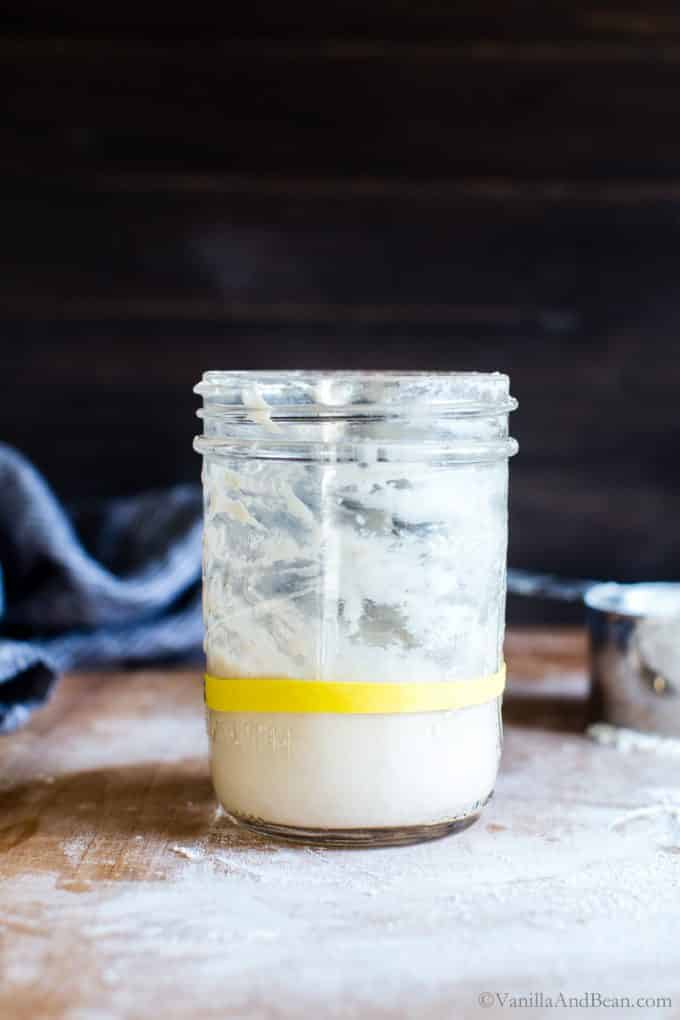
How do I Know When My Starter is Ready?
Once the starter has at least doubled in size (it may triple), is bubbly throughout, elastic when stretched, has a pleasant sweet-sour aroma, and passes the float test, it’s ready to use in your sourdough recipe.
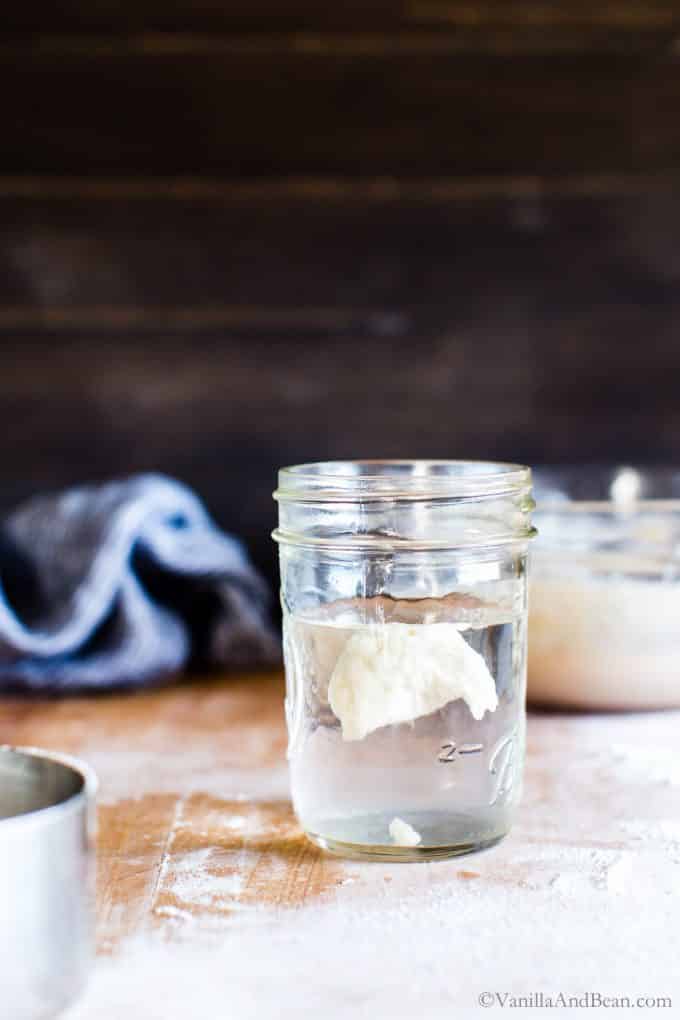
How to do a Float Test: Test to see if your starter is ripe by giving it a float test. Simply fill a glass with water and drop a small portion of sourdough starter into the glass. If it floats, its ready! If it sinks, it needs more time to double in size or develop.
Gluten Free? Check out my post on making a Gluten Free Sourdough Starter.
How Long will the Starter Stay Doubled in Size?
At some point after doubling in size, your starter will begin to lose its strength and fall. The exact amount of time will vary from starter to starter but I’ve typically observed a few hours window, at room temperature, where the starter will remain doubled in size. On warm days, it’s shorter.
But in the refrigerator, it’ll hold for quite a while. I’ve observed at least three days! Once it starts falling back down after doubling in size, you’ll need to refresh (or feed) it and allow it to double in size again before using it in a sourdough bread recipe.
If your starter is struggling to double in size, you’ll need to go through a few cycles of refreshment to build strength in the starter. You can even refresh twice within a 12 hour period if needed. Doing this builds strength and will help later in the development of your sourdough bread. I do a series of refreshments after a longer period in the refrigerator before using it in a recipe.
How to Maintain a Sourdough Starter
Think of your homemade sourdough starter as a pet that needs regular attention. There’s a community of yeast and friendly bacteria that make up the starter so it needs to be fed (refreshed) on a regular basis, else it can run out of food and weaken. The good news is, a sourdough starter is pretty resilient. So, if neglected for a bit, you can usually revive it through a series of refreshments.
Your starter can be stored at room temperature if you’re baking daily or in the refrigerator if baking at least once a week.
How to Store Sourdough Starter
Room Temperature Storage: If you plan on baking daily or every few days, leaving your starter on the kitchen counter is fine. Keep an eye on it because the warmer the kitchen, the more active your starter will be. It can double in size quickly, in as little as 5 1/2 hours at 70F! You’ll need to feed it more frequently, once or twice a day to keep it active and strong.
Refrigerator Storage: I bake with my starter about once or twice a week, so I store my starter in the refrigerator until I’m ready to prepare for mixing dough. If your starter is sluggish after refrigerating it for a while, you can feed it up to twice a day until it’s bubbly, elastic, and has a pleasant sweet/sour smell.

My Starter is Ready, But I Don’t Have Time to Mix the Dough
I get it! Something comes up, but you want to maintain that doubled in size state. To do this, put your starter in the refrigerator. This will slow it down dramatically and allow it to stay in that doubled state for at least a few days. Then you can get back to it later.
What’s That Layer of Liquid?
Occasionally you may notice a layer of liquid that forms on the surface after your starter has gone unfed for a period of time. This liquid is called hooch, a naturally occurring alcohol which indicates that it’s a little past time to feed your starter.
Hooch should have a pleasant sweet-sour aroma. You can pour it off or stir it into your starter then, carry on with refreshment. I typically pour it off because it makes my starter more slack.
Traci’s Tips
- Name Your Starter: some sourdough bakers name their homemade sourdough starter. My starter is Claire, named after my late feline friend.
- Time is a guide rather than a determining factor for when the starter is ready. Use the cues and your senses to determine when it’s ready. It may take longer than eight days. It’s ready when it’s ready.
- When to Make a New Starter: for your starter or saved discard from your established starter, if you see any mold, a layer of pinkish/orange color or it smells off, throw it out and make a new starter. This can be avoided simply keeping your starter well fed and strong, refreshing it weekly in the fridge or daily at room temperature.
- Through testing this recipe, I chose to use organic unbleached all purpose flour. It’s a flour I always have on hand, it’s easy to find, and it works. If you use something different, please share in the comments!
- Sourdough Discard: for leftover sourdough starter (discard) that is discard from an established, fully developed, doubled in size starter and able to rise sourdough bread, you can keep this discard in a jar for use in sourdough discard recipes. It gives baked goods that sourdough flavor without the long slow rise. I keep a jar in my refrigerator and refill it as I discard the leftover starter at refreshment time. I like to use it up within about two weeks.
Recipes for Your Sourdough Bread Starter
- Rustic Sourdough Bread
- Everyday Sourdough Bread (for beginners)
- Sourdough Pita Bread
- Soft Sourdough Dinner Rolls
Remember: Your starter is ready after refreshment when it at least doubles in size, is bubbly throughout the culture, elastic when pulled and has a pleasant sweet-sour aroma. It should also pass the float test.
How to Make Sourdough Bread Starter From Scratch
Ingredients
- Unbleached All Purpose Flour organic *see note on flours
- Water **see notes
Instructions
To Build Your Starter:
- Day One: In a medium glass bowl or jar, whisk together 2 Tbs (20g) flour, 1 Tbs + 1 tsp (20g) of water. Cover with a damp tea towel or loose fitting lid and rest at room temperature for 24 hours. *When covering with a damp tea towel, be sure to double up else a skin may form. If it does form, and if it's thin, I simply stir it back in to my starter and carry on.
- Day Two: In a medium glass bowl or jar, whisk 2 Tbs (40g) of mixture you made yesterday (throw out the leftovers), 1/4 C (40g) flour, 2 Tbs + 2 tsp (40g) water. Cover with a damp towel or loose fitting lid and rest at room temperature for 24 hours.
- Day Three Through Day Seven or Eight (or beyond): Repeat step two using the previous days starter, continuing to throw out the discard, until the mixture becomes puffy, fluffy, has a pleasant sweet-sour aroma (not sweaty socks) and small and large bubbles begin to appear just under the surface and throughout the culture. Notice on day three you may begin to notice a sour aroma, with a few bubbles and puffy appearance. On day four, a doubling in size in not uncommon - but it maintains it's stinky odor. On day five-six, it'll probably pass the float test but it's still stinky! Keep going!This process takes about seven to eight days (as this has been my experience) - but it may take longer. Time is not a determining factor for when the starter is ready, it's simply a guide. It's ready when it's ready. Use the cues and your senses to determine when your starter is ready. This is the nature of sourdough.*update* If your starter is struggling to show signs of development, and your flour is old, try using fresh, just purchased flour. Before using your new starter in a recipe, you'll need to refresh (feed) it.
To Refresh or Feed Your Starter:
- If not using a Mason jar or other 16 ounce jar at this point, now is the time to transfer your starter to one. I use a 2 C (16 ounce) wide mouth Mason jar. In a glass jar whisk 3 Tbs (60g) of sourdough starter with 1/4 C (60g) water. Add 1/3 C (60g) unbleached all purpose flour to the water mixture. Mix well until the flour is hydrated.
- Lid the jar and wrap a rubber band around it at the height of the starter.
- Allow the starter to develop at room temperature for about 8-10 hours (65F/18C). This time can vary due to ambient temperature and how active your starter is. If it's rising too fast, you can pop in in the refrigerator where it will continue to rise at a slower rate. Or, if you want to speed it up, refresh it with 80F (27C) water. That'll get it moving a little more quickly.Once the starter has doubled (or even tripled) in size, is bubbly and puffy, has a pleasant sweet-sour aroma, and passes the float test, it’s ready to use in your sourdough recipe. After measuring out the portion needed for your recipe, feed the starter and store it until your next refreshment. If there’s and starter left, you can save the discard for use in other recipes like pancakes and waffles (or toss it or give it away).Float Test! Test to see if your starter is ripe or ready to be used in a recipe by giving it a float test. Simply fill a glass with water and drop a small portion of sourdough starter into the glass. If it floats, its ready! If it sinks, it needs more time to double in size or develop.
How to Store Your Established Starter:
- If you see any orange or pink film or mold, or it has an unusual oder, toss it.
- Room Temperature Storage: If you plan on baking daily or every few days, leaving your starter on the kitchen counter is fine. Keep an eye on it because the warmer the kitchen, the more active your starter will be. It can double in size quickly, in as little as 5 1/2 hours at 70F! You'll need to feed it more frequently, once or twice a day to keep it active and strong.
- Refrigerator Storage: I bake with my starter about once or twice a week, so I store my starter in the refrigerator until I'm ready to prepare for mixing dough. If your starter is sluggish after refrigerating it for a while, you can feed it up to twice a day until it's bubbly, elastic, doubles in size and has a pleasant sweet/sour smell.
How to Store Your Discard if Saving:
- After you have an established starter, you can use your sourdough discard in pancakes, biscuits, muffins and other recipes to add a tangy sourdough flavor. Store it in the fridge, in a lidded glass jar, for up to two weeks. You may see a layer of hooch, and this is not unusual. You can pour it off or stir it in. If you see any orange or pink film or mold, or it has an unusual oder, toss it.





your initial recipe says 1 C water nd 1C flour but the recipe card is totally different. Which is it?
Hi Laurie! I’m not sure what initial 1 cup recipe you’re referring to. Can you clarify? The recipe card is the recipe to use.
What do you mean by “100% hydration from fridge?” When referring to discard. Thanks
Hi Anna! 100% hydration means that you maintain your starter with equal parts water and flour (by weight). So for example, if you have some discard you want to feed, you’d feed it with 60 grams of water and 60 grams of flour. If you’re using your discard in a recipe and it says to use it straight from the fridge, then you don’t need to let the discard come to room temperature. In other words, you can use it cold.
Hi! The recipe says 2Tbs 20g of flour on day 1. Day 2 says remove 2Tbs of mixture 40g. Why are the grams measurements different if they are both 2 Tbs?
Also for the water is it just room temperature? Thank you.
Hi Mel! Happy to help. Room temperature water is what I use, or straight from the tap. Regarding weights: 2 tablespoons of flour doesn’t weigh as much as 2 tablespoons of a flour-water mixture. Same volume of 2 T, but different weight (mass). It would be like weighing a tablespoon of ground cinnamon and a tablespoon of sand. Same volume, but the sand would weigh more (have more mass). I hope this helps!
Hello, I am on day 5 & I do not see it doubling or any bubbles on my starter. I followed exact measurements. My home temp.during tge day is 69 degrees & night is abt 64. I have left it on counter. Please help.
Hi VP! Thank you for sharing the temperature of your kitchen. My first thought is your starter needs a warmer environment. Try putting it in a turned off oven with the light on or, you can put it in the microwave with a bowl of steaming hot water. It’s still a little early for the starter to be ready, so giving it more time to develop will also help. How does it smell?
Not much diff. On day 7. No bubbles & no rise. Changed bottle as of day 6.
Hi VP! There’s a few other variables to consider. Try using filtered water instead of tap and also, be sure to use fresh flour. Sometimes it takes longer than 7 days for a starter to develop.
Yes, I have started using filter water. And it is fresh flour i bought to get this starter going. Will give some time more.
Great guide!! I’m wondering though…I want to dive into the world of sourdough, but I truly don’t bake bread that frequently. Once a week seems extensive as I’m just one person lol. Do I just have to keep feeding it and storing it in the fridge? Or should I not bother?😅
Hii Diane! You should bother!! Baking for one is totally doable. I bake for two. Most of the time at least 1/2 a loaf will go into the freezer. Sometimes I bake two boules at a time, and stick a full loaf in the freezer. Sourdough freezes and thaws really well! As for your starter, after it’s established, just stick it in the refrigerator. I feed mine about 8-12 hours before mixing (so in the morning, then it’s doubled in size by evening). If baking biweekly or even monthly, I would make sure to feed it at least weekly, just to keep it healthy and strong. Keep us posted, okay?
Hi! I’m currently on day 15 with bubbles but no rise. Using King Arthur bread flour for my starter. I’ve mostly kept it on top of the fridge, temp is usually between 68–75 degrees indoors, I tried leaving it overnight in the oven with the light on with no luck as well. Feeding every 24 hrs, 1:1:1. Any ideas?
Hi Rebecca! The bubbles tell me you have good activity, but not quite enough to double your starter. I would start feeding every 12 hours. The temperature is good, as is your ratio. Keep going! How does it smell?
Testing out the 12 hr feedings now, I started about 3 days ago. It’s no longer stinky, smells yeasty and I was actually able to make some discard crackers that were pretty good. Still no rising yet
Hi Rebecca! Thanks for the update. Sounds like you’re on the right track! I’d keep going with the 12 hour feedings. Have you tried using filtered water? Fresh flour?
Hi! I haven’t tried filtered water, but I’m using fresh flour. After about another week of feeding every 12 hours, I’m getting bubbles throughout. Noticing that when I feed it, it’s smelling like acetone. Still no rising. Thoughts?
Hi Rebecca… oh no! That’s not the smell we’re after. I maintain my starter with all purpose flour, so I’m not sure if the bread flour could be impacting it, the water, or environment. If you’re willing to carry on, you may need to experiment a bit. I’m thinking trying a different feeding ratio like 1 part starter, 2 parts flour and water to reduce the acidity.
Mine doubled on day 6, looked bubbly throughout, smelled great but didn’t pass the float test. Now, a day later, after continuing the process of feeding and discarding it’s no longer rising as well. Is this normal? Do I keep up with daily feeding until it floats?
Hi Molly! Thank you for sending the details of your starter. I would continue feeding it until it passes the float test. It sometimes takes longer than seven days to create a balanced culture that’s ready to leaven bread. If you’d like to try feeding twice within a 12 hour period, they may help boost activity. Keep us posted, okay?
I’m feeding it every 12 hrs. It’s rising, almost doubling within 7 hrs. Still doesn’t float. I’ll keep at it. Thank you
Thanks for all the great information. Love it & will start it today.👍
Hi Marsha! Thank you for your note. Keep us posted, okay?
Starter day 7. Smells like flour and water. Doesn’t seem to be doing much of anything. Never gets much bigger. Kitchen about 68 degrees. Tried upping the temp but no real change
Hi Curt! How can I help? It’s not uncommon for a starter to take longer to develop. If you’ve not tried it, put your starter in a turned off oven with a light on to encourage activity.
I threw out my first batch but the one I started 1/3 is doing better. It does pass the float test and while it has not doubled in size, it has grown. But the smell is not what I expected. I get a bit of an alcohol smell. Is this normal?
Hi Curt! So glad to hear you’re seeing activity in your culture. It’s not unusual for the starter to have characteristics you described as the culture develops. Your starter is ready when it at least doubles in size, is bubbly throughout the culture, elastic when pulled and has a pleasant sweet-sour aroma. It should also pass the float test. Because of the variables associated with creating a sourdough starter, it can take longer than 7-8 days. Keep in touch, okay?
After 3 weeks I have a strong starter that more than doubles in size. Using a combination of the oven with light on and then with the door ajar. Now for my first attempt at multi grain seeded bread. Thanks for the help!
Thank you for your note, Curt! Your diligence has paid off with a ready to bake with starter!
This is how I make my starter….I appreciate the tips/info on keeping it going!
Thank you for your note, Pam!
I just started my starter today and looking forward to making the bread.
Can you explain in detail how to get the discard and how much starter you need to have left over for making another bread at a later time. Thanks
Emilia
Hi Emilia! The discard occurs after your sourdough starter doubles in size, then falls. The portion that falls now becomes discard and/or in part, what you use to feed to create a new doubled in size sourdough starter. You don’t need much leftover starter (discard) to feed for use in a new bread recipe. You’ll notice in this starter recipe, I use 60g starter + 60g water + 60g flour to feed. This is just for consistency, a starting point and, it’s easy to remember. But you can use as little as a teaspoon leftover starter while feeding equal parts water plus equal parts flour to make a 100% hydration sourdough starter. If your bread recipe calls for 100 grams sourdough starter, you can use a teaspoon (or more) sourdough starter + 55 grams water + 55 grams flour (yields 110g + one teaspoon starter). This will give you enough for your bread recipe plus just a little leftover to then feed again. Double it if you want to bake two loaves. Please keep us posted Emilia!
Thank you for your advice. The sourdough bread was deliciously good.
Hooray! So happy to hear Mil!
When you initially make the starter, do you leave on the counter or can you put it in a cabinet for 24 hours. I wasn’t sure if putting it in a dark cabinet might cause the mold to grow.
Hi Susan! Leave the starter on the counter, at room temperature. I’ve not put mine in a dark cabinet, so I’m not sure what the results would be. If you experiment, keep us posted!
Question for you, Tracy. My bread is more flat than rounded the last few times I’ve made it and wondering if it’s that my starter has become more liquid than it used to be. I’ve poured off the hooch when I take from refrigerator. Is that what I should be doing?
I’ve been making this bread for 4 years and we love it!! Even flat. 😆
Hey There Lucky! Hooray for tasty sourdough bread! A flatter bread, could be your starter (but also fermentation). If your starter more liquidy, it may be the hooch you’re stirring back into the starter. Try this for a few feedings: add 1 tablespoon of your starter to a pint Mason jar. Feed it with 70 grams of water and 70 grams of all purpose flour. Allow it to double in size, then feed it again. Do this two to three times to strengthen your starter. This is a 100% hydration starter. If you’re seeing hooch regularly, try storing your starter in the fridge or feed it more frequently. Hooch indicates a hungry starter. As far as fermentation – allow your first rise to fully double in size. Just when you think it’s ready, give it more time. Play with this and you’ll probably see a difference. This was a game changer in my bread baking. I hope this helps. Happy baking!
Traci, I am at Day 18 (I think). My starter smells right and has lots of bubbles, but will NOT double. It also passes the float test. I’ve tried feeding every 12 hours, then every 6 hours. I bought a new bag of flour after about Day 7. I’ve put it inside a cold oven with the light on where it now lives. It’s risen as far as maybe 1/3 above the rubber band. I thought my home was just to cool to get it going. What do I do? Should I just go ahead and try and make bread?
Hi Lori… you’ve all the signs and you’re doing it right! I say, go ahead and make bread, but keep feeding your starter regularly to continue building the microbiome diversity. Keep us posted!
Hi
I am trying to find a gluten free sour dough bread that has an easy starter. I read your gluten free sourdough starter and it seems complicated to me. Any easier way to get started??
Thanks so much!
Paula
Traci, my discard is a thick doughy consistency, your discard (from the pictures) looks like you pour it. Your cookie recipe says to whisk the egg and discard together. I would never be able to whisk mine. Should I be adding more water to make mine pourable? Not sure if I’ve done something wrong or not but would love to make your cookie recipe.
Hi Leah! Thank you for your note. Okay on thick, doughy consistency. The discard I use is 100% hydration, meaning it’s made with equal parts flour and water by weight. If you have a lower hydration starter, you can make some discard that’s 100% hydration. Since you need 65g of starter, add a tablespoon of your existing starter with 35 grams water and 35 grams all purpose flour to a Mason jar. Allow the starter to rise and fall. The starter should be slack and easily whisked into the wet ingredients of the cookie recipe. Using it at room temperature will be helpful too. I hope this helps and you enjoy the cookies!
I see that your starter has a different hydration ratio from the one Emilie Rafa uses in her book. Is there a reason for that? Will her recipes work using your starter?
Hi Cathy! Thank you for your question. The hydration of this starter is 100%. The hydration for the recipe in Emilie’s book is 100%, meaning you can use this starter or her starter in any of my or her recipes in her book (unless otherwise noted). Maybe you’re referring to the amount of flour and water used is this starter recipe vs Emilie’s book? You’ll notice in this recipe, I use less flour and water to build the starter, but it is still at 100% hydration (1:1 ratio – equal parts flour and water by weight). I hope this helps!
I have been given and bought several sourdough starters which enjoy for a awhile then I get tired of using and tossing so much starter, then after awhile I am ready I am missing it and am ready to go again. Think I need to learn how to make it myself. I have always made our whole wheat bread (white w/w flour, oats, corn, hulless barley, red wheat, rye) It is mainly white w/w with small portions of the remaining. I also bake a dilley bread for a choice change. My vegetarian mom always baked bread so I continued. I have never eaten anything with a face:) Thank you for many lovely recipes!
Thank you for your note and sharing about your journey, Maggie! I understand about tossing starter. You can however create a no waste starter by making only a little more than what you need for a loaf of bread. Say you need 50g of starter… feed your existing starter with 30g water + 30g flour. That way you you only have a little leftover to keep your starter going. I love the addition of whole grains like oat, rye etc.. they make such tasty additions to bread. Your “vegetarian mom..” how wonderful she passed that on to you… Keep in touch about your new starter, Maggie!
Thank you, Traci, for your personalzed troubleshooting and cheering!
It started really great for the first 3 days and then all the sudden the activity seemed to come to a stop. It had dramatically reduced bubbles and it’s activity. i live in Az, so I knew it would take a lot shorter time for the fermentation to start. That being said, I waited for 12 to 18 hrs betweern the feedings. After 14 days, I finally realized it gets doubled and goes flat within 5 to 6 hrs!!! I didn’t pay attention that much earlier. I went through what kind of water is the best.(reverse osmosis is not suitable for making sourdough starter, filter or mineral water is good), the flour, and the way I stir, etc.
In the end it serms like 5-6 hrs is the good between timing for my starter to be fed since it is still pretty warm during the day here. I m sure I may encounter other issues sometime in the future, but I am happy to note that I was able to make a beautifil sourdough sandwich loaf yesterday morning after 18 days from the beginning. If there is anyone struggling with the starter. I know there is an answer somewhere out there. I know if I can do it, you can. Keep going even if it doesn’t look like it’s doing anything. If you think it’s dead or close to, take 20g of the starter and add 40g of each bread flour and water. This may get activated more with the new feed.
Best wishes to all the sourdough lovers.
Thank you for your great support, Traci. You are the best
So happy to help, Mayumi. I loved learning about your sourdough starter journey, then seeing the wonderful bread you made! Way to go YOU for your diligence!
Thank you for all the detailed information! It was sooooo helpful! I started off being incredibly overwhelmed, but when I saw that my starter had finally doubled in size (it took 10 days), I squealed with excitement. Thank you for helping me start my starter!!
Hiii Monique! Celebrating a big win for you and your starter! It can be overwhelming, for sure. I often say when I first started it took more brain space thinking about creating a starter / first loaf than it actually took / takes to create it! HA! SO excited for you and your new adventure. I appreciate your note and star rating!
Hi!
Great post! Lots of very helpful information. Wondering what you do when you leave the house for extended periods… like vacation?
Hi Lynn… Thank you! Yes, Vacation or travel in general. The fridge will preserve your starter! I left my starter for three weeks last year and after giving it a few feeds it bounced right back. I hope this helps! Keep us posted if you give it a go 🙌🏻
Hello! I’m making a rye starter. It’s been doubling perfectly after every feeding and it smells just right, but it doesn’t pass the float test even though it’s been approximately ten days since I began. I thought it might be the tap water affecting the starter’s buoyancy, so I got a jug of filtered water to use. Bupkes. It still sinks. Is there anything else I can do? Thanks!
Hii Mindy! You’ve all the indications that your starter is ready. That said, I’ve never made a rye starter so I did a quick search and found information from @thekitchn that whole wheat and rye starters don’t always float even when ready. So, I wouldn’t hesitate whipping up a batch of bread with your sinking rye starter. How exciting! Keep us posted on the bread!
Thank you! I’m very excited. 😁
I’m sorry for not sharing my results, as you helped me build a perfect starter. The loaf turned out beautifully! Sad part was that the recipe used up all of the starter. I tried beginning a new one, but it didn’t work. I’m going to try again. Thank you for your help!
Hii Mindy! SO happy to receive your note and learn of your success! LMK if when you get your new starter going. We can double your starter so you don’t run out again!
Traci, all I had was bread flour (I do cast iron bread often). My starter is thicker than what the pictures show and doesn’t seem to be growing. Should I add a little more water?
Hi Susan! Bread flour is fine. Your mixture should be pasty, but if the flour isn’t fully incorporating, add a tablespoon of water then mix again. I’m wondering when you started and also the temperature of your kitchen? Keep us posted!
Thanks for sharing your tips! I have a question about once the starter is established…when feeding/refreshing it we should always be taking a portion and discarding the rest? For instance say I’m feeding it twice a day to try and get it active again after the fridge…each time I feed it I should take just a couple tablespoons and discard the rest? Or should I just be adding water and flour to the bulk of the starter?
Hi Kel! Once the starter is established, you only take 60g of the established starter, feed it with 60g water and 60g AP flour. The leftover can be thrown out or saved. The saved portion can be put in a jar and placed in the fridge – this is now called sourdough discard. Discard is wonderful in recipes like pancakes, biscuits, crackers…. there are many things you can make with it!
Hi, I’m so glad I stumbled across your page. Quick question… refreshing and feeding, are they the same? And once I use my starter in a recipe, say to make bread, do I use the left over starter and keep feeding for further use?
Thanks for your help.
Hi Mary-Anne! Refreshing and feeding… depends on the context. When building your starter, you’re feeding it. Once your starter is established, you’ll refresh it or feed it (one in the same). Once you use your starter in a recipe, feed the leftover starter (as indicated on the recipe card) to then be used in another recipe. Discard any excess (save or throw out). I hope this helps!
I need help with my starter. I have been working on this for a week. And it hasn’t doubled yet. Am I doing something wrong?
It’s in a Mason jar with the lid on but not tightened.
Hi Nikki… some starters take longer than others. The key is patience. Can you tell me a bit more about your starter? How does it smell? Are there any bubbles showing? Has it developed hooch? You can try putting it in a warmer location, like in a turned off oven with the light on. I hope this helps. Keep in touch!
Can I feed my all purpose flour starter with whole meal or rye flour to create a new starter to make a whole meal or rye bread?
Hi Glenda! Certainly. I’d recommend rye flour, although I’ve not tried it, some of the reading I’ve done on the subject included rye in their starter. Watch it, see how it responds, then make adjustments as needed. I hope this helps!
I had my sourdough starter ready to go on day 8 and I followed your instructions for feeding it before cooking with it in a recipe.
It’s been 8 hours since I fed it and it hasn’t risen above the rubber band on the jar from its starting point. Should I leave it overnight and try feeding it again in the morning?
Hi Don… so on day eight, your starter doubled in size, but now it’s not doubling? I’d feed it again now, then leave it overnight. Keep us posted!
The same thing happened to my starter, was rest on day 8 but I didn’t need bread. I made pizza and continued feeding it but it didn’t seem to be doubling in size. I made pizza with it on day 10, which I thought was quite good. I kept the feeding routine, sometimes twice a day till I reached day 14. It passed float test and I baked my first sourdough bread yesterday. It was delicious!
Hi Dominika! Thank you for your note and sharing your experience! Hooray for your diligence, patience then…. pizza and sourdough bread! YOU did it!!
My sourdough starter never doubled after day 8, so I did what you suggested. I began feeding it 2x a day and tonight (day 15) it’s finally ready! I’m making my overnight dough as I type. 👏
Way to go Don, on your diligence! Sometimes, that’s just what it takes. I hope you enjoy the bread! Keep in touch!
Thank you so much for this tutorial! I just got started, and my mix came out pretty dry, a bit different than yours that is pictured in the beginning of the post – is that normal? Should I make it following the specific measurements or adjust so it is a bit more wet? Thanks again!
Hi Liana! Thank you for your note. Add a splash of water, starting with 1 teaspoon and see how that is. A little goes a long way. I like to keep my ratio at 1:1:1, but when creating a starter, it’s not that critical. Flour can very in moisture content, and humidity plays a role too in hydration. So, whisk in a bit of water, and try not to worry ;) . I hope this helps!
Hi, when you talk about saving the discard to use in biscuit etc recipes, is it only the discard from day 8, when the starter is ready , or can I save & use the discard from days 2 to 8 as well?
Hi Dominika! I only save the discard after the starter is established, and has a pleasant sweet/sour smell. This is the flavor I’m after in recipes that call for sourdough discard, otherwise I toss it.
thanks for your reply, Traci.
Thanks for the tutorial! One question, for day 3-7 do you still take a portion of the starter and discard the rest?
Hi Inge! You got it. On days 3… through 7 you use 2 Tbs of starter to mix with fresh flour and water. Discard whatever is leftover from the previous days mixture. Once your starter is finally active and strong (after refreshment beyond day 7 or 8) you can start saving your discard for use in other recipes. I hope this helps!
Yes, thanks!