• Skip to primary navigation
  • Skip to main content
  • Skip to primary sidebar
  • Skip to footer
  • Home
  • Start Here
  • Recipes
    • Appetizers
    • Bread
      • Sourdough
      • Sourdough Discard Recipes
      • Gluten Free Sourdough
      • Gluten Free Sourdough Discard Recipes
    • Breakfast & Brunch
    • Condiments
    • Desserts
    • Drinks
    • Grab & Go Snacks
    • Main Dishes
    • Side Dishes
    • Recipe Search
    • Recipe Index
Vanilla And Bean

Vanilla And Bean

Sweet and Savory Vegetarian

  • Facebook
  • Instagram
  • Pinterest
  • Subscribe
  • Shop
  • About
    • Subscribe
    • A little bit about me…
    • Contact
You are here: Home / Recipes / Bread / Gluten Free Sourdough / How to Make a Gluten-Free Sourdough Starter

How to Make a Gluten-Free Sourdough Starter

4.9 stars (from 43 ratings)
By Traci York — Updated January 14, 2025 — 283 Comments / Jump to Recipe
This post may contain affiliate links. Please read my affiliate policy.

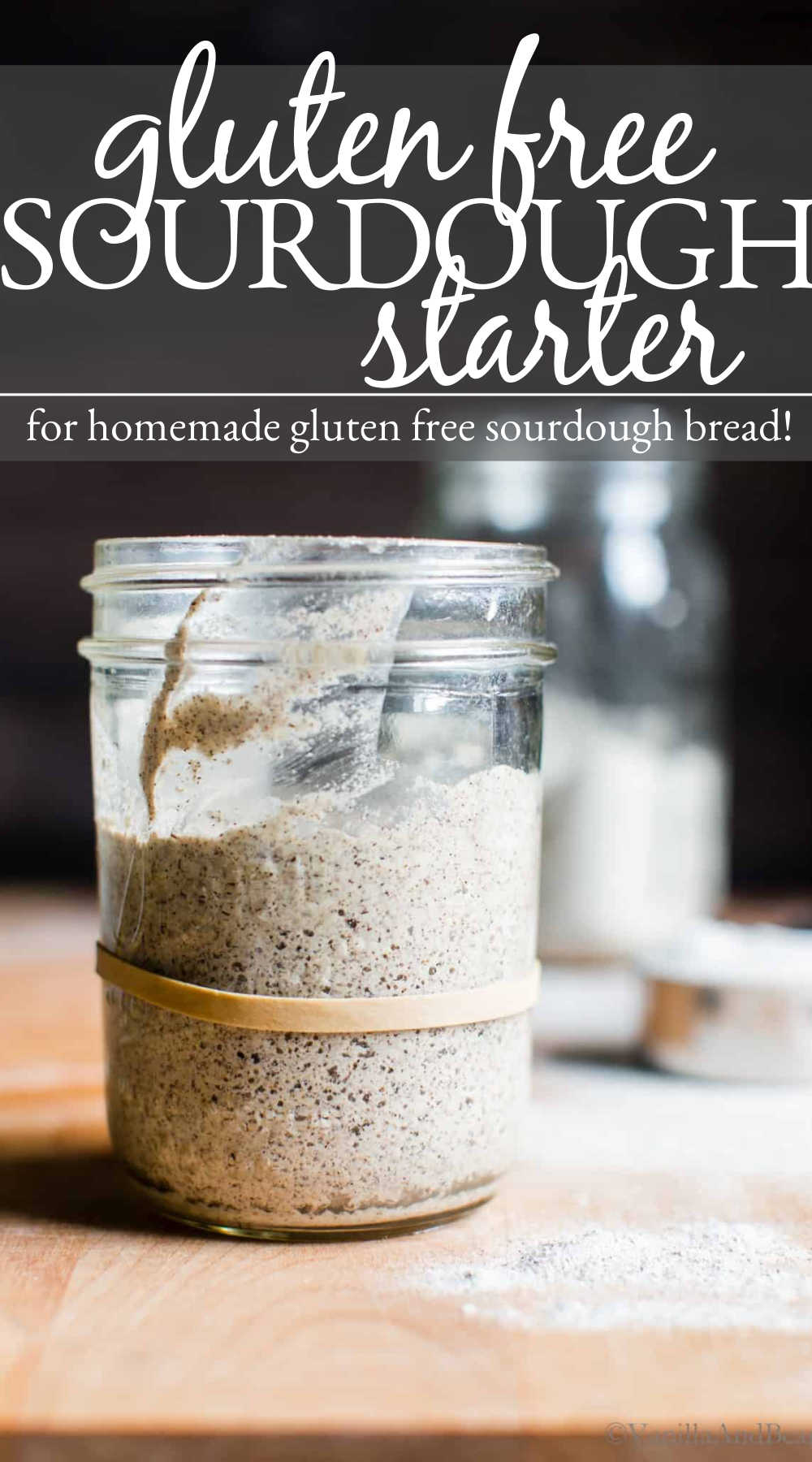
Making a gluten free sourdough starter couldn’t be easier. Start with a few simple ingredients, a little time and patience, soon you’ll be making delicious homemade gluten free sourdough bread, pizza, pancakes, and waffles!  This recipe is vegetarian and vegan. [ recipe VIDEO below on recipe card ]

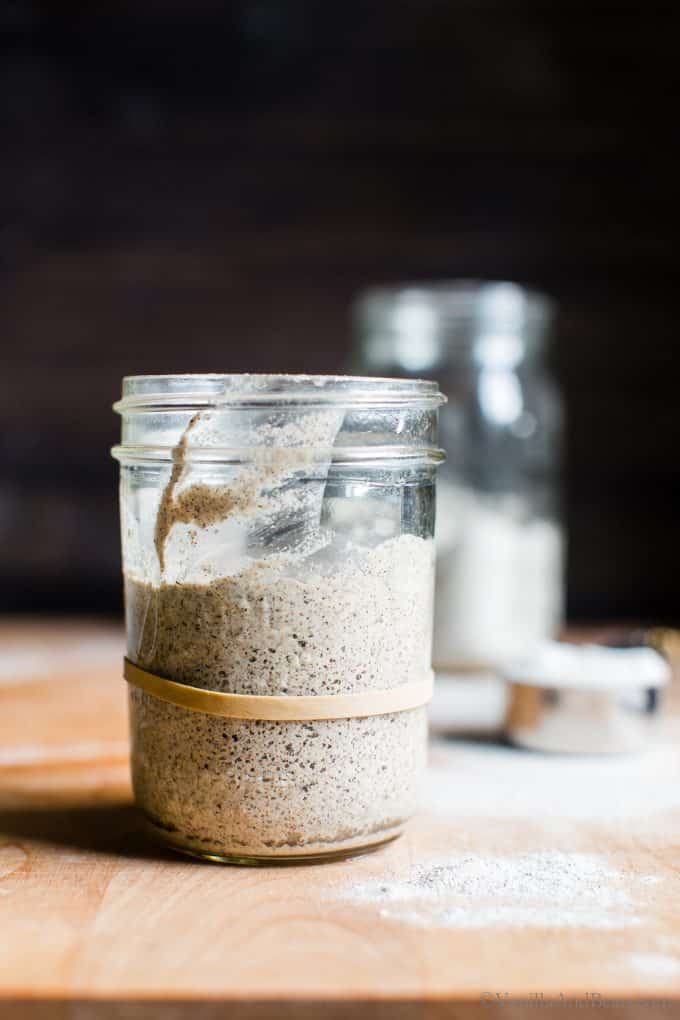
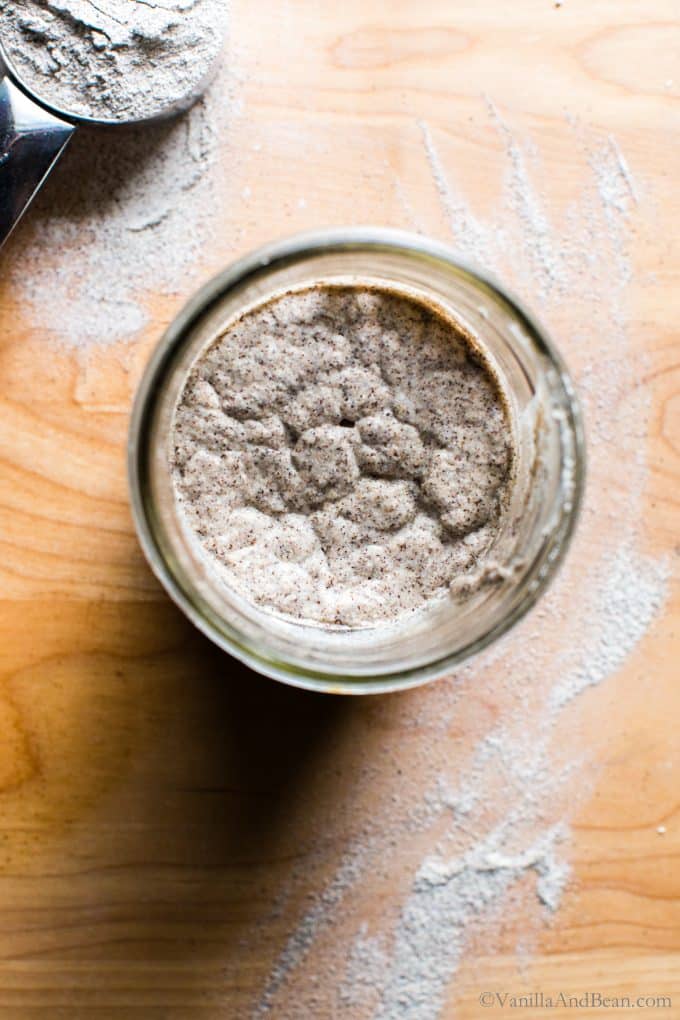
A jar of ripe gluten free sourdough starter.

A Gluten Free Journey

I started my gluten free sourdough journey in the summer of 2018. At the time I had just recently become proficient at sourdough bread when my doctor declared she wanted me to give a gluten free trial a go. And so the journey began. 

I’m eating gluten again, but through the development of this gluten free starter, and consequently seeded gluten free sourdough bread and gluten free sourdough pizza crust, the Vanilla And Bean community has shown interest. 

Gluten free sourdough starter is simple to make, but it took a bit of trial and error for me to get to this point. While it’s similar to developing a glutenous sourdough starter, I found some gluten free flours to be more reliable than others in producing a consistent GF sourdough bread starter result. After months of testing, I’m sharing with you my best gluten free sourdough starter. 

If you want to learn how to make delicious and flavorful homemade gluten-free sourdough bread recipes, then a strong GF sourdough starter is where to begin.

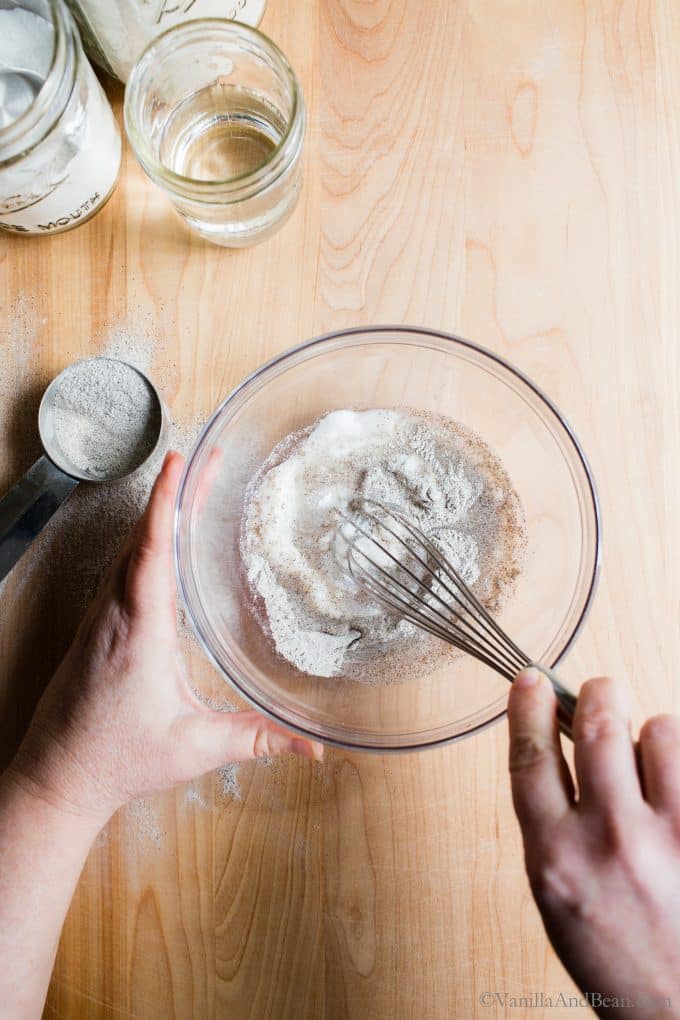
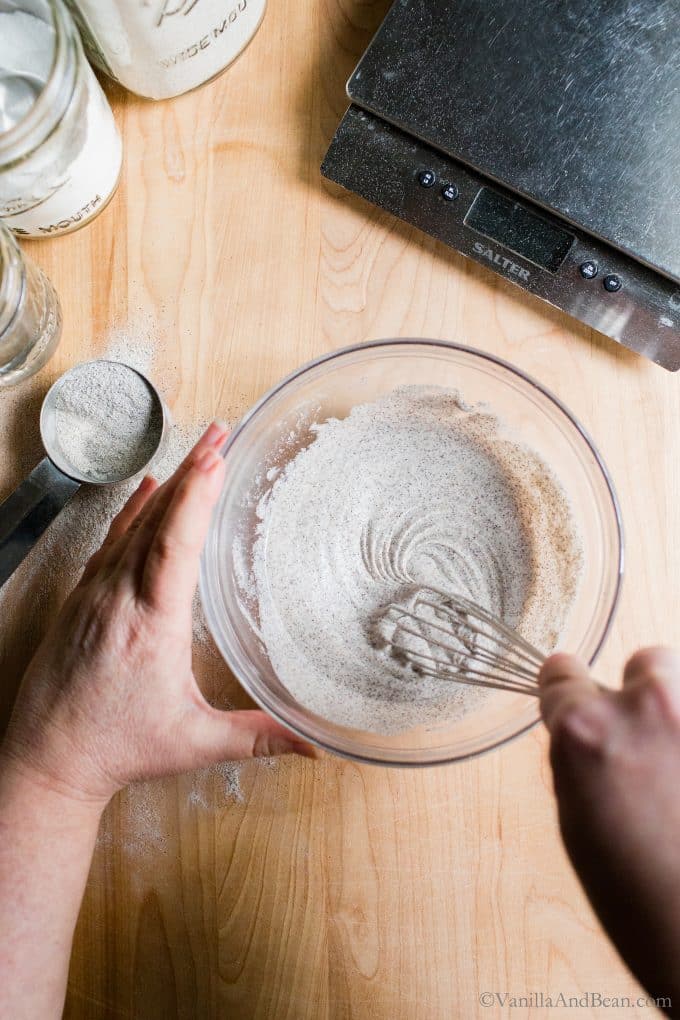
Adding water to rice and buckwheat flour in a mixing bowl.   Whisking gluten free flours in a bowl with water. Whisking a gluten free sourdough starter.   Covering the gluten free sourdough starter.

How to Make a Gluten Free Sourdough Starter

This simple recipe generally takes about 5-7 days to complete, but it could take longer. You’ll think about it more than the time it takes to make it: checking on it periodically, looking for bubbles, taking a whiff for a bit of that sweet and sour aroma we’re after. The key is patience and consistency (see recipe card below for details).

  • Day 1:  In a medium glass bowl or jar, whisk buckwheat or brown rice flour with sweet rice flour and water. Lid or cover with a damp tea towel and set aside at room temperature 24 hours.
  • Day 2: Take a portion of the previous days mix (discard the leftover), and in a clean jar or bowl whisk in previous days mix, water and buckwheat and sweet rice flour. Lid or cover with a damp tea towel and set aside at room temperature for 24 hours. 

at about day three or four, your starter will begin to smell unpleasant, like sweaty socks. keep going… it will change for the better!

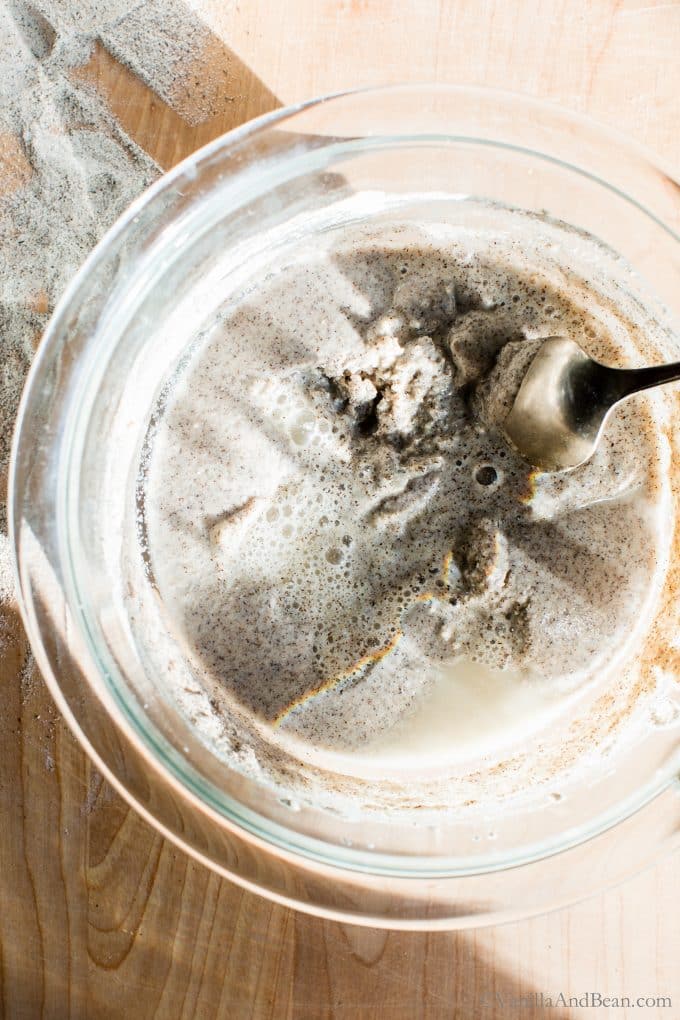
  • Day 3 through 6…or 7 (or beyond):  Repeat day two until the mixture becomes puffy, has a pleasant sweet-sour aroma and bubbles begin to form under the surface. How many days it takes to complete to get to this point depends on ambient temperature and available, naturally occurring yeast and bacteria. Six to seven days has been my experience. 
  • Note: Time mentioned here is a guide rather than a determining factor for when the starter is ready. Use the cues and your senses to determine when it’s ready. It may take longer than seven days.

It’s ready when it’s ready. 

  • Once the starter is puffy, has a sweet-sour aroma and bubbles are present under the surface (see pictures below), your initial starter is ripe or ready.
  • Last, to keep your starter balanced and strong, you’ll need to refresh it, or feed it before using it in a recipe.

Feeding the gluten free sourdough starter.   Whisking the fed gluten free sourdough starter. A bubbly sourdough starter.    Bubbly Gluten Free Sourdough Starter on day 7.

How to Refresh Your Gluten Free Sourdough Starter

Refreshing a gluten free starter keeps it strong. I refresh mine at least every other week, once a week if I remember, when stored in the fridge, but always 8-12 hours before I’m ready to mix the sourdough. Also, I keep the starter in a glass jar with a rubber band around the starting level (after I refresh it) so I can track its progress as it develops.

To Refresh Your Starter

  • First, in a clear jar you’ll add part of your sourdough starter (throw out or save the leftover to make gluten free sourdough pancakes or sourdough waffles using your discard). Then you’ll whisk in the water and add the flours. Mix well until the flours are hydrated.
  • Next, loosely lid and wrap a rubber band around the jar at the height of the starter. This will give you a visual indication of how much the starter has grown as it grows to double in size.
  • Last, allow the starter to develop at room temperature for about 8-12 hours. The time will vary due to ambient temperature.

When is the Starter Ready?

Once your GF sourdough bread starter has doubled in size, is bubbly and has a sweet-sour aroma, it’s ready to use in this gluten free sourdough bread recipe. After measuring out the portion needed for your recipe, refresh the starter, as indicated above and store in the fridge until your next feeding. 

The starter will not stay in this doubled in size state for long. At some point after doubling in size, it will begin to lose its strength and fall. The exact amount of time will vary from starter to starter but I’ve typically observed a few hours window, at room temperature, where the starter will remain doubled in size. On warm days, it’s shorter. But in the refrigerator, it’ll hold for quite a while. I’ve observed at least over eight hours! Once it starts falling back down after doubling in size, you’ll need to refresh (or feed) it and allow it to double in size again before using it in a sourdough bread recipe. 

If your starter is struggling to double in size, you’ll need to go through a few cycles of refreshment to build strength in the starter. You can even refresh twice within a 12 hour period if needed. Doing this builds flavor and will help later in the development of your gluten free sourdough bread. I do a series of refreshments after freezer storage or a long period of neglect in the refrigerator before using it in a recipe. 

How to Maintain Gluten Free Sourdough Starter

Think of your sourdough starter as a refrigerator pet that needs regular attention. There’s yeast and bacteria that make up the starter so it needs to be fed (refreshed) on a regular basis.  Your starter can be stored at room temperature if you’re baking daily.

However, I use mine about once every two weeks, so I store my starter in the refrigerator. I’ve gotten away with refreshing it only before and after I bake and this system of an every other week feeding/baking schedule works well for me. In a perfect world, it should be fed weekly. 

What is That Layer of Liquid?

Sometimes while you’re building your starter and/or after your starter is established, you may notice a layer of liquid that forms on the surface. This liquid is called hooch, a naturally occurring alcohol that indicates your starter is hungry, that it’s a little past time to feed your starter, and is an indication of a weak (hungry) starter. Hooch should have a pleasant sweet-sour aroma. You can pour it off or stir it into your starter and carry on with refreshment. 

If you notice hooch after refreshing your starter, and you’ve missed the doubled in size bake window, you’ll need to feed your starter twice a day, about every eight hours, which will remedy hooch and build strength in your starter. Putting your starter in a cooler area of the house should help too. This will slow down the fermentation process.

Freeze Your Starter to Preserve It!

If you’ll be away from baking for a while and need to store your starter longer than a few weeks, it can go in the freezer, unfed. When ready to use it again, thaw it out in the refrigerator and refresh it a few times within a window of 12-24 prior to baking with it. Be sure to allow it to double in size again.  

Remember, your starter is ready when it doubles in size, is bubbly and has a pleasant sweet-sour aroma. 

An unripe gluten free sourdough starter.   Top view of a ripe gluten free sourdough starter. Overhead view of a ripe and bubbly sourdough starter.   A doubled in size, ripe sourdough starter in a jar.

Traci’s Tips

  • Time is a guide rather than a determining factor for when the starter is ready. Use the cues and your senses to determine when it’s ready. It may take longer than seven days. It’s ready when it’s ready.
  • For leftover sourdough starter (discard), you can keep it in a jar for use in other recipes, give some away or throw it out. It can be used in gluten free sourdough pancakes, sourdough waffles or my gluten free sourdough pizza crust recipe without having to double it in size… and it’s absolutely delicious! I keep a jar in my refrigerator and refill it as I discard the leftover starter at refreshment time. The discard can be frozen too. 
  • If you see any mold or a layer of pinkish/orange/white slimy color on the top of your starter, throw it out and make a new starter. This can be avoided simply keeping your starter happy and well fed, refreshing it weekly in the fridge or daily at room temperature. 
  • Float Test: If you’re a glutenous sourdough baker and have used the float test in the past to observe when your sourdough starter is ready, the same idea doesn’t work for gluten free sourdough starter. So, you’ll need to go on observation alone. Remember: the starter doubles in size, smells of a sweet-sour aroma and has air pockets within the starter (or is bubbly). 

Through testing this recipe I found sweet white rice flour or Bob’s Red Mill AP 1-1 Gluten Free Baking Flour to be an essential component in developing a strong and consistent gluten free starter. Mixed with buckwheat or brown rice flour yields consistent results.

A ripe, doubled in size gluten free sourdough starter in a jar.
Save Recipe Saved! Print Recipe

Gluten-Free Sourdough Starter (Beginner Friendly!)

Total Time:7 days days
Author:Traci York
[ starter VIDEO below ]*The blog post above has more tips and information!*
Making a gluten free sourdough starter couldn't be easier. Start with a few simple ingredients, a little time and patience, soon you'll be making delicious homemade gluten free sourdough bread, pancakes, and waffles! This recipe is gluten free and vegan.
This process generally takes between 6-7 days to complete, with only minutes each day to prepare it. Be aware that it could take longer. This is the nature of sourdough.
(keep screen awake)

Ingredients

  • Buckwheat Flour or Brown Rice Flour
  • Sweet White Rice Flour or Bob's Red Mill AP 1-1 gluten free baking flour
  • Water room temperature **see note

Instructions

  • Day One: 
    In a medium glass bowl or jar, whisk together 2 T (20g) buckwheat or brown rice flour, 2 T (20g) sweet rice flour and 1/4 C (60g) of water. Cover with a damp tea towel and rest at room temperature for 24 hours. 
  • Day Two: 
    In a clean medium glass bowl or jar, whisk 2 T (40g) of mixture you made yesterday (throw out the leftovers), 2 T (20g) buckwheat or brown rice flour, 2 T (20g) sweet rice flour and 1/4 C (60g) of water. Cover with a damp towel or loose fitting lid and rest at room temperature for 24 hours.
  • Day Three Through Day Six or Seven (or beyond): 
    Repeat step two using the previous days starter until the mixture becomes puffy, has a pleasant sweet-sour aroma and bubbles begin or air pockets are visible under the surface. This process takes about six to seven days (as this has been my experience) - but it may take longer.
    Time is not a determining factor for when the starter is ready, it's simply a guide. It's ready when it's ready. Use the cues and your senses to determine when your starter is ready. This is the nature of sourdough.
    Before using your new starter in a recipe, you'll need to refresh (feed) it. 

How to Refresh your Gluten Free Sourdough Starter:

  • Once you have an established starter, you'll need to feed it.
    In a clean lidded jar, add 1/4C (60g) of sourdough starter (throw out or save the leftover 'discard'). To the starter, mix in 1/3 C (80g) room temperature water. Add 3 T (30g) buckwheat flour and 3 T (30g) sweet white rice flour to the water mixture. Mix well until the flours are hydrated.
    Wrap a rubber band around the jar at the height of the starter. This will give you a visual indication of how much the starter has grown. 
    Put a lid on the jar (it doesn't need to be loose - just regular) and allow the starter to develop at room temperature for about 8-12 hours* or until it doubles in size. The time will vary due to ambient temperature.
    If your starter is struggling to double, place it somewhere warm, like inside a turned off oven with a light on. You can also try feeding twice a day to nudge the starter along.
    Once the starter has doubled in size, is bubbly, and has a sweet-sour aroma, it's ready to use in your gluten free sourdough bread recipe.
    After measuring out the portion needed for your recipe, refresh the starter, as indicated above and store it until ready to use again.  

How to Store Your Starter:

  • Room Temperature: The starter can be stored at room temperature if you bake daily, which also means it will need to be refreshed daily. Store it in a glass jar with a lid.
    Refrigerator: Ideally, you'll want to refresh your starter (feed it) each week if stored in the refrigerator. When preparing for mixing, and after pulling the starter from the fridge, you may need to refresh it twice within a 12 hour period to get it going again. This is not always the case, but sometimes the starter can be sluggish. Store it in a glass jar with a lid.
    Freezer: For longer storage, place your starter in the freezer. It will revive after it thaws in the refrigerator and goes through a few refreshments. Store it in a glass jar with a lid.

How to Store Your Discard if Saving:

  • Once you have an established starter, you can use it for bread, and your discard for pancakes, waffles, pizza and other recipes to add that tangy sourdough flavor. Store it in the fridge, in a lidded glass jar, for up to two weeks. You may see a layer of hooch, and this is not unusual. You can pour it off or stir it in.
    If you see any white, orange or pink film or mold, toss it.
    You can also store your discard in the freezer for longer storage. Thaw it in the fridge before using in a recipe.

Video

Notes

Sourdough discard? Save it, put it in a covered container in the refrigerator and then, make Gluten Free Sourdough Pizza Crust, Sourdough Waffles and Gluten Free Sourdough Pancakes! 
*If you're in a hurry and have an established starter, you can increase the speed at which the starter doubles in size simply by heating the water to 80F before refreshing the starter. When I do this, my starter typically doubles in size in about four hours.
**Filtered vs Tap Water: I've tried both and haven't experienced a noticeable difference in activity in my starter or bread. Chlorine and hard water can be a problem for your starter and bread development, however, and tap water quality varies widely. So, if in doubt, use filtered water.
Made It? Leave a comment below! The most helpful comment may include recipe rating, feedback, any modifications and/or helping other commenters. On Instagram? Take a snap of your make and share, tagging @VanillaAndBean #VanillaAndBean!
Pinterest Pin for how to make Gluten Free Sourdough Bread

You might also like:

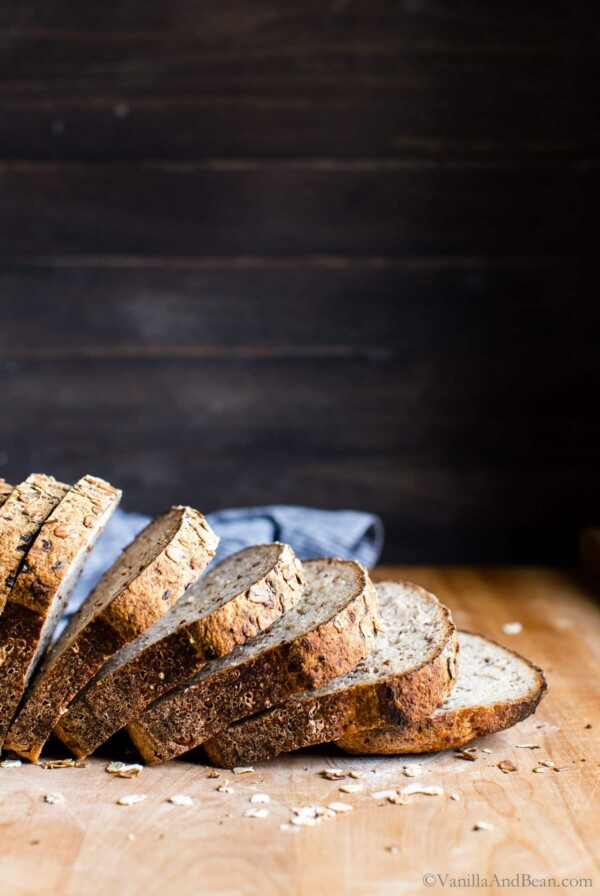
A loaf of gluten free sourdough bread, sliced, on a bread board.

Seeded Multigrain Gluten Free Sourdough Bread

Maple pecan granola in a jar with a scoop.

Maple Pecan Granola

French Lentil Soup with Coconut milk in a bowl with a side of naan.

Coconut Curried French Lentil Soup

Lentil Sloppy Joe with a onion ring on top.

30-Minute Tangy Lentil Sloppy Joes

    Shares7.3kPinShareEmail

    Sign up for the Vanilla And Bean newsletter and get my Five Secrets to Vegetarian Cooking email series delivered to your inbox!

    You will receive recipes and kitchen tips, along with information about our partners and offerings. For more details, review the Vanilla And Bean privacy policy.
    Previous Post: « 10 Minute Mexican Chipotle Salsa
    Next Post: Seeded Multigrain Gluten Free Sourdough Bread »

    Reader Interactions

    283 comments

      4.94 from 43 votes (23 ratings without comment)

      Leave a Comment & Rate this Recipe Cancel reply

      If you love this recipe, please consider leaving a star rating when commenting below. Star ratings play an important role in helping others in the online community discover and enjoy my recipes. I appreciate your support!

      Your email address will not be published. Required fields are marked *

      Recipe Rating


      This site uses Akismet to reduce spam. Learn how your comment data is processed.

    1. Avatar for Jo MclayJo Mclay

      September 10, 2024 at 3:18 pm

      I am on Day 4 and have been keeping the discard from day 2,3,4 even though it has not “developed”. Can I use this discard or do I have to wait until it doubles and it’s viable sourdough starter? I loved the one comment that she named her starters. I have named them Nanton and George ( one with filtered water and one with tap water) as my starters and Sadi is my discard. Can I use Sadi in your discard recipes?

      Reply
      • Avatar for Traci YorkTraci York

        September 10, 2024 at 7:52 pm

        Hi Jo! For discard, I would wait to use it until it’s a viable sourdough starter simply due to the flavor profile. Once you have a viable starter, you can use Sadi in discard recipes. Please keep us posted!

        Reply
    2. Avatar for Heidi EricksonHeidi Erickson

      July 14, 2024 at 2:31 pm

      I am on day two. It seems watery? I mean it is not the consistency of “pancake mix” like a wheat sourdough. Is this right?

      Reply
      • Avatar for Traci YorkTraci York

        July 14, 2024 at 5:52 pm

        Hi Heidi! The consistency is different from a wheat sourdough starter. Are you weighing the ingredients? Keep going!

        Reply
    3. Avatar for KasKas

      May 14, 2024 at 1:33 am

      Day four, my starter developed a pink hue. I know this is a potentially pathogenic bacteria. I’m going to start over. Do you know how this could have happened? And more important, how to make sure it doesn’t happen again?

      Reply
      • Avatar for Traci YorkTraci York

        May 14, 2024 at 12:22 pm

        Hi Kas! This sometimes happens. Throwing it out and starting new is appropriate. To prevent it from happening, be sure to start each feeding in a clean bowl (this 100% solved my moldy starter problem). Keep your starter in a cooler than warmer area (68ish degrees) and away from drafty areas. And keep it covered with a lid or damp tea towels (they need to stay damp so double up so they don’t dry out overnight).

        Reply
    4. Avatar for Mari MaddoxMari Maddox

      February 29, 2024 at 2:04 pm

      Hi Traci,
      I’m on day 2 of the starter. I was reading about feeding it, once it’s established, and I noticed that buckwheat flour is called for and the option to use brown rice flour is no longer listed as an option to use. Will you please clarify this for me?

      Thanks so much, I’m really looking forward to trying this out!

      Reply
      • Avatar for Traci YorkTraci York

        February 29, 2024 at 2:29 pm

        Hi Mari! You can use brown rice flour if you like. I have typically used buckwheat when refreshing/feeding because I have usually have more of it on hand. Keep us posted with your starter!

        Reply
        • Avatar for Mari MaddoxMari Maddox

          February 29, 2024 at 6:22 pm

          Thanks for your quick reply. I ought to have asked you if you think it’s a better flavor using buckwheat(?)

          Reply
          • Avatar for Traci YorkTraci York

            February 29, 2024 at 6:24 pm

            I do prefer buckwheat. Plus it’s always at the ready for pancakes!

            Reply
    5. Avatar for RéeRée

      February 1, 2024 at 4:00 am

      Aloha, Traci, I started my first attempt with your recipe on Tuesday afternoon using sweet white rice flour and buckwheat flour. On Wednesday afternoon, there was a bit of hooch on top, so I mixed it in and combined 2T with the amount in the instructions for day 2. It smelled slightly tart and it made me happy. Then, this morning (Thursday), when I came out to the kitchen, there was a layer of pink liquid on top. :(

      I’m not sure what went wrong, so I’m trying again. It’s been about 6 hours, and there is a layer of water/hooch on top––is it too soon to do a refresh?

      And, I was wondering about the damp towel––does the towel need to stay damp? Maybe because it’s winter and dry in our home, the towel dries up before I go to bed.

      Lastly, have you ever left your starter somewhere other than the kitchen and found success? I wonder if the constant cooking/baking/roasting negatively impacts the starter or not.

      Thank you so much, Traci.

      Reply
      • Avatar for Traci YorkTraci York

        February 1, 2024 at 10:44 am

        Aloha Ree! That layer of liquid indicates a hungry starter, meaning it’s exhausting it’s food supply before it’s fed again. You can put it somewhere consistently cooler as warmer temperatures speed the process up, or try feeding it two times a day. Feeding it several times a day will ensure it’s not running out of food! Warmer temperatures (cooking/baking/roasting nearby) will increase the speed at which your starter exhausts the fresh flour you recently fed it. Also, be sure to use a new, clean vessel each time you feed. Last, the towel needs to stay damp, so you can double up – since it’s dry in your home. Keep us posted and let me know if you have any other questions!

        Reply
        • Avatar for RéeRée

          February 1, 2024 at 4:40 pm

          Thank you so much for the reply, Traci. I noticed that the “hooch” starts to develop just 15-20 minutes after I refresh the starter––do you recommend I add less water?

          I’ve been reading about “hydration”, but since math is not my strong suit––and neither is science––I’m wondering if this recipe is over hydrated for my specific environment?

          Mahalo!

          Reply
          • Avatar for Traci YorkTraci York

            February 2, 2024 at 9:38 am

            I’ve never seen hooch develop that quickly. Usually it takes at least 12-24 hours, so I’m not sure what’s going on. You could try letting the starter develop in the refrigerator, although it will take much longer to create a starter and also, double in size.

            Reply
            • Avatar for RéeRée

              February 2, 2024 at 4:45 pm

              Thank you, Traci. I will try that if I fail again with this second attempt.

              Update: I fed it twice yesterday, but before I went to bed, there was a huge layer of hooch on top. Then, this morning I saw that there were bubbles and (the layer of hooch was at the bottom instead of at the top), so fingers crossed it will work this time around. If not, I’ll try growing it in the fridge.

              Thanks for all of your help!

            • Avatar for RéeRée

              February 16, 2024 at 1:11 am

              5 stars
              Hi Traci, I am here to report that my sourdough starter FINALLY … started? And I’ve made your pancakes, along with focaccia, naan, and muffins. Thanks so much for all of your help. In case it helps others, I want to share that my starter really took off when I named her (lol).

            • Avatar for Traci YorkTraci York

              February 17, 2024 at 4:44 pm

              Best news ever! Thank you Rée!

    6. Avatar for JenVJenV

      January 18, 2024 at 5:09 pm

      4 stars
      I am having difficulty getting my starter to double in size. It is in a mason jar with lid gently on. I have kept it in oven with oven light on and it raises but does not double. So I’ve refreshed x 2 about 8 hours apart and again it will raise but does not double. It is definitely bubbly and smells sweet so is it ready to bake with based on those two factors alone? Any suggestions are appreciated. Thank you!

      Reply
      • Avatar for Traci YorkTraci York

        January 18, 2024 at 5:23 pm

        Hi Jen! Can you tell me what flours you’re using? Is the starter almost doubling in size? If so and it smells sweet as is bubbly, it’s more than likely ready!

        Reply
        • Avatar for JenVJenV

          January 18, 2024 at 8:12 pm

          I am using Buckwheat and Sweet White Rice. I’d say it has been about half way to the point of being doubled.

          Reply
          • Avatar for Traci YorkTraci York

            January 19, 2024 at 10:28 am

            Okay.. thank you Jen. What day are you on? Some have commented taking up to 12 + days to double. Also, some makers find using filtered water helps due to hard water. I’ve not experienced this but I wanted to let you know that *could help.

            Reply
            • Avatar for JenVJenV

              January 19, 2024 at 9:27 pm

              I am on Day 15. Came home from work tonight and it was nearly doubled so I proceeded to start making my first loaf of sourdough bread. I will bake it tomorrow. Super excited! Thank you for all your help!!

            • Avatar for Traci YorkTraci York

              January 20, 2024 at 10:23 am

              Wooo! Love that feeling when it finally happens! So excited!

    7. Avatar for MattMatt

      December 2, 2023 at 9:01 am

      5 stars
      Just started my day 1! Do you have a gluten free sourdough recipe that I can use once the starter is ready?!

      Reply
      • Avatar for Traci YorkTraci York

        December 2, 2023 at 10:18 am

        Outstanding! Keep us posted on your progress, Matt. LMK if you have any Qs along the way. Just above the recipe card in the RELATED section, you’ll find links. Also, check out my Gluten Free Sourdough Recipes category page.

        Reply
        • Avatar for MattMatt

          December 2, 2023 at 11:13 am

          Thank you! I see it now! Is it possible to make the sourdough loaf without the seeds and oats and just use the starter and flour?

          Reply
          • Avatar for Traci YorkTraci York

            December 2, 2023 at 12:21 pm

            While I’ve not tried it, there’s lots of tips and community notes/adaptations in the comments, If I recall several makers have done this with success. One maker commented: “I love this recipe! I make it both with and without the soaker, using either volume and weight measurements. It never rises quite as much without the soaker though.” I hope this helps, Matt!

            Reply
    8. Avatar for DanielleDanielle

      October 25, 2023 at 8:59 am

      In a medium glass bowl or jar, whisk together 2 T (20g) buckwheat or brown rice flour, 2 T (20g) sweet rice flour and 1/4 C (60g) of water. Cover with a damp tea towel and rest at room temperature for 24 hours.
      Day Two:
      In a clean medium glass bowl or jar, whisk 2 T (40g) of mixture you made yesterday (throw out the leftovers), 2 T (20g) buckwheat or brown rice flour, 2 T (20g) sweet rice flour and 1/4 C (60g) of water. Cover with a damp towel or loose
      I am wondering why in the day one, it says 2 T (20g) and in day 2, it says 2 T (40g) ? This is confusing!

      Reply
      • Avatar for Traci YorkTraci York

        October 25, 2023 at 9:56 am

        Hi Danielle! It’s because on day one, you’re using 2 T (20g) of buckwheat flour or brown rice flour + 2 T (20g) sweet rice flour + 1/4 cup (60g) water. On day 2, you’re using 2 T (40g) of the mixture you made the day before (flours + water). The mixture you made the day before weighs more because it has water in the mixture. Same volume of 2 T, but different weight (mass). It would be like weighing a tablespoon of ground cinnamon and a tablespoon of sand. Same volume, but the sand would weigh more (have more mass). I hope this helps!

        Reply
        • Avatar for DanielleDanielle

          October 26, 2023 at 6:42 am

          Ohhhhh! Ok, thank you so much for the explanation ☺️ I’ll try that.

          Reply
    9. Avatar for LeahLeah

      September 27, 2023 at 12:34 pm

      great exept for one thing: online it tells me sweet rice flour is a gluten product. it is not gluten free.

      Reply
      • Avatar for Traci YorkTraci York

        September 27, 2023 at 4:51 pm

        Hi Leah! You’ll want to look for Sweet Rice Flour that is gluten free. I use Bob’s Red Mill. Also, from Bob’s Red Mill “…also known as sticky rice or glutinous rice. No, it doesn’t contain gluten – it gets that name from the sticky, starchy quality of the rice.” I hope this helps!

        Reply
        • Avatar for LeahLeah

          September 28, 2023 at 10:01 am

          Thank you, yes. I’ve been to every store looking for it. Apparently it’s only available online. No one carries it here.

          Reply
    10. Avatar for ShelbyShelby

      September 2, 2023 at 2:48 pm

      Hello! I’ve tried to make this started twice now and it becomes beautifully bubbly day one and day two, but after day two when I go to feed it again it completely dies and is no longer active. Any tips? I have been using sweet rice flour and brown rice flour. Both times I’ve tried to establish it has lost activity after the second discard. Thanks!!

      Reply
      • Avatar for Traci YorkTraci York

        September 2, 2023 at 3:06 pm

        Hi Shelby… it’s normal for a few days to look like nothing’s happening. But there is a community of microorganisms at work. If you see a thin layer of liquid on top, start refreshing every eight hours.. and put in in a turned off oven with the light on to make the culture nice and warm. Watch it closely for changes. I hope this helps! Keep us posted.

        Reply
        • Avatar for Shelby HockadayShelby Hockaday

          September 13, 2023 at 6:02 am

          Thank you for the reply and tip Traci! It worked! I had been keeping my starter in the oven with the light turned on already, but more frequent feeding did the trick to get a beautifully active starter. I made your GF sourdough pizza crust with the discard this week and it was the BEST pizza crust we have ever had!

          Reply
          • Avatar for Traci YorkTraci York

            September 15, 2023 at 7:59 pm

            Best news ever, Shelby! SO happy you enjoyed the GF sourdough pizza crust and your starter is working well for you. Thank you for your note and sending a smile!

            Reply
    11. Avatar for MerileeMerilee

      July 1, 2023 at 7:24 pm

      How can I make a small Gluten Free Sourdough Starter. All I need is 1 cup?

      Reply
      • Avatar for Traci YorkTraci York

        July 1, 2023 at 8:15 pm

        Hi Merilee! Do you already have a ripe starter made or are you wanting to start making a starter?

        Reply
    12. Avatar for AnnieAnnie

      June 7, 2023 at 1:20 pm

      5 stars
      Hi I’m day 6/7 feeding my started 2x a day and have only been using buckwheat flour and water, can I switch the flour to buckwheat flour and rice flour or is that a bad idea when is a “young” starter

      Reply
      • Avatar for Traci YorkTraci York

        June 7, 2023 at 4:08 pm

        Hi Annie! I’d make the switch, so long as you’re using sweet rice flour. I find sweet rice flour to be a *key* flour in a gluten free sourdough starter. I hope this helps! Please keep us posted with your progress.

        Reply
    13. Avatar for ValarieValarie

      March 29, 2023 at 6:18 pm

      Thank you for sharing this amazing recipe. It’s truly the best gluten free bread and pizza I’ve ever eaten!
      The one thing I have missed on my gluten free journey is the crunch and crispy texture of bread. Now I have found the answer to my quest for crispy pizza and soft delicious tasty bread again.
      I made a loaf of bread and two pies at the same time by doubling my starter. I refrigerated two starters and shared a starter jar with a friend.
      Thank you again for sharing this amazing recipe!

      Reply
      • Avatar for Traci YorkTraci York

        March 30, 2023 at 9:57 am

        Hii Valarie! Thank you for coming back and sharing your experience with us. Super pleased to read your note and your success with the starter, pizza and sourdough bread! A Triumph! What a sweet gift for your friend :D

        Reply
    14. Avatar for BridgetBridget

      January 19, 2023 at 9:37 am

      Can regular white rice flour be used instead of sweet white rice flour.. I’m new to all of this and am having a hard finding all the correct flours in a timely fashion

      Reply
      • Avatar for TraciTraci

        January 19, 2023 at 10:33 am

        Hi Bridget! You can give it a go, but I found through my trials the combinations suggested work best. Sweet white rice flour (or BRM AP gluten free flour) was the game changer for me.

        Reply
    15. Avatar for sophiesophie

      January 18, 2023 at 3:20 pm

      Hi Traci,
      I have a starter made with only brown rice flour, and I’m going away for 2 months. I want to try your idea to freeze the mother starter, do you freeze it directly in the glass jar after you feed it and let it ferment at room temperature, when it’s at its peak?
      thank you,
      Sophie

      Reply
      • Avatar for TraciTraci

        January 18, 2023 at 4:21 pm

        Hi Sophie! That’s a good time to freeze your starter, when it’s at its peak. When you return, simply thaw in the fridge overnight, then feed it and allow it to ferment until doubled in size. I hope this helps, and you have a good trip!

        Reply
        • Avatar for sophiesophie

          January 19, 2023 at 7:40 pm

          thank you so much Traci, I hope it will work, my starter is only 2 months old ! I don’t want to loose it after putting so much time, effort, and money into it, so I’m glad I found your freezer idea . take care.

          Reply
    16. Avatar for AmyAmy

      December 20, 2022 at 5:24 pm

      If I need more starter for a recipe (for example, 250 grams) and need to bulk up my starter, what ratios should I use to do so? I’ve been using 20 grams of each flour, 60g water, and 40g discard to continue feeding. The starter looks fantastic so far! Thanks so much for the recipe!

      Reply
      • Avatar for TraciTraci

        December 20, 2022 at 8:25 pm

        Hi Amy! Thank you for your note. To keep it simple, I double or triple the feeding, using a 4 cup Mason jar. So excited the starter is working for you!

        Reply
        • Avatar for AmyAmy

          December 21, 2022 at 9:43 am

          Thank you! So, if doubling, you would do 40g of each flour, 120g water and 80g starter?

          Reply
          • Avatar for TraciTraci

            December 21, 2022 at 1:51 pm

            Since you’re refreshing your starter after it’s established, you’ll double what’s in the recipe for How to Refresh your Gluten Free Sourdough Starter: “In a clean lidded jar, add 1/4C (60g) of sourdough starter. To the starter, mix in 1/3 C (80g) room temperature water. Add 3 T (30g) buckwheat flour and 3 T (30g) sweet white rice flour to the water mixture.” So you’ll mix, 120g of starter, 160g water, 60g buckwheat and 60g white rice flour to double your starter. Keep us posted Amy!

            Reply
    17. Avatar for CourtneyCourtney

      March 25, 2022 at 9:11 pm

      When you do the feed is it always just taking out 40g and disgarding everything else. So day 3-6 so every feed you start with just 40g of the previous fed starter?

      Reply
      • Avatar for TraciTraci

        March 26, 2022 at 8:57 am

        Hi Courtney! You got it. Every feed you start with just 40g of the previous fed starter and discard the rest. Once you have an established starter, you can start saving that flavorful discard to use in sourdough discard recipes!

        Reply
        • Avatar for CourtneyCourtney

          March 26, 2022 at 7:59 pm

          Thank you so much!!!!

          Reply
          • Avatar for TraciTraci

            March 27, 2022 at 11:07 am

            Keep us posted, Courtney!

            Reply
    18. Avatar for Patricia HenniganPatricia Hennigan

      March 7, 2022 at 8:25 am

      I plan to experiment a little, as I already have a teff starter going. I wonder if you have any thoughts regarding varying the flours used in both the starter and bread.
      Thanks for the recipe. I am new to gluten free and appreciate the time you take.

      Reply
      • Avatar for TraciTraci

        March 7, 2022 at 2:42 pm

        Hi Patricia! Through testing this recipe, I found sweet white rice flour or AP 1-1 gluten free baking flour to be an essential component in developing a strong and consistent gluten free sourdough starter. Mixed with another whole grain flour such as buckwheat or brown rice flour yields consistent results. These are the only two whole grain flours I’ve tried when making this starter. As far as the bread recipe, I’ve included flours I tested/tried as well as “makers notes” who have had success with other flours in the blog post. Please keep us posted on if you give the recipe(s) a go!

        Reply
    19. Avatar for MeganMegan

      January 23, 2022 at 2:10 pm

      this sourdough starter guide is great! Mine is on its fourth day and has been aromatic and bubble for at least 48 hours. So excited to use it!

      Reply
      • Avatar for TraciTraci

        February 7, 2022 at 2:32 pm

        Hi Megan! So happy to hear! Please keep us posted!

        Reply
    20. Avatar for AudraAudra

      December 30, 2021 at 4:44 pm

      When/how will you know if it’s working and at what point do you know it’s been too long without seeing any bubbles or doubling?

      Reply
      • Avatar for TraciTraci

        January 1, 2022 at 11:56 am

        Hi Audra! I share lots of tips and what to look for in the blog post… which, I’m thinking will answer your questions. Please let me know if I can help futher.

        Reply
    21. Avatar for Danielle DavisDanielle Davis

      December 30, 2021 at 10:20 am

      5 stars
      Will the started be “sour” enough when making it the first time? Does it need to be aged to be really fermented?

      Reply
      • Avatar for TraciTraci

        December 30, 2021 at 1:36 pm

        Hi Danielle, this depends on your preference. As the starter ages, it will develop a unique flavor profile. However, once your starter is ready, you can use it in sourdough recipes. There’s no need to wait unless you just want to see for yourself. The flavor really comes from the long fermentation process as your dough rises.

        Reply
    22. Avatar for Per ThomsenPer Thomsen

      November 4, 2021 at 9:30 pm

      Hi! Loving this resource for GF baking.

      My niece has celiac, and because I’m the ‘sourdough person’ in the family, she’s asked me to see if I can make something similar for her. I’m excited about the challenge and have gotten the flours for the starter.

      I’m wondering if there are any issues letting my GF starter sit next to my gluten-based starter when I feed it? I thought I might have an easier time getting things going with my current bacteria floating around the GF starter. Anything I should be concerned with?

      Reply
      • Avatar for TraciTraci

        November 5, 2021 at 1:30 pm

        Hi Per! Thank you for your note. What a kind gesture for your niece! I’m not an expert in celiac disease, but from the little reading I’ve done on it, it’s not something I would do. I wouldn’t want to risk contamination.

        Reply
        • Avatar for Per ThomsenPer Thomsen

          December 3, 2021 at 8:06 pm

          Traci: Wanted to thank you for the recipe! I took the risk and left the gluten-based starter next to the gluten-free starter for 2 days. The yeast migrated from one to the other, and after 5 more careful feedings of the gluten-free starter, I had a lively starter and was pretty sure that there was no gluten flour in the starter.

          The bread was a big hit, not only with my niece but also with her family. Thank you for putting together what seems to be a difficult recipe to come up with. So many moving parts! And so darn tasty!!!

          Reply
          • Avatar for TraciTraci

            December 5, 2021 at 11:00 am

            Hi Per! Thank you for your update. Hooray for success! So happy to hear your starter and the bread was a hit. Your note makes my day!

            Reply
    23. Avatar for AndreAndre

      October 12, 2021 at 10:16 am

      Hi Traci!
      I’m 65 and was diagnosed with Celiac 4 years ago. I LOVE sourdough bread and miss it terribly, so I am super pumped to try your recipes. My questions:
      1. If I can’t source sweet white rice flour, what can I use as a substitute?
      2. I live at 3000′ elevation and it’s super dry here, only about 15% humidity. What adjustments should I consider to compensate for the elevation and low humidity? More water?
      Thanks!

      Reply
    24. Avatar for OlenaOlena

      March 5, 2021 at 2:47 pm

      Hi Traci! Thanks for this amazing recipe! I started my starter 3 days ago and it doubled already today.
      1) Can the starer be ready so soon?
      2) When you take 2 tbsp out of the developing started to feed it after 24 hours, do you whisk it before?

      Thanks!

      Olena

      Reply
      • Avatar for TraciTraci

        March 5, 2021 at 3:08 pm

        Hi Olena! So happy to help…. The starter is most likely too young to use in a recipe. It’s not uncommon for it to double after the first few days, but that doesn’t mean it’s ready. Over the 7-8 days it takes to get the starter’s yeast and bacteria in balance, it also is building strength. How does the starter smell? Over time it will develop a more fragrant aroma. If it’s unpleasant, it’s not ready. Do whisk the starter before taking the 2 Tbs out to feed. I hope this helps, Olena! Please keep me posted!

        Reply
    25. Avatar for AshleyAshley

      February 2, 2021 at 6:27 pm

      Can this be dried out to store long term like regular sourdough starter?

      Reply
      • Avatar for TraciTraci

        February 2, 2021 at 10:37 pm

        Hi there Ashley! I’ve not tried it, so I’m not sure. If you give it a go, please let us know how it goes!

        Reply
    26. Avatar for WendyWendy

      November 2, 2020 at 8:07 am

      Looking forward to my first loaf! Its fermenting now. I want to do the fridge method… do you need to leave it at room temperature until it doubles and then refrigerate or will it do its thing in the fridge? Thanks!!

      Reply
      • Avatar for TraciTraci

        November 2, 2020 at 10:27 am

        Hi Wendy! So excited for you! You’ll want the starter to double in size whether it’s in the fridge or room temp, either will work. The fridge will take longer, and you’ll need to keep an eye on it. If it peaks then falls, you’ll need to feed it again and allow it to double in size again. Please keep in touch and let me know if you have any more questions!

        Reply
    27. Avatar for MelMel

      October 13, 2020 at 8:51 pm

      Hi Traci, I’m up to day twelve and am not sure whether my starter is still viable. There are hardly any bubbles and it isn’t expanding. The first five days the starter looked great, it was bubbly and had air pockets. Day 6 I discovered it tipped over during the night (with a wet cloth on top secured by a rubber band), and since then it hasn’t been the same! It has a sweet-sour smell, slightly vinegary. I’ve tried feeding it every twelve hours (nothing). There was a layer of water on top which I tipped off and thickened it up with extra flour. What would you recommend – is there a way to save it or should I throw it and start again? It’s been cold overnight here so I’ve been keeping it in the oven with the light on. Is it possible that it was ready before day seven and now I’ve missed that window? Thanks in advance for your help, Mel

      Reply
      • Avatar for TraciTraci

        October 14, 2020 at 11:42 am

        Hi Mel! Oh goodness… I’d try to rescue what’s left. Try feeding the starter twice a day instead of once and watch how it changes in between feedings (so, perhaps feed once in the morning and once before bedtime. The hooch on top tells me the starter is hungry, so it’s gobbling up the food fast. It is possible that the starter could have been ready before day seven… but it’s hard to say without seeing exactly what it was doing. I hope this helps, Mel… please keep in touch and let me know how it’s going.

        Reply
    28. Avatar for Gilly Huntington-RaineyGilly Huntington-Rainey

      September 15, 2020 at 4:21 pm

      I started my GF starter today and am v excited to see how it looks tomorrow. This is my 4th attempt, but 1st using your recipe! Question. I like in the West Indies and it’s always hot and pretty humid. The temperature at night right now is about 80F
      Is this going to be too warm for my starter? If so, what should I do? Am pretty sure the fridge is too cold. I know I can keep it in there with my regular sd starter once it’s up and running. Any advice would be soooo welcome. I’m a micro baker and am very familiar with sourdough, but I’ve been wanting to make gf sourdough for ages. Your seeded loaf looks amazing!

      Reply
      • Avatar for TraciTraci

        September 16, 2020 at 11:26 am

        Hi Gilly! Thank you for your note and giving the recipe a go! As for a warm temperature, you may need to build your starter with twice daily discards. I’m thinking you’ll start seeing activity sooner than later. Another option would be to set the jar in a 70F water bath, although that would be high maintenance! Please keep us posted!!

        Reply
    29. Avatar for PatPat

      September 13, 2020 at 11:45 am

      On the second day, when I take out 1/2 of the sour dough starter from the first day it says “discard leftover”. I assume you want me to throw out 1/2 of the first days sour dough. Is this true? Can I use that 1st day starter for anything or should I just throw it out (day 2-8 or when ever).
      Thank you

      Reply
      • Avatar for TraciTraci

        September 16, 2020 at 11:31 am

        Hi Pat! Yes, you need to discard, throw out 1/2 until your starter is vibrant and ready for bread baking. When you start maintaining your established starter, this is when you can use the discard in pancakes or waffles or other recipes. I hope this helps!

        Reply
    30. Avatar for MackenzieMackenzie

      September 8, 2020 at 6:48 am

      Hey Traci! I’m on day 8 of my starter and I have great activity, bubbles, a good smell, but my starter is refusing to double in size. Is there something I can do to help this? I’ve also tried putting it in the oven with just the oven light on and i’m not having any luck with that. Thanks!

      Reply
      • Avatar for TraciTraci

        September 8, 2020 at 6:52 am

        Hi Mackenzie! Try feeding it twice in one day allowing it to almost double in size before feeding again. Like you’re already doing, put it in the oven with light on. I hope this helps. Please keep in touch!

        Reply
    31. Avatar for AlexandraAlexandra

      September 4, 2020 at 9:46 pm

      Hi! I’m on day 6 of making my buckwheat starter. This is my first buckwheat starter, but I’m very familiar with the glutenous sourdough starter process. I’m on day 6 now and the past couple of days, there is a layer of mold growing on the surface of my starter. It’s a very fine layer of “white fur” looking mold that seems to grow overnight. I’ve been using a damp tea towel and will try using a lid today. I can very easily take the top layer of mold off and use a little starter from the bottom of the jar. The starter seems to be almost ready to use as it’s very bubbly and doubling in size, but I’m concerned about the mold that grows every night? Would really appreciate your thoughts as I’m not sure whether to throw it out or not.

      Reply
      • Avatar for TraciTraci

        September 4, 2020 at 10:37 pm

        Hi Alexandra! Oh noooo… I’m sorry to hear you have a layer of white fur… or mold. Since I don’t know what that is, it’s safer to start fresh. I’m curious if you’re using a new container each day while building your starter. I found through my trials that doing this will help prevent mold formation. I hope this helps.

        Reply
    32. Avatar for Eleanor SommerEleanor Sommer

      August 30, 2020 at 10:22 am

      5 stars
      Most efficient and clear instructions for making gluten-free sourdough starter I have found! Thank you! I’ve been making the multigrain bread since March.

      The starter is feed sorghum and brown rice flours and seems to thrive. I have also feed it teff and sorghum.

      I have been making the multigrain bread recipe since March as well. I’ve reduced the sweetener to 2 tbsp and I’ve been able to use potato starch instead of tapioca with good results. I sometimes substitute sorghum flour for the oat flour (but bread is a bit drier) or use 1/2 and 1/2. I have reduced water to 550g consistently. May work better as I live in north central Florida and it is quite humid here.

      I have tried a variety of soaker combinations (e.g., pumpkin seeds, hemp kernels), but always using the flax seed and oats.

      Question: Do you have a recipe for gluten-free sourdough dinner rolls?

      Reply
      • Avatar for TraciTraci

        August 30, 2020 at 10:32 am

        Hi Eleanor! Thank you for your note and sharing your tips/results. It’s super helpful to the community! Agreed about reducing water and humidity. I love your soaker suggestions… pumpkin seeds sound so delicious and I’m a fan of hemp seeds! I don’t have a recipe for gf sourdough dinner rolls, unfortunately. It sounds like I need to work on one! Thank you again for your note and sending a smile :D

        Reply
    33. Avatar for Marjorie NjaaMarjorie Njaa

      August 27, 2020 at 4:02 pm

      5 stars
      YAY! It worked! It took 12 days but I have gluten free sourdough starter that is doubling when fed. Next step, try a recipe. FYI I used the buckwheat and sweet white rice flours from Bob’s Mill.

      Reply
      • Avatar for TraciTraci

        August 28, 2020 at 11:38 am

        Hooray, Marjorie! SO happy to hear! I hope you enjoy the sourdough journey!

        Reply
    34. Avatar for CatherineCatherine

      July 20, 2020 at 6:36 pm

      I have refreshed my starter and want to store it for a week. After adding the flour and water and mixed it together do I let it sit on the counter to double and then put it in the fridge? or do I put it in the fridge right after I have mixed the flour water and starter together?

      Reply
      • Avatar for TraciTraci

        July 20, 2020 at 7:14 pm

        Hi Catherine! Put it in the fridge.. it will continue to develop but at a slower rate. Take a peak at it every day to watch how it changes. I hope this helps!

        Reply
    35. Avatar for JudithJudith

      July 2, 2020 at 6:19 pm

      Hi Traci – thank you for your recipe tips and support. My starter was slow to take off, so I increased to 12-hourly feeds and made additional efforts to keep it warm, and eventually on day 12 it rose to double in size … so exciting! But it hasn’t done the same since. It still rises a little each day, and has a pleasant yeasty smell – I’m just not getting that full rise and have not attempted bread with it yet. Any thoughts on what is happening? On the plus side I’ve used discard to make some fabulous pancakes and muffins. Thanks.

      Reply
      • Avatar for TraciTraci

        July 2, 2020 at 6:40 pm

        Hi Judith! Ah, finally, you got it to double. Hooray! Okay on not getting a full rise. I’d feed it twice a day and put it in a turned off oven with the light on until you get what you’re after. Yessss to pancakes (and I’d love to hear more about those muffins!). Keep in touch!

        Reply
        • Avatar for JudithJudith

          July 3, 2020 at 8:11 pm

          You may be sorry you asked about the muffins :) … it’s a bit of a long story as they were a rather imprecise version of the Apple & Cinnamon Muffins on lowtoxlife.com, making it up as I went along and without exact measurements for converting to adding the starter. I used a few tablespoons of starter mixed with the melted butter, rice malt syrup & egg (I only used 1 egg), then added sufficient buckwheat/brown rice flour mix (and coconut flour reduced proportionately) and a little milk until I had a muffin batter consistency. Except I ran out of the flour, which I normally grind up in the Thermomix but this was now full of batter, so I topped up with a little millet flour. Didn’t include the coconut. Doubled the cinnamon. And used pear instead of apple. Turned out really well!

          Reply
    36. Avatar for ElizabethElizabeth

      July 1, 2020 at 9:32 pm

      You mention about keeping the discard to use in sourdough pancake and the like. Is the discard a) the leftover developing starter when you actually progress to the starter stage and/or b) the discarded starter that you have to refresh if it wont double in size?

      Reply
      • Avatar for TraciTraci

        July 2, 2020 at 6:37 pm

        Hi Elizabeth… the developing starter is thrown out. A discarded starter that has doubled in size and removed to refresh the starter can be used to enjoy in pancakes. LMK if you have any more questions!

        Reply
    37. Avatar for AodhanAodhan

      June 26, 2020 at 6:13 am

      Hi I’m just attempting my first starter…and I have a few questions. Firstly when you’re feeding it everyday should just keep 40g from the previous days mix and disgard the rest? Secondly, my jar is a 2ltr jar and I’m wondering is that too big as it seems the mixture is just spread across the bottom of the jar. Would it better in a smaller jar where it’s more condensed into a smaller area if that makes sense? And thirdly should I store it on a window so that it gets direct sunlight or is that bad for it? Thanks

      Reply
      • Avatar for TraciTraci

        June 27, 2020 at 5:25 pm

        Hi Aodhan… First – yes, keep 40g and discard the rest. Second – I would use a smaller jar. Third – I would store it in a turned off oven with the light on. I hope this helps!

        Reply
    38. Avatar for LinseyLinsey

      June 23, 2020 at 11:11 am

      This is my second time attempting this starter. The first time was a major fail, and I know why. I used the same large glass pyrex container and never moved to a clean dish. I had a lot of hooch each day and shortly after grew mold. Yuck. I made some other minor mistakes along the way that I thought I could fix – I should have just started over. I also couldn’t find Sweet Rice Flour so I used my normal go-to homemade GF flour blend plus more Brown Rice Flour

      This second attempt has been much better. I’ve followed the instructions exactly – start each day with 2T starter, 1/4C water, 2T each Sweet Rice Flour and Brown Rice Flour in a clean glass jar. My starter was doing AMAZING for days 1-4, bubbly, would double in size, smelled sour, etc. However, day 5 brought no bubbles, no rising, and a thick layer of slimy hooch. I’ve continued on each day since with the normal routine, but still no bubbles or rising and has the layer of slimy hooch which I’ve been pouring off. I started double feeding. We were having some hot days but the weather has cooled off. I live on the Central Coast of California – our weather doesn’t change much here but +/- about 10 degrees.

      So my questions:
      Do I mix up the starter with the water and then add the addition flour? Does it matter?
      Should I store it in the window/somewhere else to get some good warmth?
      Should I just keep plugging away with the regular routine and hope the bubbles/rise comes back?
      Anything else I should try? I’ve read through the comments and am just not sure.
      When double feeding, I’ve been following the same instructions, just doing it both in the am and pm – is that right? Or do I only add more flour in one and discard the rest in another? So basically the whole process for one feeding, and only add flours to the second feeding.

      Thanks for the recipe and instructions – I know I’ll get there soon!

      Oh also, I watched your GF SD Starter highlight on instagram – it would be super helpful to see all of the days 1-7 (I only saw from day 3 or 4 onward I think).

      Thanks again!

      Reply
      • Avatar for TraciTraci

        June 23, 2020 at 2:43 pm

        Hi Lindsay… patience is key. It takes time to develop a starter, even after you’ve seen it bubble and it falls flat again. Keep going! One thing you can do is place the starter in a turned off oven with the light on. This will help things get moving. It doesn’t matter how you add the flour, starter and water – just mix it up! I hope this helps. Keep in touch!

        Reply
        • Avatar for Carol elbinCarol elbin

          August 17, 2020 at 12:26 pm

          I’ve been making this recipe for several monthes now and I love it! I’m wondering if anyone can tell me what I could use in the place of the millet? I’ve tried an all-purpose gf flour but it doesn’t rise as well when I do. Any ideas? Thanks

          Reply
          • Avatar for TraciTraci

            August 17, 2020 at 2:20 pm

            Hi Carol! So happy to hear you’re enjoying the recipe! Can you tell me, are you referring to the GF Sourdough Bread? If so, have a look at what other makers used in the “Maker’s Notes” section above the recipe card on the Sourdough Recipe. One maker used teff instead of millet. In my trials, I found millet really helps the bread rise higher and it has a more neutral flavor than many other GF flours. I hope this helps! Please keep in touch!

            Reply
    39. Avatar for NealNeal

      June 19, 2020 at 12:24 pm

      Thanks for getting back to me. Will try the suggestions, and get back to you.

      Reply
    40. Avatar for NealNeal

      June 18, 2020 at 9:12 am

      I have tried to produce the stater for 3 weeks. Started with sweet rice four and brown rice flour. Got little bubbles after a week, but no rise in volume. then substituted buckwheat flour. A few bubbles, but no rise. Kitchen temp is in the 70’s. Not sure how to proceed. Wanted to make the multigrain loaf for my son, but can’t move forward. I have been using tap water. Should I be using unchlorinated bottled water? Help! Any help appreciated.

      Neal

      Reply
      • Avatar for TraciTraci

        June 18, 2020 at 10:49 am

        Hi Neal… I’m sorry to hear your starter is struggling. There’s a few things you can try. First, try filtered water. I use tap, always, and it’s never been an issue, but water quality varies widely, so start there. Next, try putting your starter in a turned off oven with the light on. This will really warm things up. Last, you can try feeding twice a day, but I’d start with the first two strategies before this one. I hope this helps. Please keep in touch!

        Reply
    41. Avatar for Rachel GreenawayRachel Greenaway

      June 10, 2020 at 11:45 am

      Just Wow! My starter has just taken off! It’s doubled in size and has soooo many bubbles!
      I’ve used it to make bread today. It’s in the “proving” stages I just don’t know what to expect with the bread. Should it rise, double in size? I’ve never made bread before but was so excited when my starter worked! Do you have a recipe for bread to follow?

      Reply
      • Avatar for TraciTraci

        June 10, 2020 at 11:52 am

        Hi Rachel! So happy to hear your starter has taken off! I do have a few sourdough recipes: Seeded Multigrain Gluten Free Sourdough Bread. Use your discard in these Gluten Free Sourdough Pancakes! I hope this helps and you enjoy the recipes!

        Reply
    42. Avatar for MonicaMonica

      June 7, 2020 at 12:23 pm

      5 stars
      Thank you for this recipe, and your guidance! I tried making the starter with buckwheat flour and BRM 1-to-1, and it didn’t grow happily. I switched to rice flour and 1-to-1, and it took OFF!! Just made my first loaf of bread and first round of pancakes today, and they’re all delicious. This is so cool and exciting. Thanks again.

      Reply
      • Avatar for TraciTraci

        June 8, 2020 at 4:35 pm

        Thank you for your note, Monica! Hooray for a starter taking OFF! So happy to hear you’re enjoying the bread and pancakes – a win-win(!!).

        Reply
    43. Avatar for kirsikirsi

      May 31, 2020 at 1:22 am

      hello

      I have been trying to establish a starter. I have been feeding it for 6 days now but it is quite liquidy..is it normal? what can I be doing wrong please? thanks for your time.

      Reply
      • Avatar for TraciTraci

        May 31, 2020 at 7:29 am

        Hi Kirsi! Can you tell me a bit more about your starter? How does it smell? Are there any air pockets or bubbles when you pull back the surface?

        Reply
    44. Avatar for ElizabethElizabeth

      May 24, 2020 at 10:38 pm

      Hi Traci – Thanks for your hard work and patience in testing this and letting us into your secret! You mentioned that any discard starter can be put into a jar and kept for pancakes and waffles. I have only managed to find the gf sourdough pancake recipe. Do you use the same for waffles?

      Reply
      • Avatar for TraciTraci

        May 25, 2020 at 2:46 pm

        Hi Elizabeth! Thank you for your note. Indeed, the GF Sourdough Pancakes are on the blog, but I’ve yet to blog about the waffles. It’s definitely on my list. The recipe is different than the pancakes, although I’ve not tried the pancake recipe in a waffle iron. :D Stay tuned!

        Reply
    45. Avatar for DarcyDarcy

      May 20, 2020 at 9:13 am

      5 stars
      Hello! So I’ve been working on 2 starters (using Almond Flour and GF AP Flour) for about the last 11 days (I’m losing track of time), and about 6 days in, I started doing twice a day feedings. Both starters are bubbly below the surface and a little on the surface. The smell is right. But they have never doubled yet. They grow about 1/4-1/2 the size but that’s it. There’s never any hooch on top. I’ve got them sitting in the same place in my kitchen, near a window. Do you think I should go ahead and try to make a loaf with one of them? Or just keep going with trying to build the starters? This is my first time making bread but since going GF in Oct, I’ve been desperate for sourdough bread since it’s my fave. I appreciate any advice in advance!!

      Reply
      • Avatar for TraciTraci

        May 20, 2020 at 12:19 pm

        Hi Darcy! Thank you for your note and giving the recipe a go! Can you clarify for me…. two starters? Does one contain Almond and GF AP, together? If so, what is the other one? I’ve never tried Almond and AP, so I’m unable to speak say what’s going on there. But, what I would do, since you’re seeing some activity, is put it in a turned off oven with the light on and watch it closely for doubling in size. I’d wait until your starter is strong enough to raise the bread (double in size, bubbly) before mixing. Please keep in touch!

        Reply
        • Avatar for Darcy PurkhiserDarcy Purkhiser

          May 21, 2020 at 2:04 pm

          Sorry, I should’ve been more clear-I have 2 separate starters I’m trying and they both have the same mix. Just in case one dies or something I guess? lol I’m just nervous I suppose and trying to give myself the best chance of making this work so I won’t give up on it too easy…

          Thank you for the suggestion, I will try that! I think it’s so close, it’s just not getting there for some reason.

          Reply
    46. Avatar for GregGreg

      May 15, 2020 at 6:01 am

      I have tried making the starter several times but after 5 to 6 days it is close to doubling in size and I think it’s just about ready, so I give it one more day but then it won’t rise again… Even if I try to feed it it won’t rise again, it stays flat. I think there is a layer of hooch on top and it smells sour, but I just can’t get past the 5 to 6 day mark… Any thoughts on what night be going wrong?

      Reply
      • Avatar for TraciTraci

        May 15, 2020 at 10:48 am

        Hi Greg… thank you for your note! Since hooch is appearing on top, it sounds like your starter is hungry, which means it’s struggling. Try feeding it twice per day instead of once. Also, for some makers, it takes longer for their starter to develop. This isn’t uncommon. One maker, a month! Instead of starting again after day 5 or 6, keep going! Since your starter smells sour, there’s something good going on! Patience, and double up on feeding …. please keep in touch!

        Reply
    47. Avatar for ChristineChristine

      May 12, 2020 at 7:42 am

      5 stars
      I wasn’t sure how this would turn out, but it is amazing bread! It only took a few days for my starter and used white rice and buckwheat flour. At the same time, I tried a starter using buckwheat and 1-1 GF flour. They both worked perfectly. I must say the timing of when they rise, when they fall, etc takes a lot of patience and trial, but bread is worth the wait! For the actual bread, I used the 1-1/ buckwheat starter. For the bread, I skipped the soaker and used 1-1 flour, oats, and half buckwheat & half white rice. Once dough was made, it didn’t quite rise as much as I thought overnight, but baked it anyways. So yummy! My son and husband can’t even tell it’s GF. Pancakes are delicious too! I’m sharing my starter with a neighbor and she’s going to try using glutinous flour, so we’ll see. Thanks for this recipe and great directions. It did take serious patience, but well worth it…got my second bread process starting already!

      Reply
      • Avatar for TraciTraci

        May 12, 2020 at 2:55 pm

        Hi Christine! Thank you for your note and sharing your tips! So happy to hear you’re enjoying the GF sourdough recipes – that’s amazing your son and hubs couldn’t tell otherwise! Indeed, serious patience, but so glad the wait and effort is worth it :D Hooray!

        Reply
        • Avatar for RoseRose

          September 10, 2020 at 1:33 pm

          Hi there. I have been religiously clean with My jars and have swapped the sourdough starter daily when feeding it and it still grew mold! Do you think it’s just too humid in my house perhaps? I live in Virginia and summer here is brutally humid. I can’t think of any other reason for the mold? It was doing so beautiful and I had hit day six!

          Reply
          • Avatar for TraciTraci

            September 10, 2020 at 1:56 pm

            Hi Rose… thank you for your note. I’m sorry to hear you’re having difficulty with mold. I’m stumped but think that humidity could be playing a role. You could try placing the jar in the fridge and build it every other day, but it will take longer for the starter to develop. I hope this helps! Please keep us posted.

            Reply
    48. Avatar for LaunaLauna

      May 4, 2020 at 8:04 pm

      Success! My starter worked great (as mentioned earlier) and I made a loaf. Had a few issues as I couldn’t find all the flours you used so improvised. Batter was runny to added more flour. Took about 16 hours to rise to the right amount but it baked up quite nicely. My quesiton is with feeding my starter. I fed it as suggested right after making my loaf and then popped it in the fridge. It hasn’t risen which I guess is understandable. However, when I go to feed it in a week, what proportions to I mix if it hasn’t doubled in size? Did I do something wrong? Maybe this is a dumb question. Help.

      Reply
      • Avatar for TraciTraci

        May 5, 2020 at 11:12 am

        Hi Launa! So happy happy to hear you improvised and it work! Yay! Not a dumb question… To feed your starter next week, you use the same process/proportions, even if it hasn’t doubled in size. Save the discard for pancakes!

        Reply
        • Avatar for Launa AspesletLauna Aspeslet

          May 7, 2020 at 6:35 am

          Thanks Traci! Pancakes are on the menu for this weekend.

          Reply
    49. Avatar for Natasha HerediaNatasha Heredia

      May 3, 2020 at 1:51 am

      I started a jar using sprouted buckwheat and sweet rice, and a jar using brown rice and sweet rice.
      After the first 24 hours, the sb/sr jar doubled and had all the indicators you say to look for when it’s ready to use… is that even possible?? Four days in, I’m still following the recipe as you described but it always looks the same the next morning; doubled, bubbly, sweet-sour smell…should I be looking for something else or more specific??

      Reply
      • Avatar for TraciTraci

        May 3, 2020 at 5:55 pm

        Hi Natasha! Wow! That’s amazing! I’ve not heard of this before nor do I experience with sprouted buckwheat… so I’m not sure about there being anything in addition to the cues that the starter is ready. Maybe give it a few more days, just to continue building strength in the starter before you use it in a bread recipe. Hows the br/sr jar doing? Sounds like you’re off to a great start!

        Reply
    50. Avatar for Jami petersonJami peterson

      May 2, 2020 at 5:47 pm

      Hi! Just curious, what do I need to make my loaf after this starter? You don’t have a full GF sourdough recipe. Just wondering how what to mix in with my starter.

      Reply
      • Avatar for Carlos ParragaCarlos Parraga

        May 7, 2020 at 5:35 am

        I’m also wondering this????

        Reply
        • Avatar for TraciTraci

          May 7, 2020 at 10:35 am

          Hi Jami and Carlos! My GF sourdough recipe is here (linked in the blog post) and there are other GF Sourdough bread recipes to explore online through Google. I hope this helps!

          Reply
    « Older Comments
    Newer Comments »

    Primary Sidebar

    well hello!

    Traci in front of a barn.

    I’m Traci and this is my blog. So Glad You Stopped By!

    Here you’ll find full of flavor vegetarian comfort food with vegan and gluten free recipes too. I also share sourdough, sweets and naturally sweetened baked goods and desserts recipes because we all gotta have a little balance!

    Learn More About Traci  or  The Blog.

    Search

    Start Here!

    Why vegetarian, what you’ll find on Vanilla And Bean and fan favorites all right here!

    Right this Way to Start

    Footer

    Affiliate Info

    Vanilla And Bean is monetized in part through the use of affiliate links. As an Amazon Associate I earn from qualifying purchases. This means that if you click on a link and/or purchase an item after clicking on a link, Vanilla And Bean may receive a percentage of the sales price. I only recommend products that I love and use through my affiliate links. To learn more please see my Affiliate Policy. Thank you for your support!

    © Vanilla And Bean, LLC  – 2026. Unauthorized use and/or duplication of any content or images without express and written permission from this blog’s owner is prohibited. Licensing inquiries for publication, general distribution, and/or commercial use, please contact me on my contact page.

    Copyright © 2026 · Vanilla and Bean · Website by Meyne

    Menu

    Home · Recipes · Web Stories · Contact · Editorial Policy · Privacy Policy · Terms of Service · Accessibility · California Privacy Notice

    Copyright © 2026 · Vanilla and Bean On Genesis Framework · Log in

    • Home
    • Start Here
    • Recipes
      ▼
      • Recipe Search
      • Recipe Index
      • Appetizers
      • Bread
        ▼
        • Sourdough
      • Breakfast & Brunch
      • Condiments
      • Desserts
      • Drinks
      • Grab & Go Snacks
      • Main Dish
      • Side Dishes
    • Shop
    • About
      ▼
      • Contact
      • A little bit about me…
      • Let’s Work Together
      • Blogger Resources
    • Subscribe to Newsletter!
    • Search

    Rate This Recipe

    Your vote:


    A rating is required
    A name is required
    An email is required

    Recipe Ratings without Comment

    Something went wrong. Please try again.