
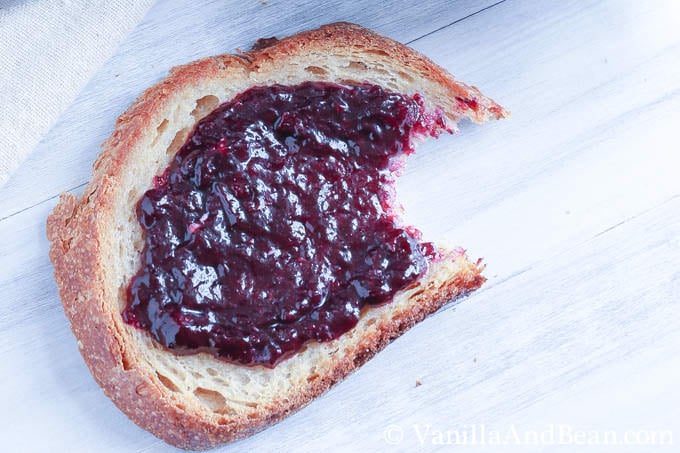
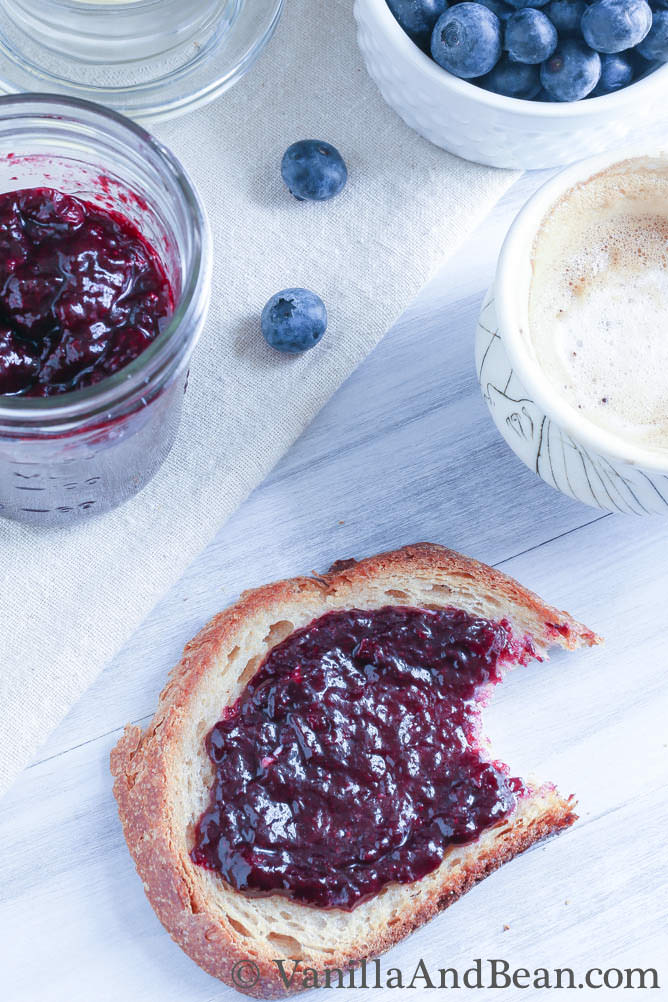
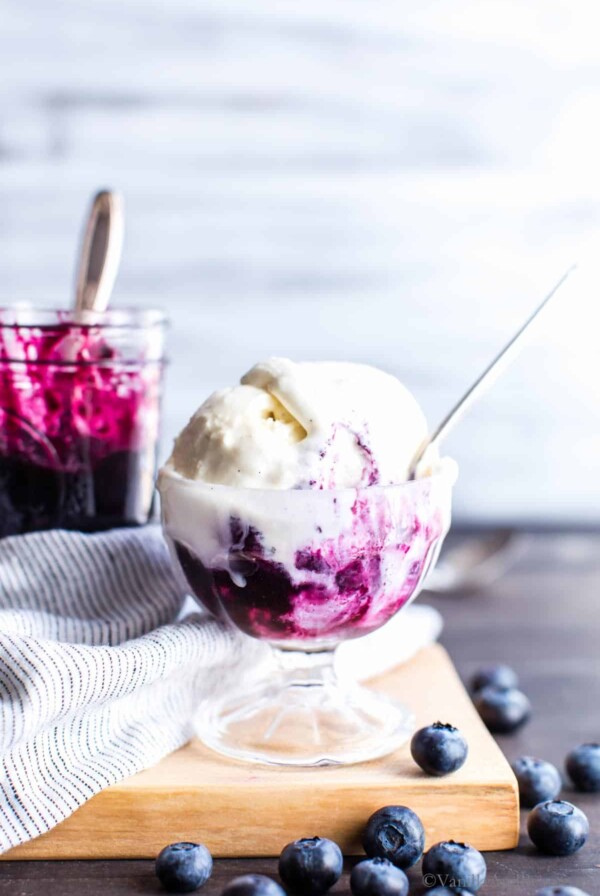
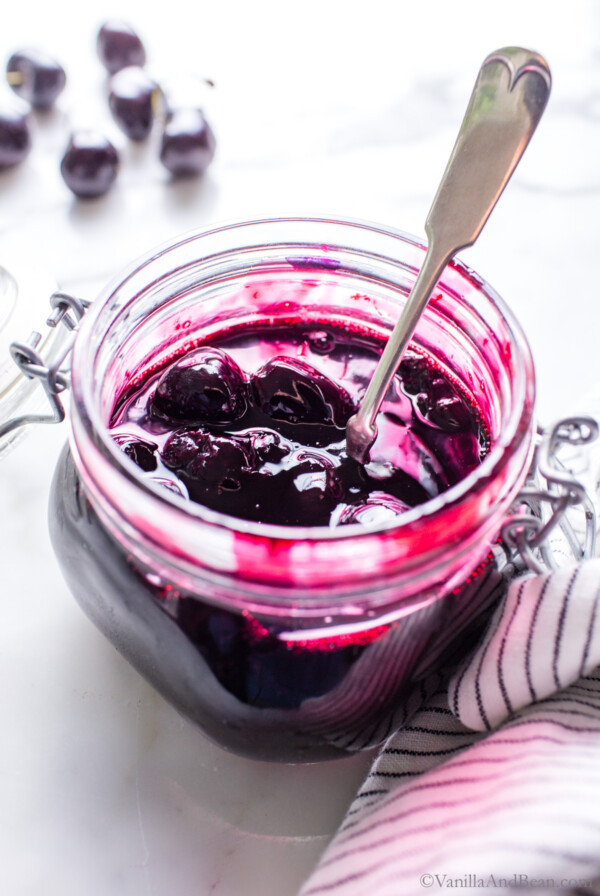
The simplest of all berries to make jam with, Blueberry Jam is sweet, juicy and utterly delicious! With just a little pre-packaged pectin, and the proper equipment, canning this blueberry jam recipe means the freshness of summer can be had in the middle of winter. This recipe is vegetarian and vegan.
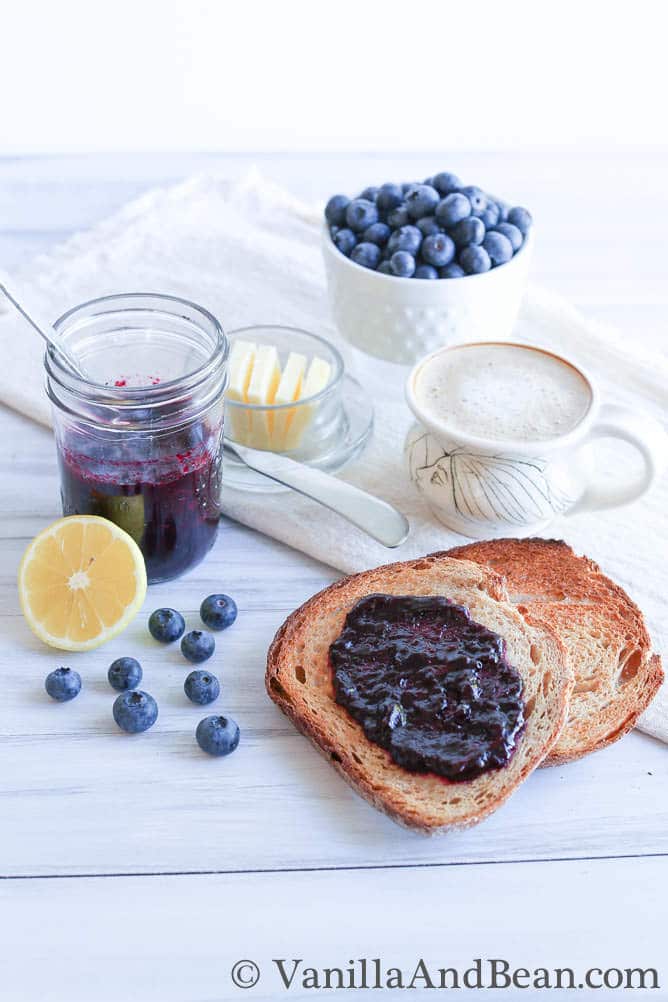
Summertime Canning
Summertime is the time for canning, pickling, and freezing its abundant fresh fruits, berries, and veggies so when cold winter days hit, there’s a little bit of Summer sunshine tucked away to enjoy.
One of my most favorite berries to jam is blueberry because of its simplicity. If you love blueberries, you are going to enjoy learning how to make blueberry jam.
With just a bit of planning and organization, you’ll have long-lasting blueberry jam well into the winter, if you can resist eating it all before then. And, homemade jam always makes a welcomed gift.
Equipment for Canning
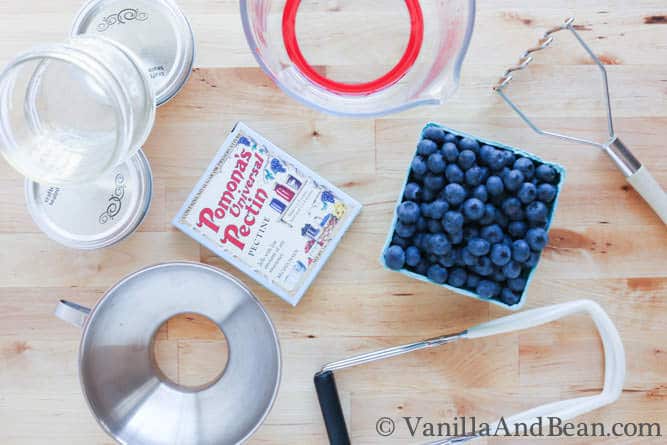
To make canning easier, I use a few pieces of special equipment, specific for canning. These are affiliate links:
- Wide Mouth Funnel – this kitchen tool sets on top of the canning jar. It has a wide rim that allows you to transfer the hot blueberry mixture into the jars without spilling it everywhere.
- Jar lifter – this tool allows you to easily lift jars out of the hot water bath without your fingers or hands coming into contact with the hot water.
- Canning Jars – I use 8oz Mason jars. Because they’re small, it allows you to use the jam up quickly, while keeping the remaining jars unopened and fresh for longer.
- Canner – use a dedicated canner or a large 10 quart stockpot fitted with a canning rack to can this recipe.
- Four Cup Measuring Glass – an essential kitchen tool, it has a large capacity for easily measuring ingredients.
- Small Potato Masher – you can use large or small here, but I find the smaller masher is easier to handle smaller projects.
For canning this blueberry jam recipe, I use to use Pomona’s pectin because the amount and/or type of sugar used can be easily adjusted to taste. I’ve typically get three batches of jam out of one package (almost 30, 8-ounce jars).
At a Glance: How to Make Blueberry Jam
Blueberry jam is one of the simplest jams to make because the berries are already stemmed, and they have tiny seeds that are almost undetectable, so you don’t have to spend time destemming, using cheese cloth or a juicer to get all the seeds out. This is a good berry to start with for new jammers!
- First, sterilize the jars and lids.
- Second, rinse the blueberries under running water.
- Third, prepare the calcium water (in the Pomona’s pectin package), and sugar/pectin mixture.
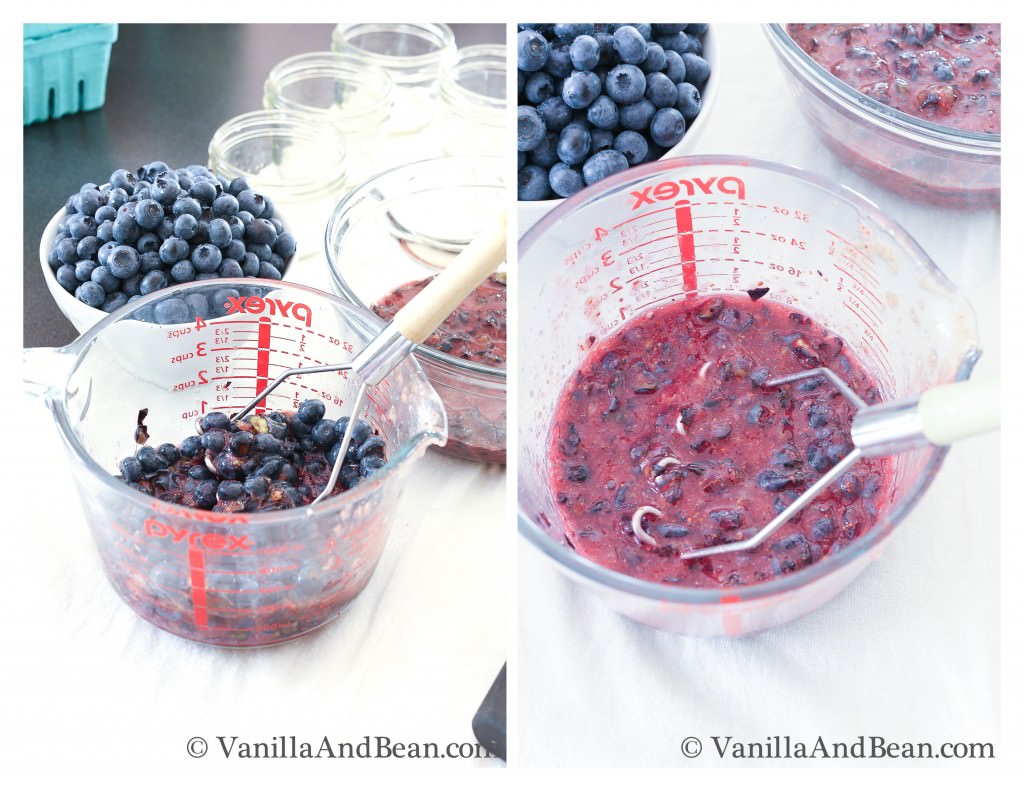
- Fourth, mash the blueberries, then cook them with lemon and the sugar/pectin mixture.
- Fifth, transfer the cooked blueberries to lidded jars.
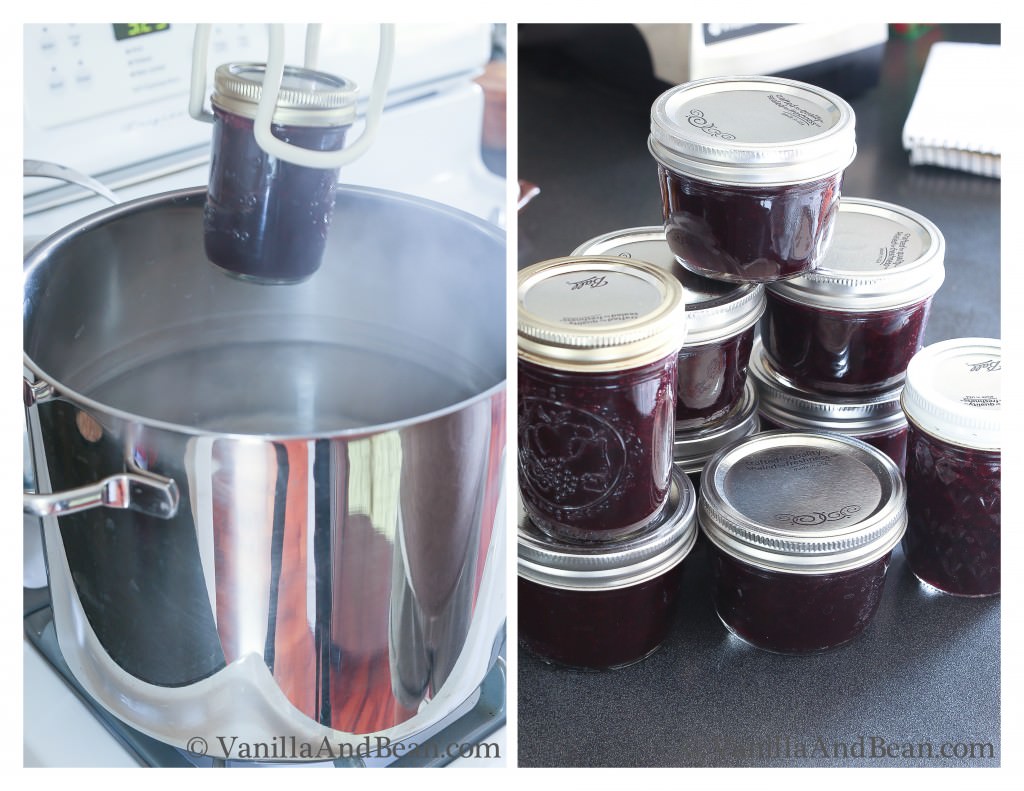
- Next, process jars in a water bath of boiling water.
- Last, remove the jars from the water bath and allow to cool.
Pro Tips
- When deciding how much sugar to add to the batch of blueberries I’m jamming, I always taste the blueberries first. If tart, I add a bit more sugar. If sweet, I add as little sugar as I can get away with. Directions for sugar adjustment come in Pomona’s Pectin package, so if you have tart blueberries, let the package insert guide your sugar decisions.
- One of the most important parts of jamming is to be organized. Mise en Place before you start and make sure you have a plenty of counter space and kitchen towels!
Blueberry Jam
Ingredients
In Pomona's Pectin Package:
- 1/2 tsp Calcium Powder, prepared with water as directed below
- 4 tsp Pectin Powder
For the Jam:
- 1/2 C Fresh Lemon Juice, about 3 lemons juiced
- 1 1/2 C Granulated Sugar
- 8 C Mashed Blueberries, about 5 pints
Instructions
- If using jars from previous canning projects, thoroughly inspect your jars for nicks and/or cracks. Even hairline cracks can result in breakage in the water bath. Discard jars that are damaged.
- Sterilize 14, 8-oz jars. The National Center for Home Food Preservation shares how. Wash new lids and bands in hot, soapy water, rinse, and set aside.
- Have ready a canner 2/3 full of water, 4-qt saucepan, ladle or stainless 1-cup measuring cup, large measuring cup (I use a 4-cup), or bowl to mash berries in, large separate bowl to hold the mashed berries, and several kitchen towels.
- While you're preparing the blueberries, keep your jars hot in the canner until you're ready to use them (you can turn off the heat if you've already sterilized the jars). This keeps the jars preheated and helps prevent thermal shock when filling and transferring them to the canner.
- Rinse blueberries in a large strainer.
- In Pomona's Pectin package, find the calcium pack. In a lidded 8-oz jar, mix 1/2 C water with 1/2 tsp of calcium powder. Mix well. This will last several months (discard if powder discolors or molds). Shake well before using. Set aside. Measure out the sugar and add 4 tsp pectin to the sugar. Mix well. Set aside. Squeeze the lemons and measure out 1/2 C of juice. Set aside.
- In the large measuring cup (or bowl), mash the blueberries. Do this in 2 C batches, otherwise, it's hard on your hands. Transfer mashed blueberries to a large bowl. Continue mashing in 2 C batches until you've depleted almost all the 5 pints of blueberries. Start measuring out the mashed blueberries and place 8 C total in the 4-qt saucepan. Mash more blueberries if needed.
- Turn the stove on to about medium high under the mashed blueberries. Add 4 tsp calcium water, 1/2 C lemon juice, and granulated sugar mixture.
- Bring blueberry mixture to a boil, stirring frequently, and scraping the corners of the pan, making sure no sugar is sticking/clumping in the corners. Boil for 1 minute. You want all the sugar and pectin dissolved before canning. Remove from heat.
- Remove the jars from the canner with a jar lifter, leaving the water behind in the canner, one jar at a time.Place the wide mouth funnel on a jar and carefully begin filling the jars with the blueberry mixture, leaving about 1/2 inch of space at the top of the jar. Slide a rubber spatula down between the jam and the inside of the far two or three times to release air bubbles. Fill all the jars, topping off the jars as the residual blueberry mixture allows. With a clean damp cloth, wipe the jar rim and threads. Place lids and rings on the jars to fingertip tightness.
- To process the jars, use a jar lifter to place them in the canner. Heat the water to a boil. You'll need at least a one inch of water to cover the jars. If needed, add more water. Process (boil) for 10 minutes.
- Wipe the jars clean and dry after removing them from the boiling water. Allow to cool at room temperature.
- The jar has sealed when you hear a "pop". Test the seal by pressing the center of the lid down. If the lid can still be pressed down, the jar has not sealed. Wait for 24 hours, and if the jar still has not sealed, store in the refrigerator and use within two weeks.
- Once the seal is confirmed, remove the band so the jar rim and band can dry. If preferred, once clean and dry, the band can be reapplied. Label the lids with the type of jam and date. Jam will keep for up to a year stored in a cool, dark place.
Notes
Nutrition
Nutrition is provided as a courtesy and is an estimate. If this information is important to you, please have it verified independently.
Made it? Leave a comment below!
The most helpful comment may include recipe rating, feedback, any modifications or helping other commentors.


Can I use frozen organic blueberries for the your blueberry jam recipe?
Any adjustments needed?
Thanks.
Hi Margaret! I’ve only made this jam using fresh blueberries, so I’m not sure how it would turn out or what necessary adjustments would be necessary if using frozen blues.
I know it’s been months since this comment was made, but in my experience, using frozen berries doesn’t require any recipe changes. In fact, I’ll often freeze berries during harvest time when it’s hot and I’m busy in the garden, and then make jam in the cooler months.