
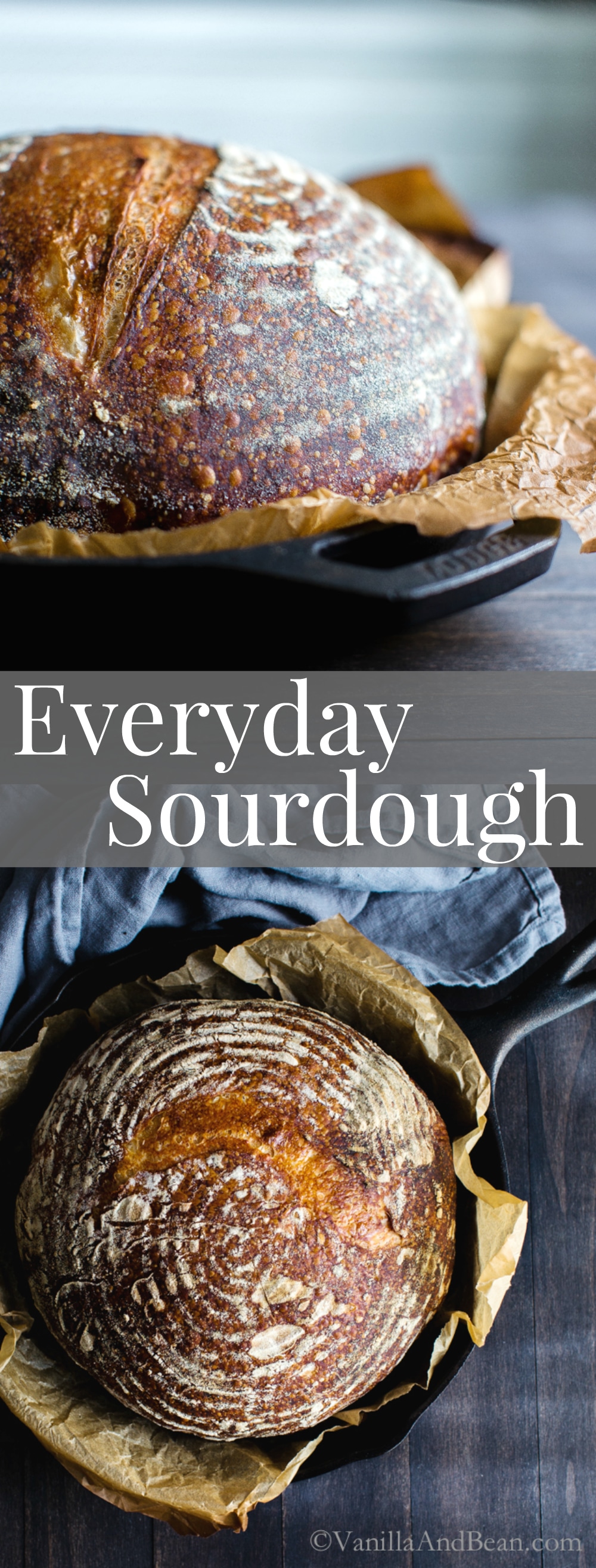
New to homemade sourdough bread or simply improving your craft? Everyday Sourdough from Emilie Raffa’s book Artisan Sourdough Made Simple is a fabulous starting point for new sourdough bakers or simply to hone your sourdough skills. DIY a Sourdough Bread Starter to create a beautiful wild yeast sourdough loaf!
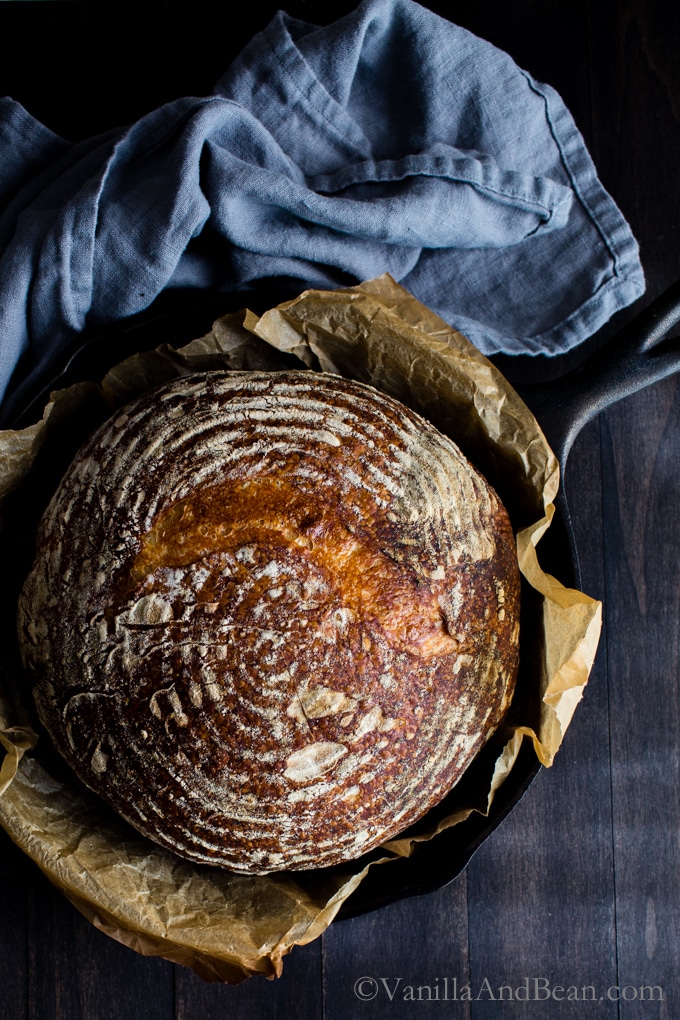
I received a copy of Emilie’s book and am happy to be able to share it in this space. All opinions are my own.
A Sourdough Journey
Prior to going to pastry school, I’d never tried making homemade sourdough bread, although I had read books about it. Intimidated by the terminology, flours, feeding schedules, shaping techniques and knowing, I never took the time or had the courage to dive in.
During pastry school I worked with yeasted bread until I could make it in my sleep. But it was naturally leavened sourdough that mystified me. Only having a few opportunities in school to work with it, I never really gained the hands on knowledge I’d anticipated. So, I continued to read about it, gleaning little nuggets that would some day make me the bread baker I wanted to be.
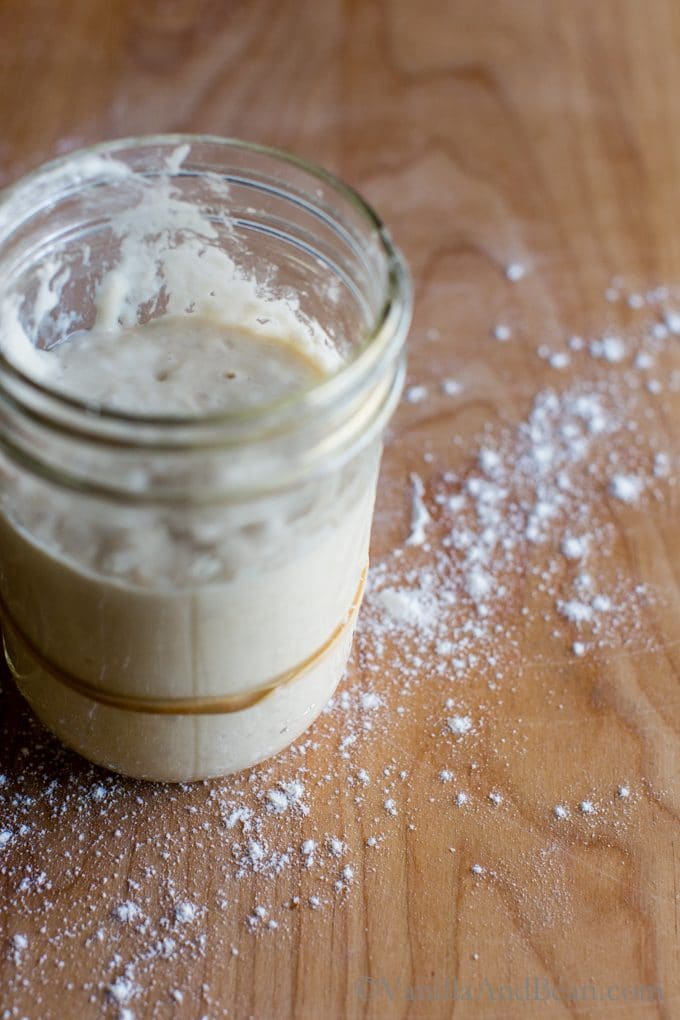
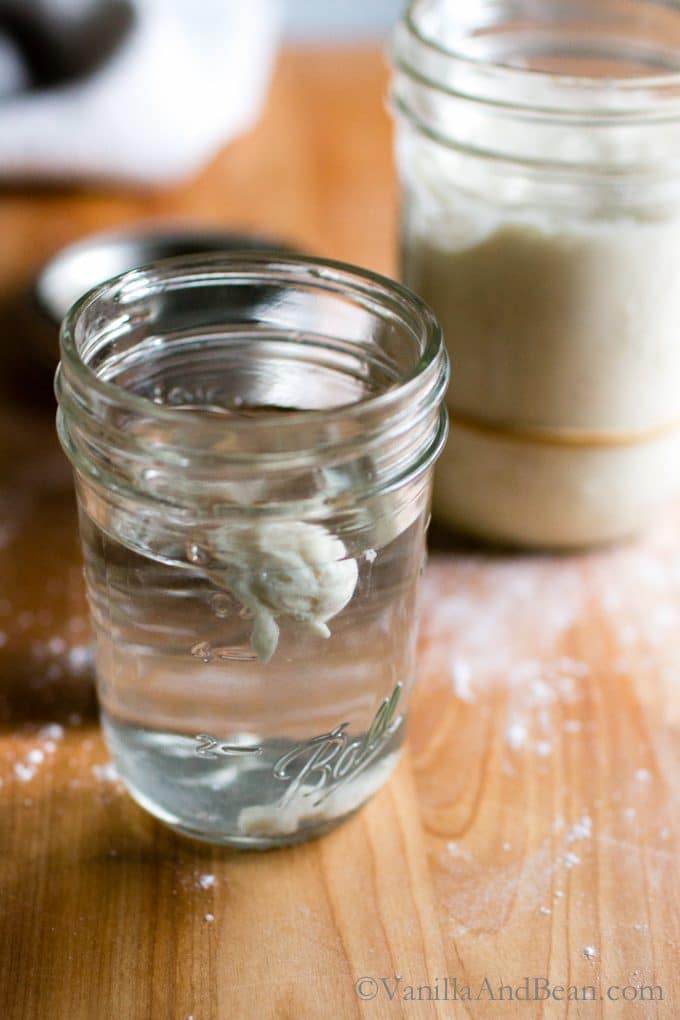
A friend of a friend offered some sourdough starter, knowing my interest. I promptly killed it after attempting sourdough again. Then, I carried some of my mom’s starter back to Whidbey with me after a visit to Texas.
I persisted, yet…
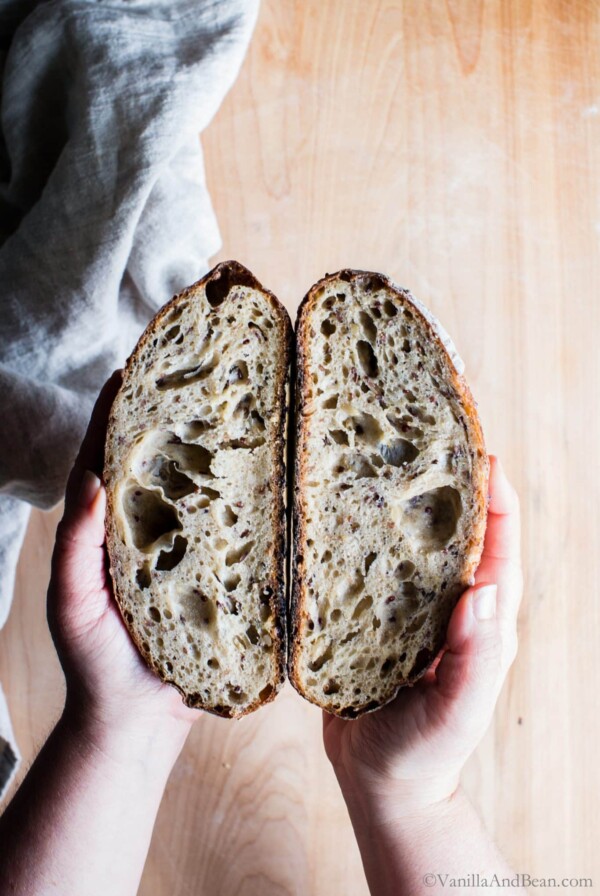
I couldn’t quite get the dough to its fluffy pillowy softness, the crumb to its tender-chewy texture, or the crust to its crusty bliss as I had tasted, seen in books, bakeries.
I tried again, still not producing the loaf of my dreams. Why is this SO hard?
I gave up sourdough baking early last winter with the hopes of starting again this fall.
Sourdough Success!
With the help of Emilie Raffa’s book Artisan Sourdough Made Simple, I am a sourdough baker! When I heard she was publishing a book on her sourdough method, I knew it would be my best chance yet to finally learn how to make the perfect loaf. I’ve been following Emilie’s blog, The Clever Carrot, for a while now.
After diving into sourdough again using Emilie’s thorough and approachable new book and in a short period of time, I can confidently say,
I am a sourdough baker.
Making everything from Sourdough Sandwich Bread, Sourdough Pie Crust and Homemade Sourdough French Toast to this simple Buttery Sourdough Discard Cornbread recipe.
And, you can do it too!
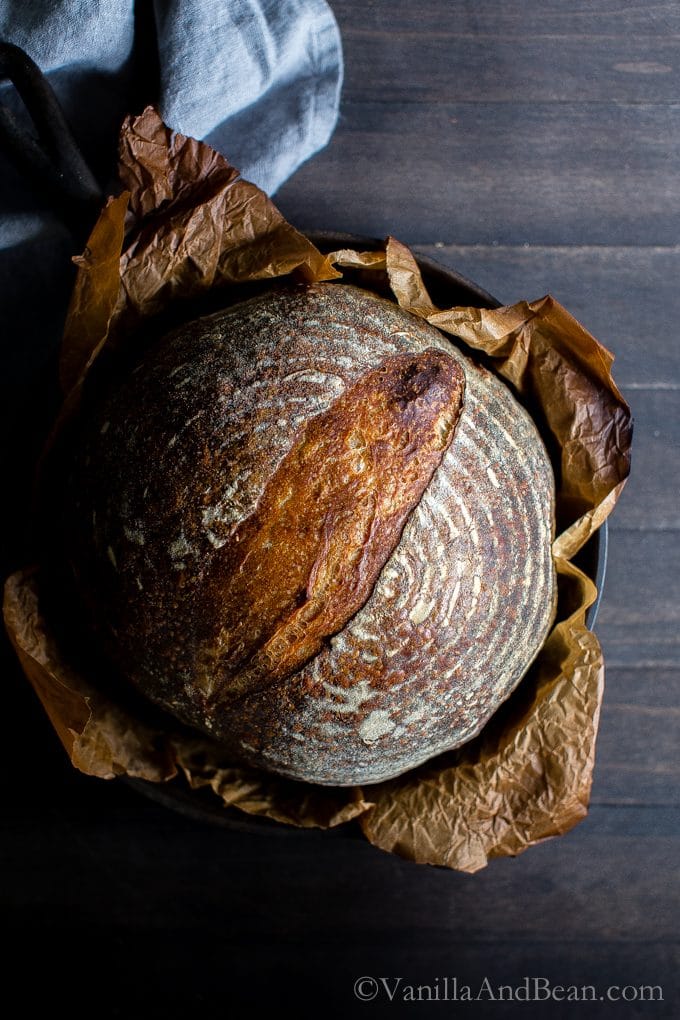
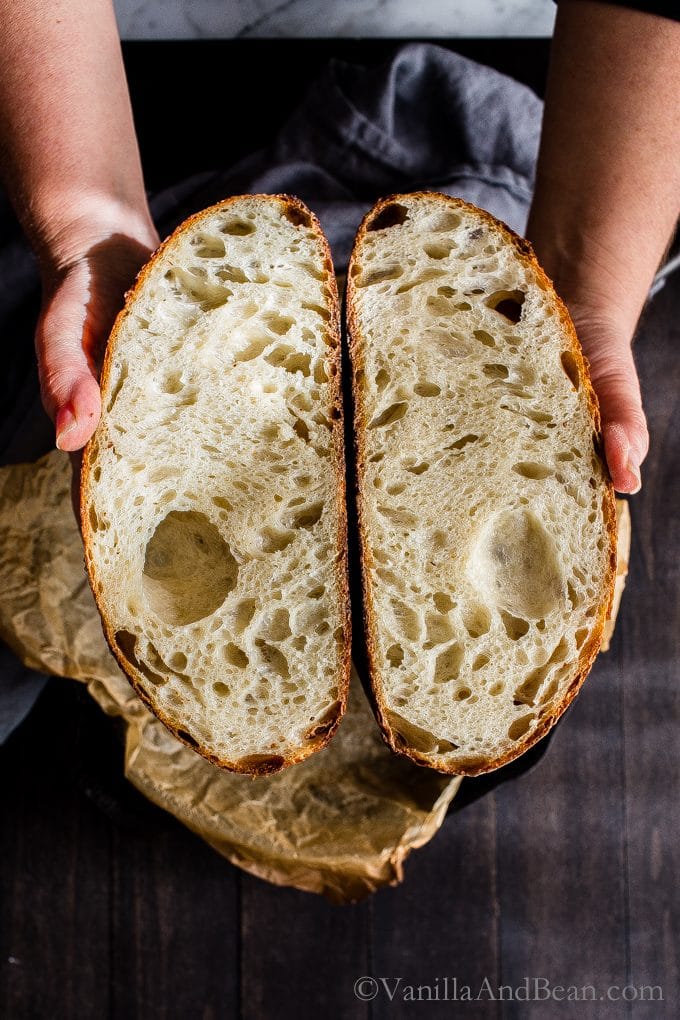
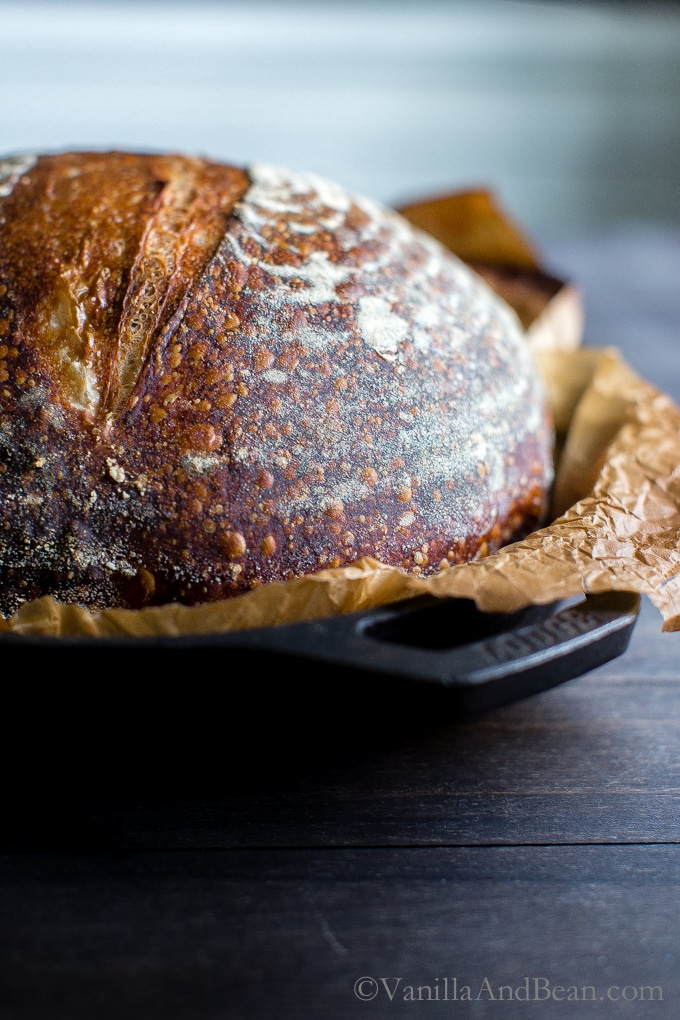
An Essential Resource
Emilie’s book is for the beginner or more advanced sourdough baker. So if you’re just starting sourdough, intrigued or have been baking for a while, this book is for you. Her recipes are approachable, creative, completely mouthwatering and clearly written for success. Her photography and gentle nudges will inform and inspire you.
________________________
Looking for a delicious Multigrain Sourdough Bread recipe to challenge your bread baking prowess? Check out this reader favorite Seeded Multigrain Sourdough Bread.
My Sourdough Toolkit (affiliate links):
- 7 Quart Dutch Oven
- 10″ Cast Iron Skillet with Deep Dish Skillet for a lid
- Bench Scraper
- Parchment Paper
- Digital Food Thermometer
- Lame – for scoring the dough
- Banneton(s)
- Digital Scale
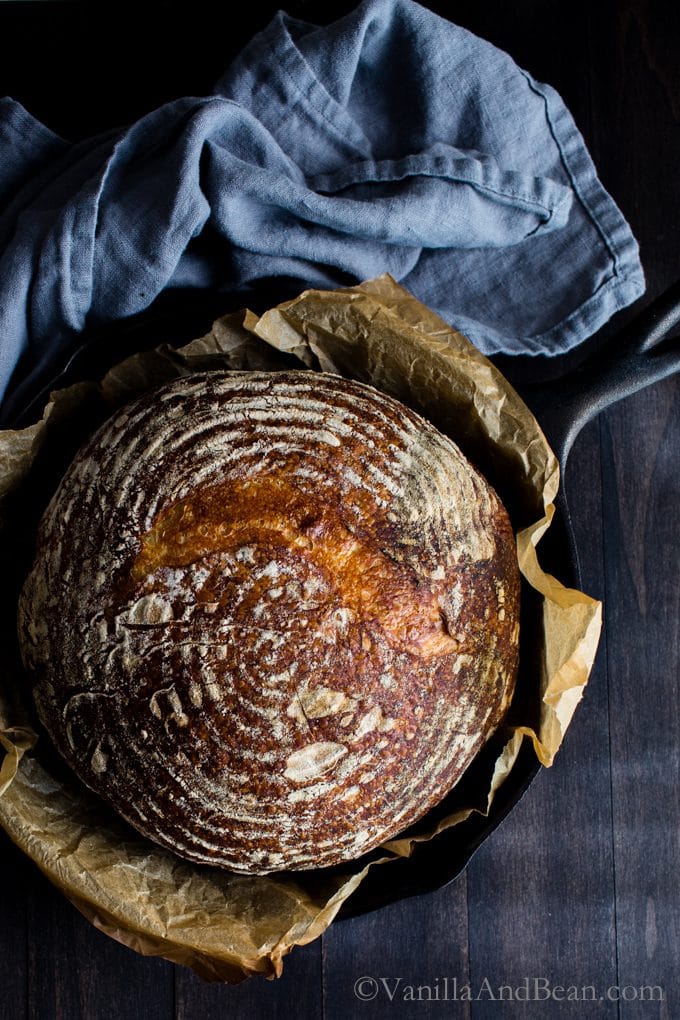
Emilie’s Everyday Sourdough Recipe
Ingredients
- 1/4 cup (50g) Sourdough Starter, previously fed, active and bubbly
- 1 1/3 cup + 2 tablespoons (350g) Warm Water, about 80f (26c)
- 4 cups (500g) Bread Flour
- 1 1/2 teaspoons Fine Sea Salt
Instructions
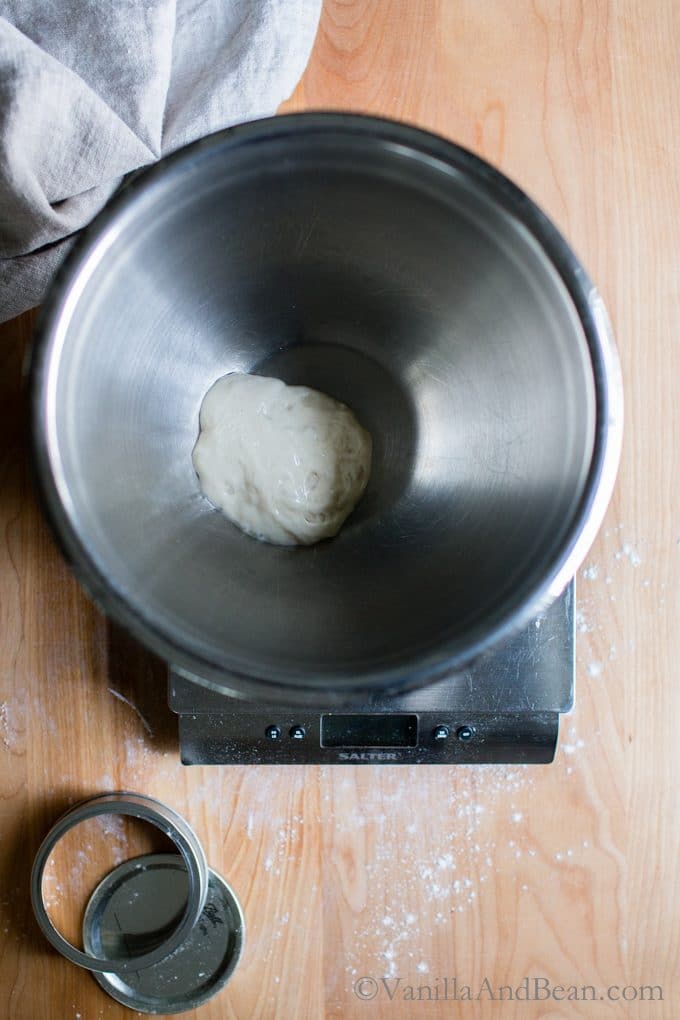
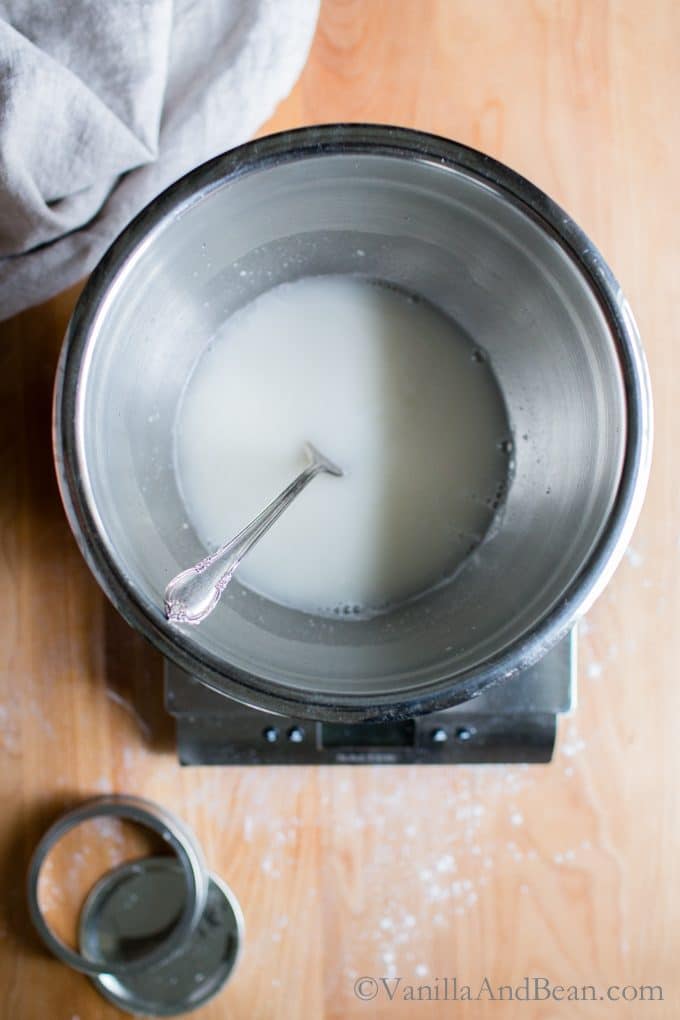
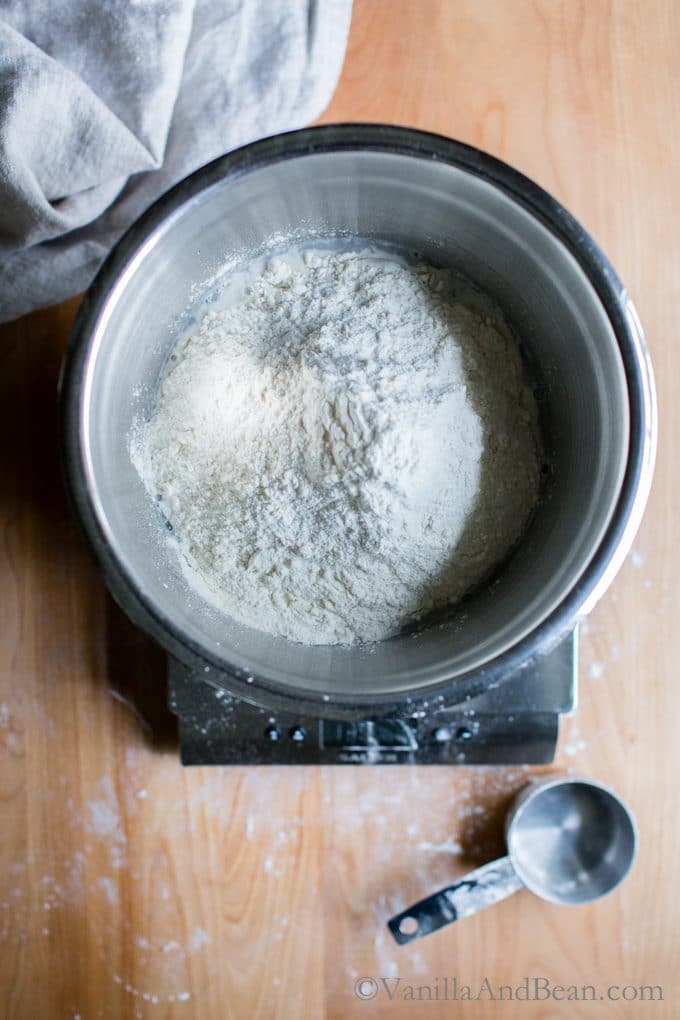
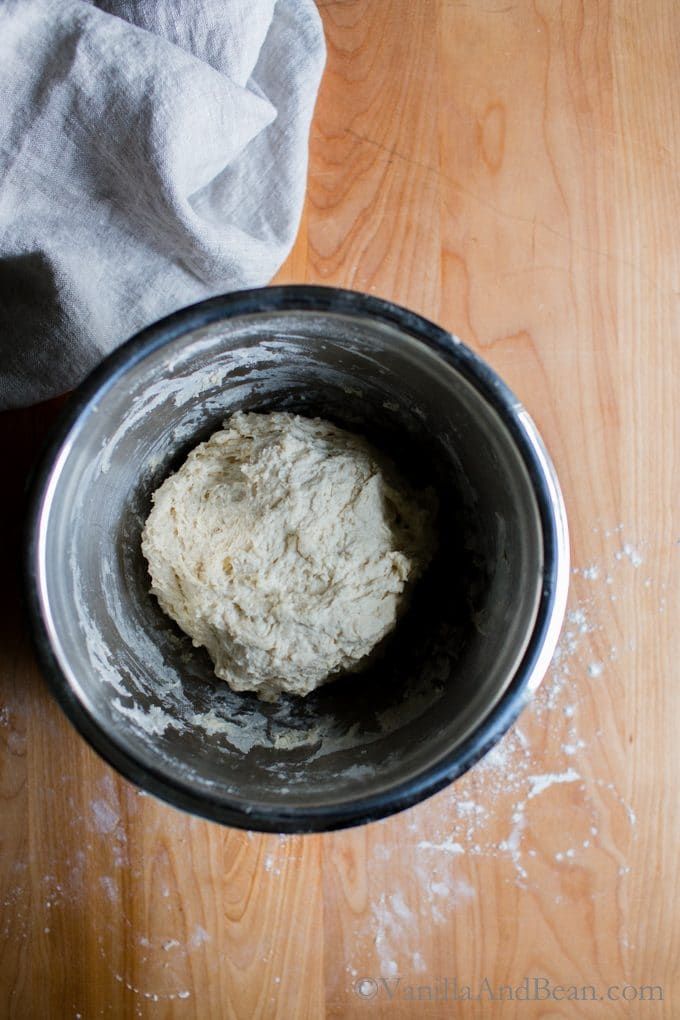
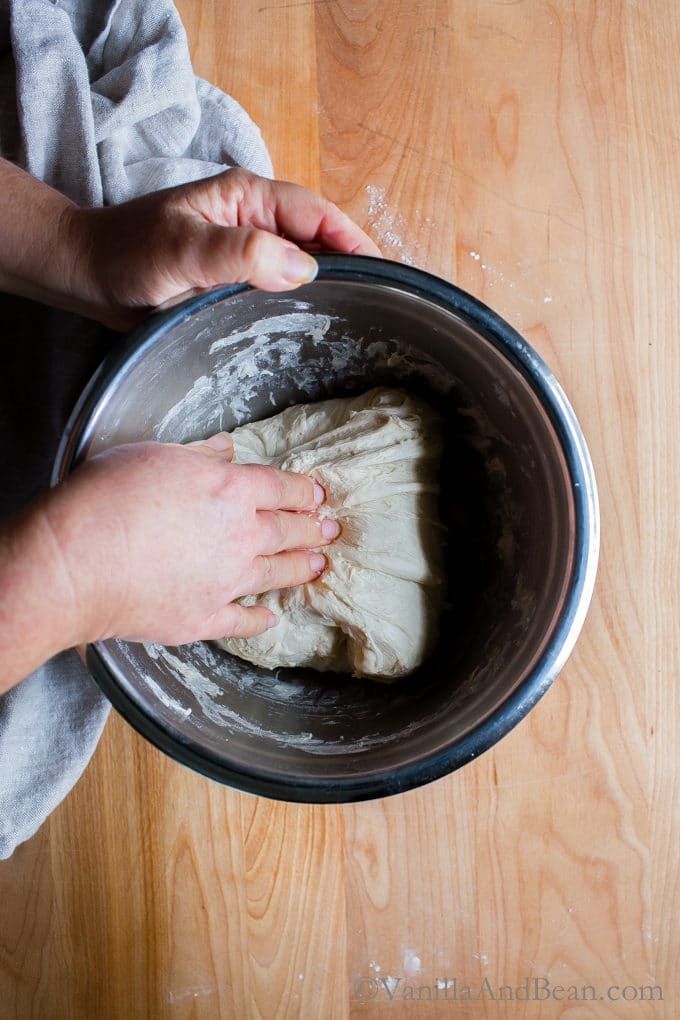
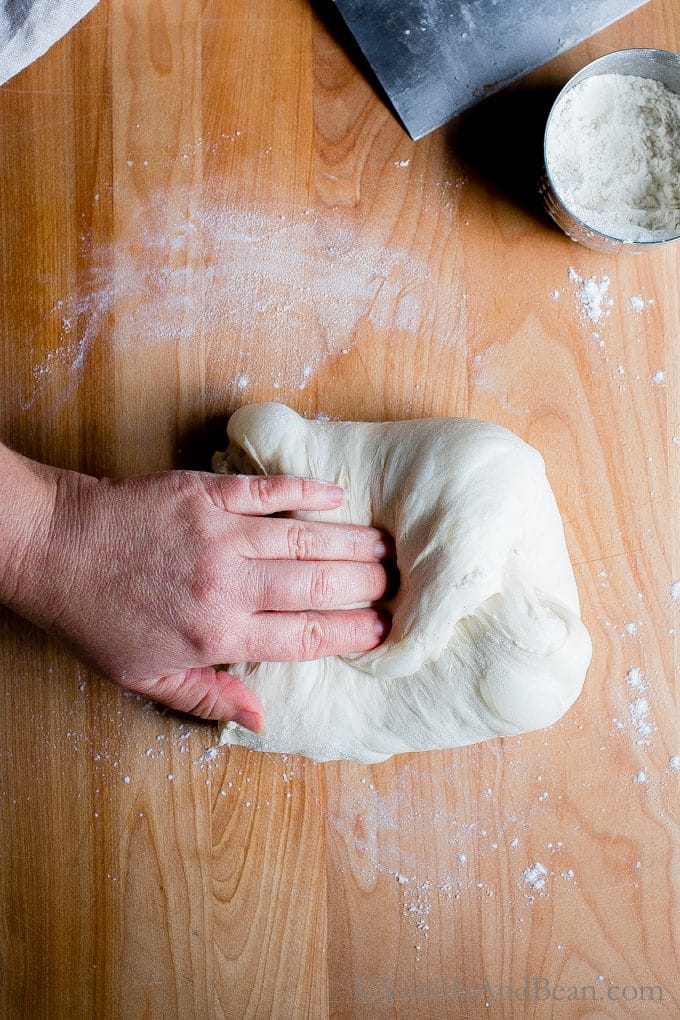
- Make the Dough: In the evening, whisk the starter and water together in a large bowl with a fork. Add the flour and salt. Combine until a still dough forms, then finish mixing by hand to fully incorporate the flour. The dough will feel dense and shaggy, and it will stick to your fingers as you go. Scrape off as much as you can. Cover with a damp towel and let rest for 30 minutes. Replenish your starter with fresh flour and water, and store according to preference. After the dough has rested, work the mass into a fairly smooth ball. To do this, grab a portion of the dough and fold it over, pressing your fingertips into the center. Repeat, working your way around the dough until it begins to tighten, about 15 seconds.
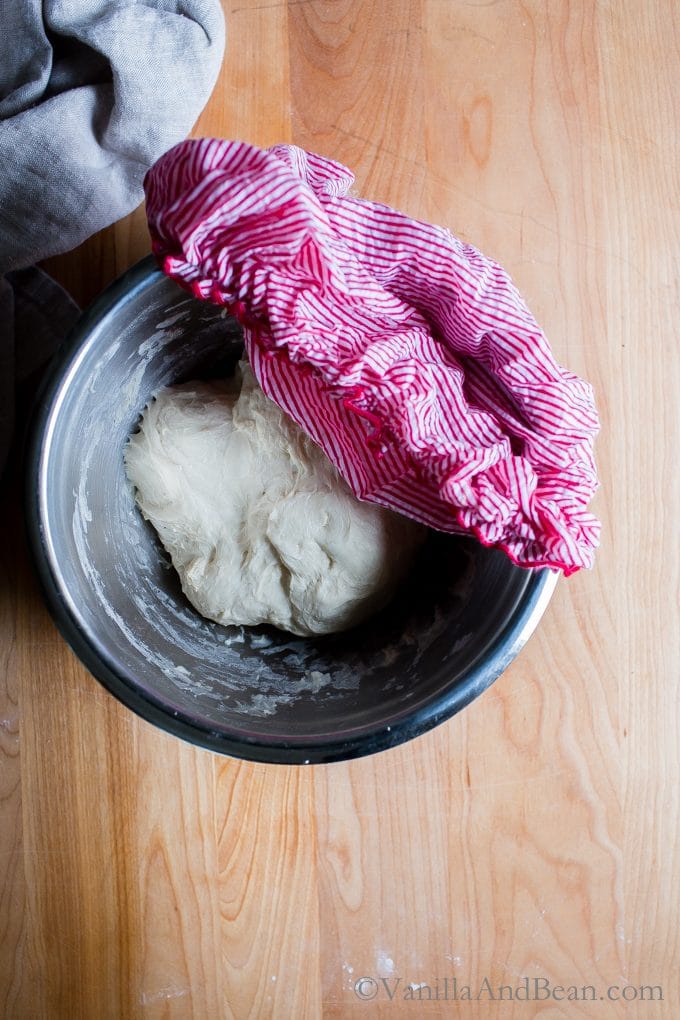
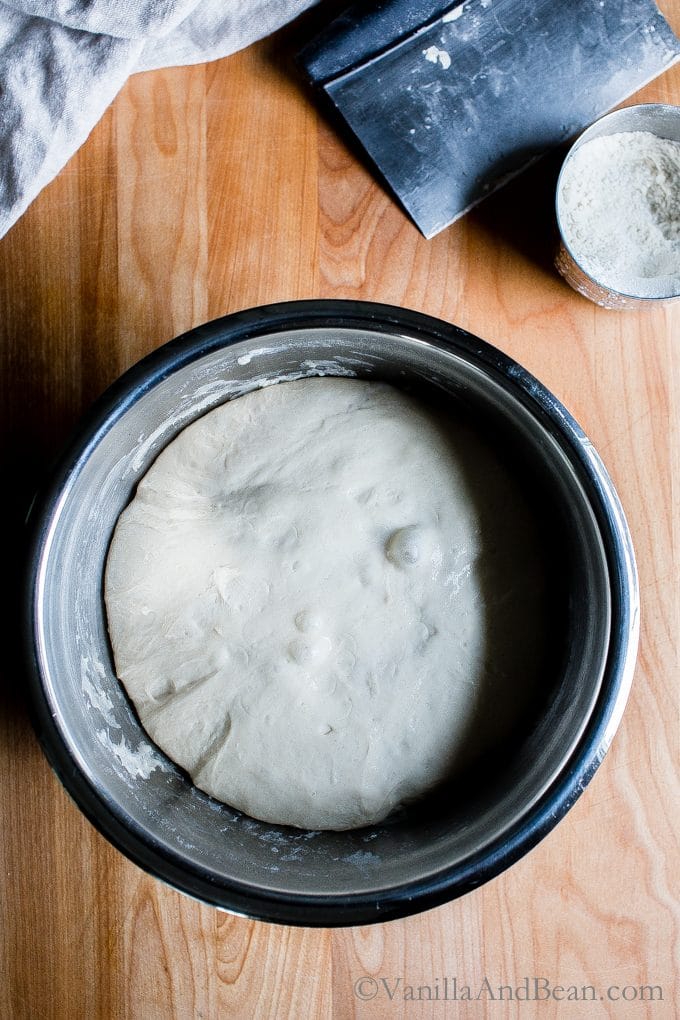
- Bulk Rise: Cover the bowl with a damp towel and let rise overnight at room temperature. This will take about 8-10 hours at 70F (21C). The dough is ready when it no longer looks dense and has doubled in size. (Traci's Note: Mine generally takes 12-13 hours to rise, but I have a chilly kitchen!).
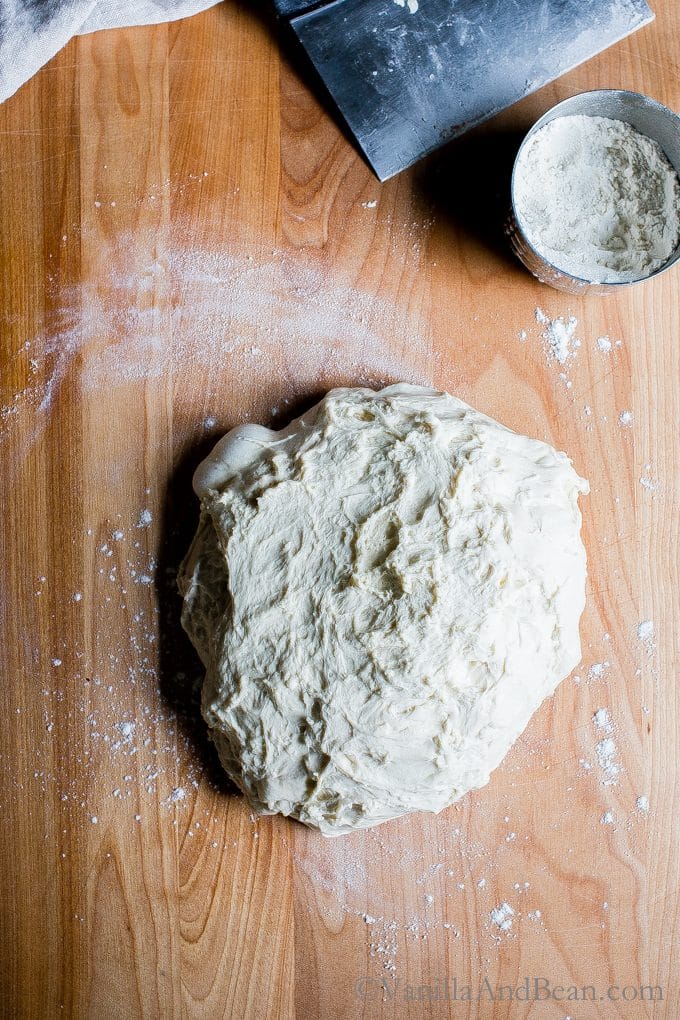
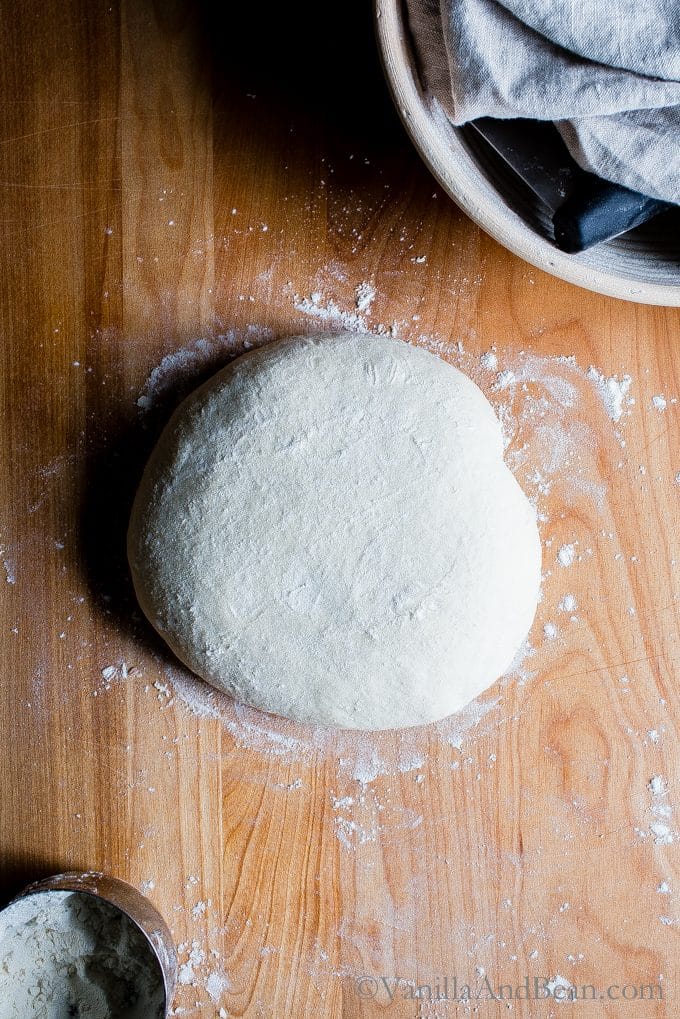
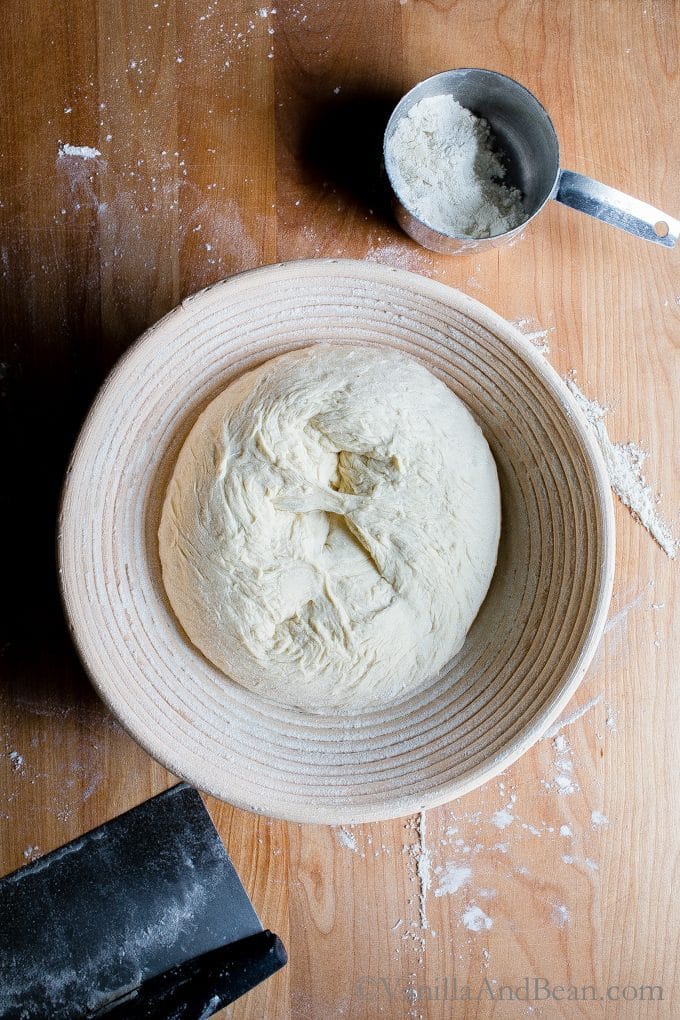
- Shape: In the morning, coax the dough into a lightly floured work surface. To shape it into a round, start at the top and fold the dough over towards the center. Turn the dough slightly and fold over the next section of dough. Repeat until you have come full circle. Flip the dough over and let rest for 5 to 10 minutes. Meanwhile, line an 8-inch (20cm) bowl with a towel (or use a banneton) and dust with flour. With floured hands, gently cup the dough and pull it toward you in a circular motion to tighten its shape. Using a bench scraper, place the dough into the bowl, seam side up.
- Second Rise: Cover the bowl and let rest for 30 minutes to 1 hour. The dough is ready when it looks puffy and has risen slightly but has not yet doubled in size. Preheat the oven to 450F (230C). Cut a sheet of parchment paper to fit the size of your baking pot leaving enough excess around the sides to remove the bread. **UPDATE (5.20)** Place a sheet pan on an oven rack directly under the oven rack you'll be baking the bread on. This protects the baking vessel from the intense heat of the oven and helps prevent a too-dark or burnt bottom. (See notes for more information).
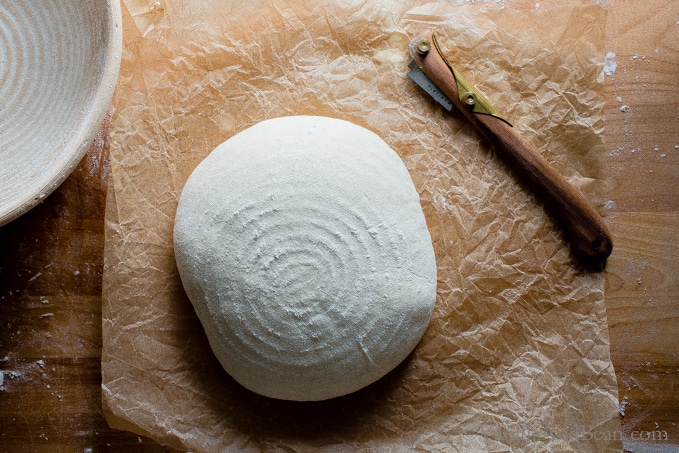
- Score: Place the parchment over the dough and invert the bowl to release. Sprinkle the dough with flour and gently run the surface with your hands. Using the tip of a small, serrated knife or a razor blade, score the dough with a cross-cut pattern about 1/3" (8mm) deep and about 2-3" (5-7cm) on the top or any way you like. Use the parchment to transfer the dough to the baking pot.
- Bake: Bake the dough on the center rack for 20 minutes, covered. Remove the lid and continue to bake for 30 minutes. Then, carefully remove the loaf from the pot and bake directly on the oven rack for the last 10 minutes to crisp the crust. (To check if the bread is ready, check the internal temperature of the loaf. It should read between 190F-205F when done.) When finished, transfer to a wire rack. Cool for 1 hour before slicing. Sourdough is best consumed on the same day it's baked. To maximize freshness, cool completely and store at room temperature in a plastic bag for up to one day (My sourdough is generally storing for between 3-4 days.)
Notes
Nutrition
Nutrition is provided as a courtesy and is an estimate. If this information is important to you, please have it verified independently.
Made it? Leave a comment below!
The most helpful comment may include recipe rating, feedback, any modifications or helping other commentors.



Thank you so much for this! I’ve been trying the Tartine method and coming up short but the first time using your recipe and it worked. It was a really warm day so the bulk rise was quicker and not as much sour taste. When doing a bulk rise in the fridge, are you waiting for the dough to double in size like when rising at room temperature? I always use that as a gauge to know when it’s ready but not sure if that’s how it will look in the fridge or not. Hope that makes sense.
Hi Sabrina! Thank you for coming back and leaving a note. Warm days can really speed up the bulk. When bulking in the fridge, I do wait for it to double in size. However, most of the time, I don’t have the patience, so I bulk overnight in the fridge, then pull it in the morning where it warms up and doubles a little quicker. Doing it this way too, makes it easier to shape. I hope this helps Sabrina! Here’s to good bread!
I live really really far from civilization. My options for a baking vessel are an 8 in iron skillet or a 12 in iron skillet. What would be the best option?
Hi Jessica! Either one will work! If a deep dish/iron lid is unavailable, then leave the skillet uncovered. Use the other skillet to place on the rack below the baking vessel to pour boiling water in. This will create a steam environment in the oven, much like a lidded vessel would do. Just don’t spill any water on the glass of the oven else it could shatter (lesson learned the hard way here). I hope this helps and you bake the bread of your dreams!
Hey Jessica… thinking more about this, I would use the 12in for the bread. I’m thinking the 8″ would be too small for proper oven spring to occur and the bread shape would be off. Go with the 12″ for baking!
Thank you! Thank you! Thank you! Finally, a sourdough recipe that is simple and works. First attempt was perfect. Made another to see if it was a fluke and the 2nd loaf was also perfect. I’m going to try a longer rise in the fridge next time to develop more sourness. Thanks again!
Hooray John! Way to go YOU! Thank you for giving the recipe a go and coming back and leaving a note. I’m working on the sourness thing too in the exact same way. An extra loooong bulk ferment in the fridge! Please let us know how it goes for you!
I’ve been trying to make sourdough from a recipe that is way too complicated, so I’m glad to find this one! I’m looking forward to giving it a try. For the starter, do you have a particular recipe or will any starter recipe work with this?
Hi Rachel! This recipe took my sourdough skills to a whole new level. Emilie’s method is so simple and approachable! For the starter, I use a mixture of 60g discard + 60g water + 60g All Purpose Flour. I can’t say if any starter will work because I’ve only used my own, but it should. If you’re looking for a new sourdough starter recipe, I recommend King Arthur Flour or The Perfect Loaf I hope this helps, Rachel! Please let us know how your sourdough turns out!
I’m sorry I don’t know how to leave a comment without it being on another thread. Can this proof in the fridge over night and until five pm the next day? I started it not realizing the time frames. I’m clearly a newbie. Thank you!
Hi Kara! The comment box is at the very bottom of the comments… I know, that’s a long way to scroll (I need to change its location – thank you for reminding me!). For proofing, I’m afraid that would be an extra long proof. If you said bulk ferment, I’d say go for it. But I’ve never proofed in the fridge for that long. It’ll be an experiment! Let us know how it goes!
Hi,
I’ve tried this recipe twice and each time the shaping has gone awry. The initial mixing of the dough goes well, I get the shaggy, sticky consistency that the recipes states. Then when making the initial smooth-ish ball I can see the dough tightening after a little while, I think it’s longer than 15 seconds though. After the rest overnight, the dough looks similar to the picture in your blog post. So I think everything up until the shape and second rise is going well.
Do I need to put down more flour on the surface when folding my dough into a ball and then turning it over?
Hi Brent, I’m sorry your struggling with shaping. Don’t over think that initial shaping. Just take a portion of the dough, working all the way around, and press each portion down and into the center. The surface doesn’t need to tighten at this point. Really, you’re just ‘mixing’ the dough by gently folding it. 15 seconds is all you need. It’s after the overnight bulk rise that the shaping is super important. This is where the surface of the dough should become taught. Putting more flour down prior to turning the dough out onto your work surface (after the bulk fermentation) will help you flip the dough without it sticking. When ready to do the final shaping, scrape the flour away and lightly sprits the work surface with water. This will help the dough grip your work surface and help you create a taught ‘skin’ and your round/shape the dough. Otherwise, the dough just slides around on the work surface and it’s harder to get that taught skin. I hope this helps and you create the loaf of your dreams!
I’m having the exact same issue as Brent. After mixing the starter, water, flour, and salt, the dough is very wet, sticky, and shaggy. It looks like the photos (thank you by the way!!). Instead of staying in a more solid, ball shape, it spreads out over the bottom of bowl and sticks to the bottom and sides. After the initial rest, I’m basically prying the dough off the sides of the bowl and my hands. After it’s folded over, it returns to the sides of the bowl and flattens back out. I’ve never been able to get it to that nice rounded shape or smooth look. Even after the bulk rise. :( Glad to know I’m not alone and will keep on trying!
Okay I’ve made three loaves and each time my dough is sticking to the banneton! One loaf completely ruined! What am I doing wrong? Why is my dough so Sticky? Thanks!
Oh nooo Sara! I’m so sorry to hear this. It sounds like you need more flour. Just before putting the shaped dough into the banneton, take flour in both hands and cover the entire surface of the dough in flour making sure to get the areas at the base at the dough too (that area always used to stick for me too). Don’t worry about using too much – just make sure the entire surface is covered. I’ve read some people use a 50:50 mix of rice flour and AP flour and cover the dough before putting it in the banneton; they do this because of the bread sticking. I’ve not tried it because I’ve not had an issue, but it’s something that may work for you. I hope this helps! Please let us know if this works for you.
I drank a little wine and tipsy me thought it’d be fun to try and bake a loaf with the newly acquired starter I had sitting around. Your recipe was easy enough that I didn’t mess anything up, and this morning the loaf came out pretty well! Can’t wait to try again under more sober conditions. Thanks for posting!
Hehe! Sounds like you had a little fun baking! :D So happy you’re enjoying the recipe Trisha!
Re: my previous comment, taking into account that I used only organic sprouted wheat flour in this loaf (no white or bread flour/rice flour) and it came out much lighter than I expected, I’m extremely pleased.
Oooh, I’m encouraged! I’ll have to look for sprouted wheat… thank you for your tip, Donna!
Traci, I am SO glad I found your website. While I’ve made bread for years, I’ve recently begun the trial/error adventure of sourdough starters and trying to achieve a decent loaf. After going through numerous recipes that were entitled “simple” (except for the fact that they had 15 steps, a list of utensils, I guess you had to cook under a full moon, I don’t know….lol) your Emilie’s sourdough turned out absolutely lovely last night. I don’t have all of the fancy proofing baskets, etc. but I used my husband’s suribachi as the proofing bowl and baked the bread in our donabe ceramic covered bowl. (He got these from a macrobiotic institute years ago). They worked perfectly–I heated the donabe before adding the dough on parchment. Much lighter than the others and I almost cried when I saw the gorgeous cracked/scored/darkened top crust that looked almost like a pod opening up. Thank you for posting such an easy recipe with succinct instructions. I wish I could send you a pic. :) Since this one won’t last long, I’m getting ready to start on another one. :)
Hi Donna! Thank you so much for coming back and leaving a note. Emilie would be proud… and I am thrilled for your success (I would love to see a pic – please email me!)! What a journey, right? I can relate to your feeling of joy pulling that bread baby from the oven and it’s perfectly cracked/scored/darkened top crust. Hooray! Here’s to many more perfect loaves, Donna!
I’ve been having trouble with my sourdough, but I tried your recipe this weekend and had great success! Thank you! I wish I could include an image here to show how beautifully the loaf came out. It’s bakery quality =) Just bought the book you recommended and can’t wait to make more!
I loooved reading your note, Sam! And I’m thrilled to hear of your success. You’re going to love Emilie’s book! Here’s to good bread!
I’m so glad I found your recipe! I just made this and it turned out perfect! Thanks for this perfect recipe and easy to follow instructions.
So happy to hear Jocelyn! Thank you for coming back and leaving a note. Here’s to good bread!