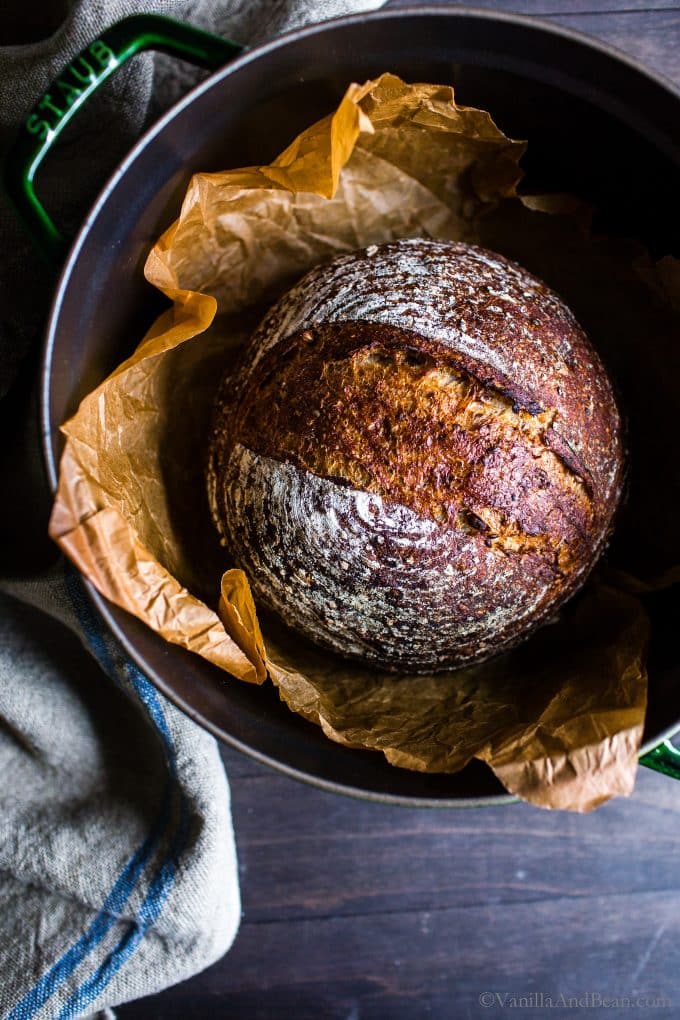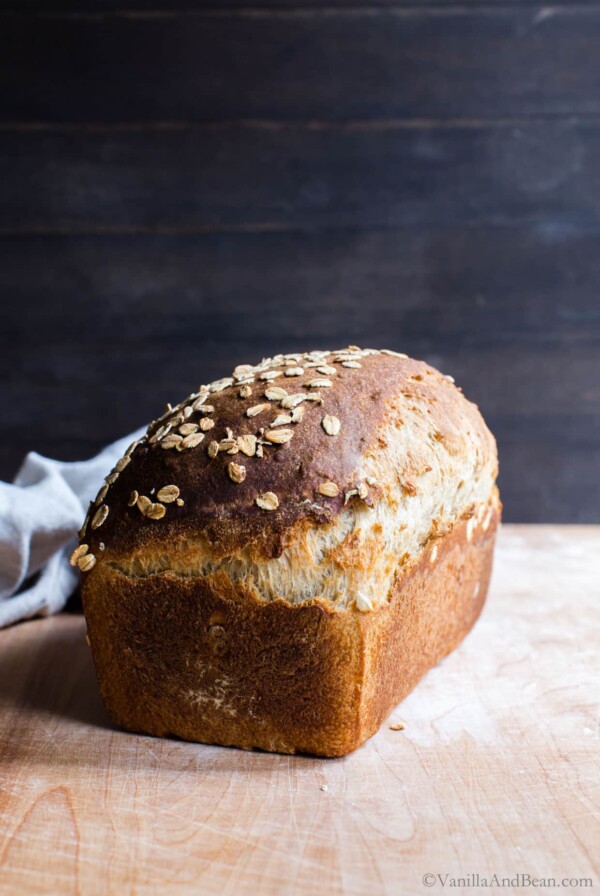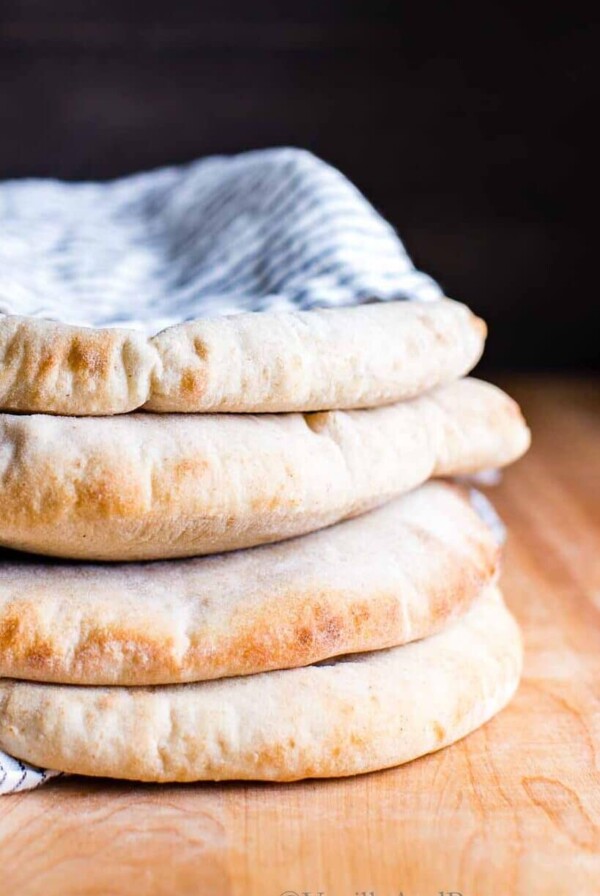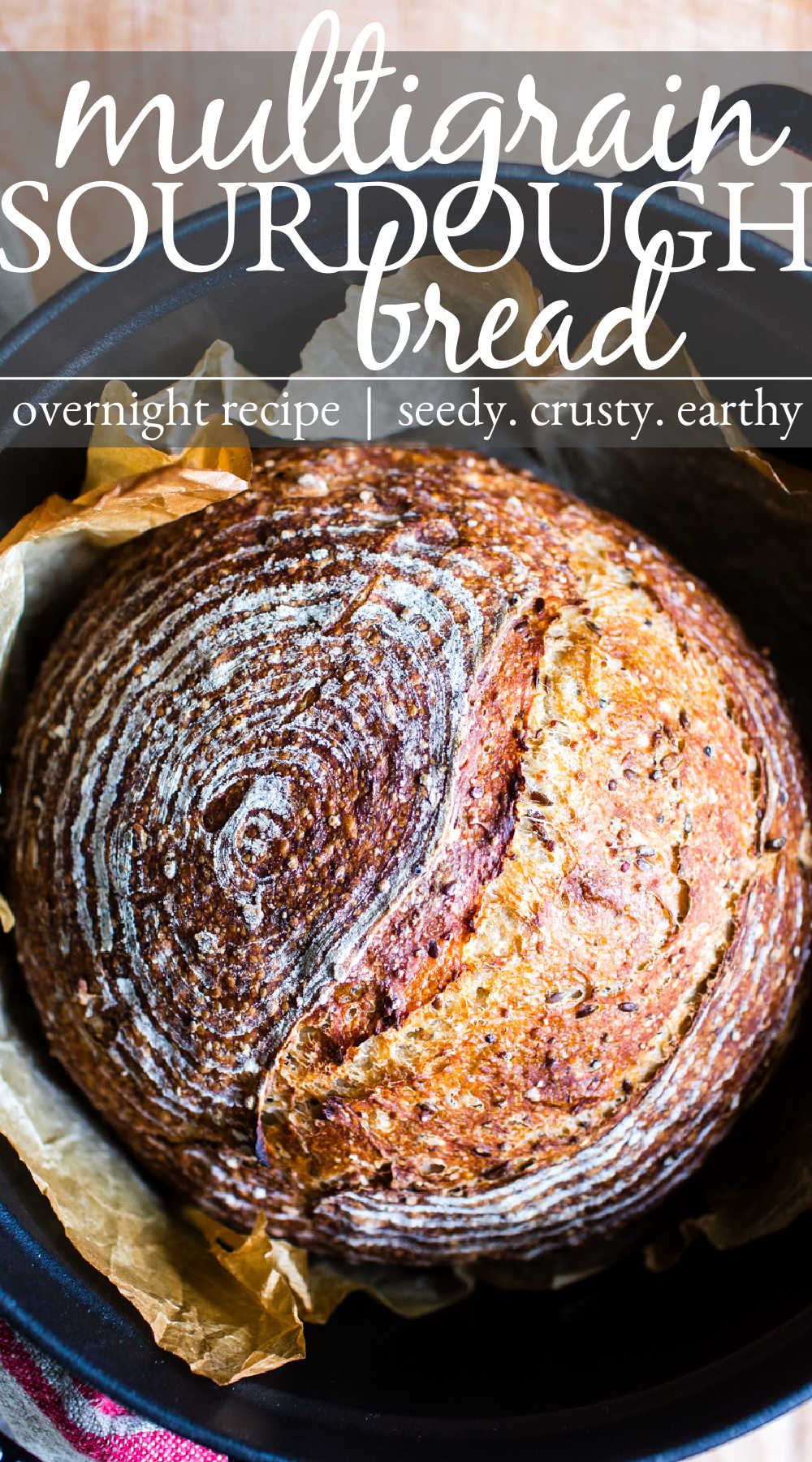
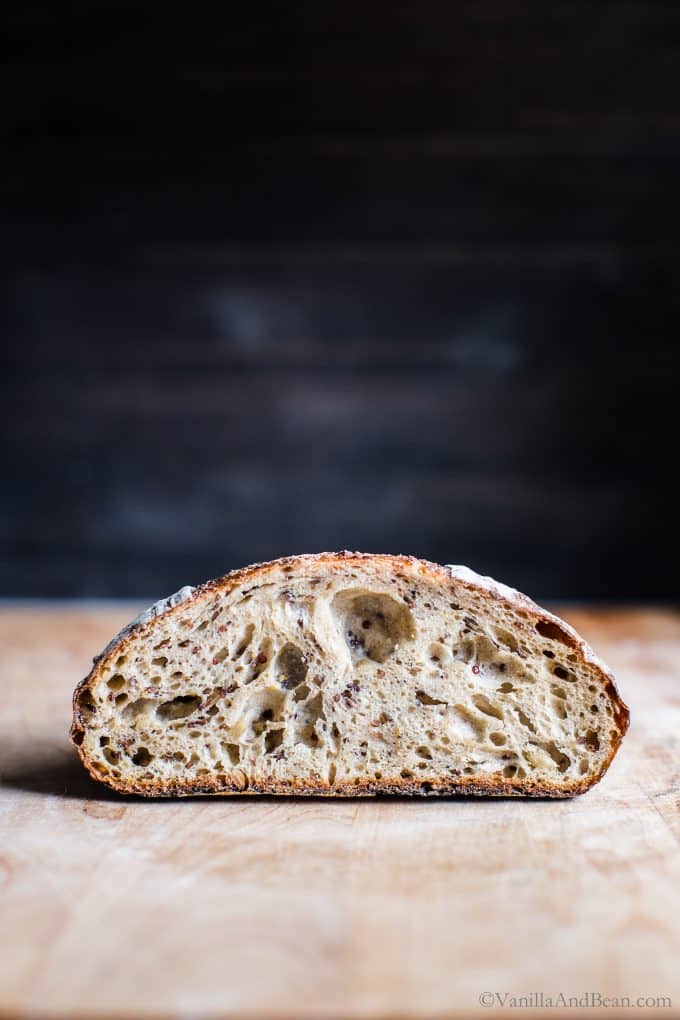
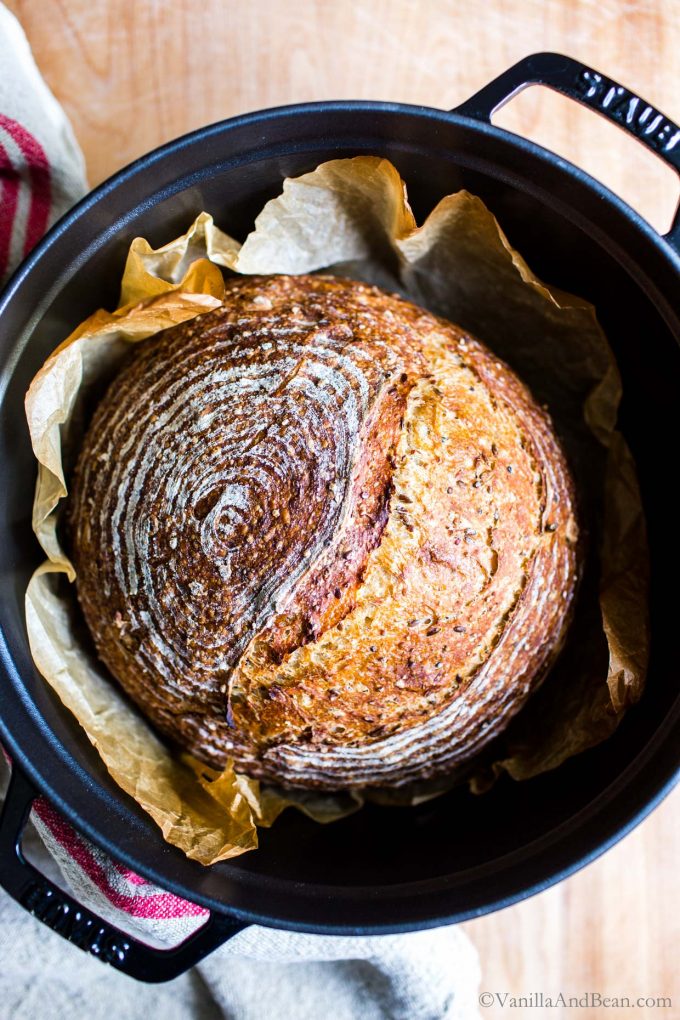
With a crunchy exterior and chewy interior, Seeded Multigrain Sourdough Bread is texture-rich with an earthy blend of grains and seeds to make a crave-worthy loaf. Readers share this is a versatile loaf and one of their favorites (see comments below). Got leftover sourdough bread? This loaf makes fabulous Sourdough Croutons and Sourdough French Toast.
Looking for a soft sandwich loaf version of this bread? Check out my Soft Multigrain Sourdough Sandwich Bread recipe.
Celebrating Multigrain Sourdough Bread
If you love Sourdough Recipes, you’ll enjoy this crusty, flavorful seedy loaf. It’s a perfect crumb for sandwiches, toast and anything you want to slather on it.
This was the first loaf I made after an eight-month gluten hiatus. I couldn’t believe how resilient the sourdough starter was after having been neglected for far too many months. After all, I was focusing my efforts on a gluten-free sourdough starter and bread recipe, which you can find here: my gluten free starter and gluten free sourdough bread.
But, I’m thrilled to be back to my glutenous ways and excited to share more sourdough recipes with you!
This Recipe Is
- has a sturdy closed crumb for sandwiches, toast and slathering all the things
- bulk fermented overnight
- quick room temperature proof
If you have sourdough starter discard, you can use it in these Olive Oil Sourdough Crackers.


Recipe Inspiration
This seeded sourdough bread recipe is an adaptation on my Yeasted Multigrain Sandwich Bread, a bread I made often before learning how to make sourdough bread. Chock full of grains, including a 10 grain cereal, oats, and quinoa, I also add sunflower and flax seeds to create more texture and flavor.
Making sourdough bread isn’t hard, but, it’s a process that takes a little planning and practice. I used to say I think about sourdough longer than it takes me to create a loaf. And while this was the case at one time, now that I know how to make it, manipulate the rise time through retardation if needed, shape and proof the dough, and bake sourdough, the process doesn’t seem so daunting anymore. Its become closer to second nature, and I don’t think about it as much. A little more brain space is always good!
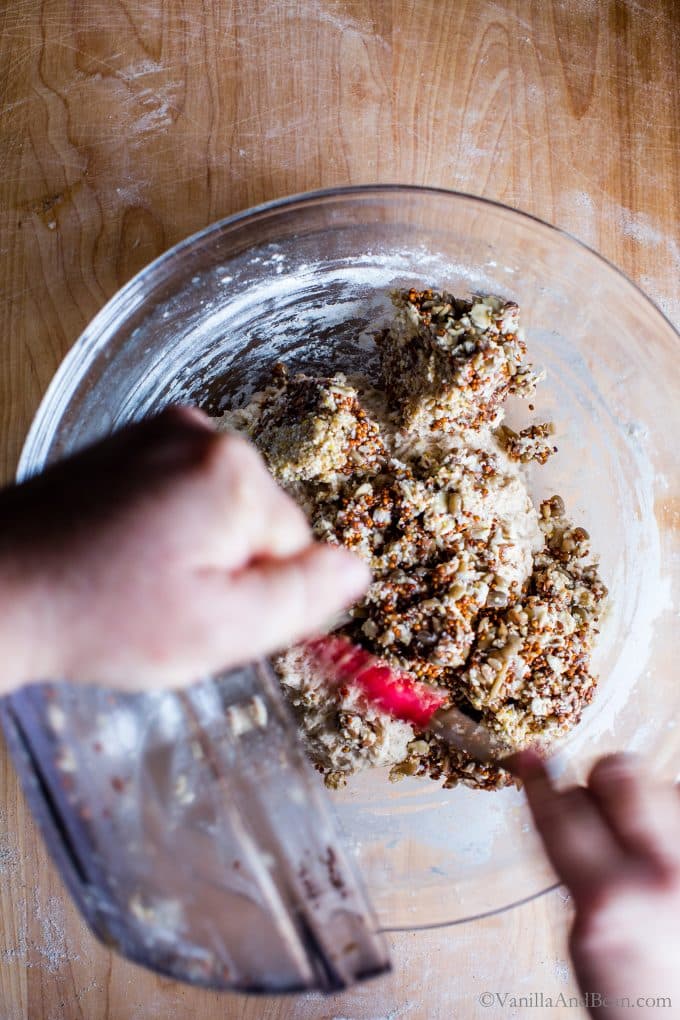
If you love sourdough recipes, check out my Sourdough Discard Recipes collection. I know you’ll find something new to love!


At a Glance: How to Make Seeded Multigrain Sourdough Bread
The process is pretty straightforward but it takes a bit of planning. I typically mix the night before and bake early on a weekend morning because I have a bit more flexibility then. While you sleep, your little dough baby is growing! In summary, here’s how to make it:
- Saturday Evening:
- prepare the soaker by pouring hot water over the mixture of seeds and grains.
- mix the dough using a previously fed, active sourdough starter, water and a mixture of bread and whole wheat flour. Rest the dough, then hand mix in the soaker.
- do a series of at least two stretches and folds with 30-45 minutes between each.
- Begin bulk fermentation overnight until dough has doubled in size.
- Sunday Morning:
- preshape the dough (optional), then shape.
- proof the dough for about 30 minutes.
- score and bake!
The aroma wafting through the house is so warm and inviting, you’ll want to rip into the bread as soon as it comes out of the oven.
How Long for Bulk Fermentation
- Bulk fermentation (first rise) time depends on several factors: ambient temperature and how active your starter is. Also, a firmer dough will take longer to rise than a well-hydrated dough.
- When fermenting at room temperature, bulk rise time in summer will generally be quicker than from winter rise times.
- An ambient temperature of 70F (21C) will require a bulk rise time of about 8-10 hours. My kitchen tends to be cooler most of the year (68F (20C), but in the winter, it’s downright cold. It’s not unusual for my sourdough to take up to 14 hours to rise during the coldest months.
How To Tell When Sourdough Has Risen Enough
- The bulk fermented (first rise) dough is ready when:
- it no longer looks or feels dense
- is jiggly when the bowl is shaken
- has about doubled in size
- you may see a few large bubbles on the surface of the dough
Cool After Baking
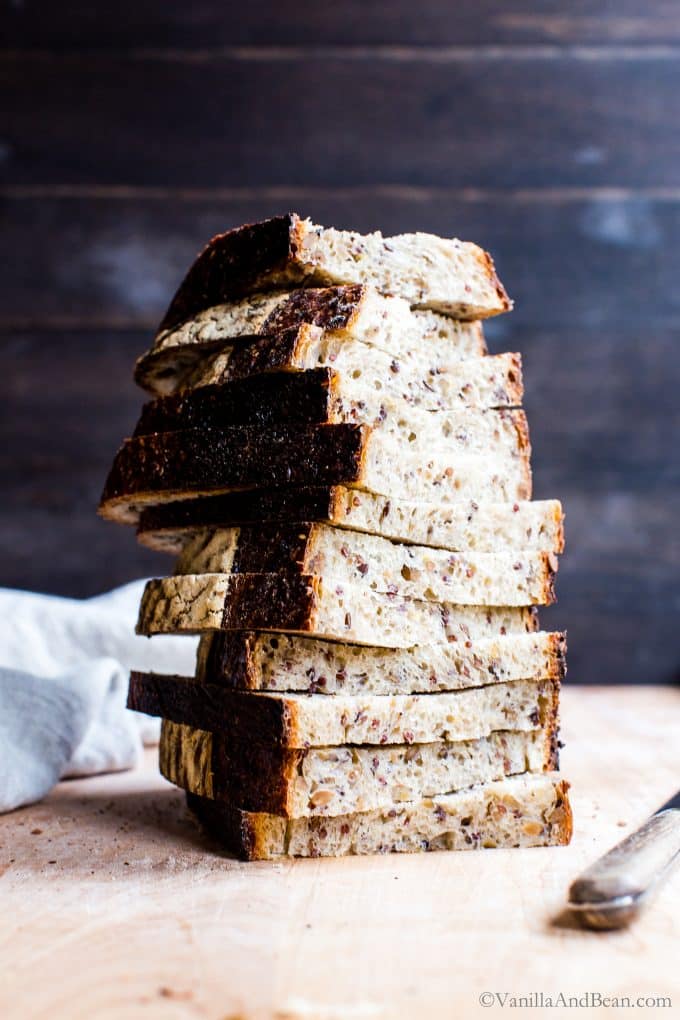
To complete the cooking process, sourdough bread needs at least an hour to an hour and a half to rest at room temperature. The crust will continue to develop as the sourdough cools as well. However, I won’t deny that I’ve ripped into a few loaves before the hour was up. It’s sublime with a slather of butter.
The Best Vessel to Bake Sourdough Bread In
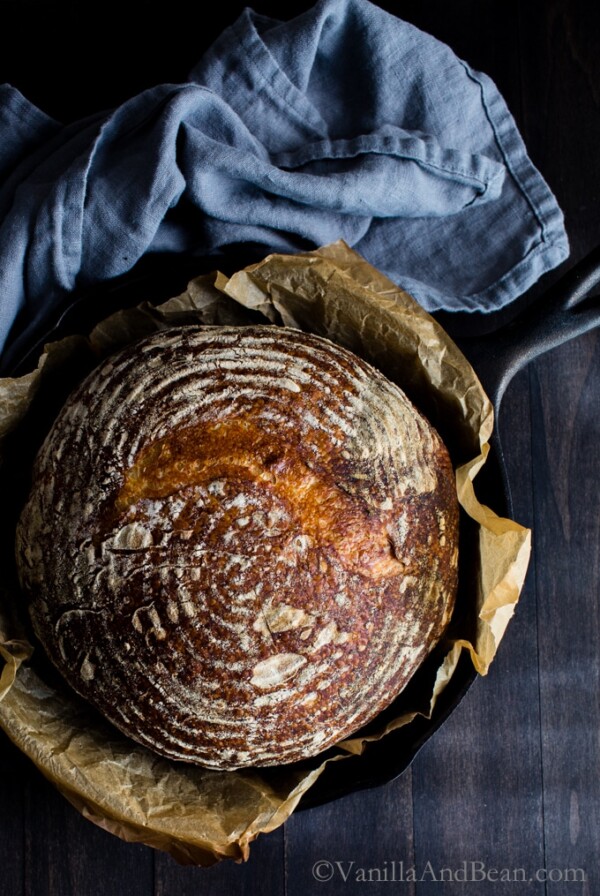
I use two vessels to bake sourdough bread. One is a 10″ cast iron skillet with deep dish skillet for a lid and the other, a 7 quart Staub Dutch oven. I recommend either or both, but I’ve noticed the Staub bakes the bottom of the bread darker than the cast iron, sometimes it’s burnt. This may have to do with the vessels’ differing materials.
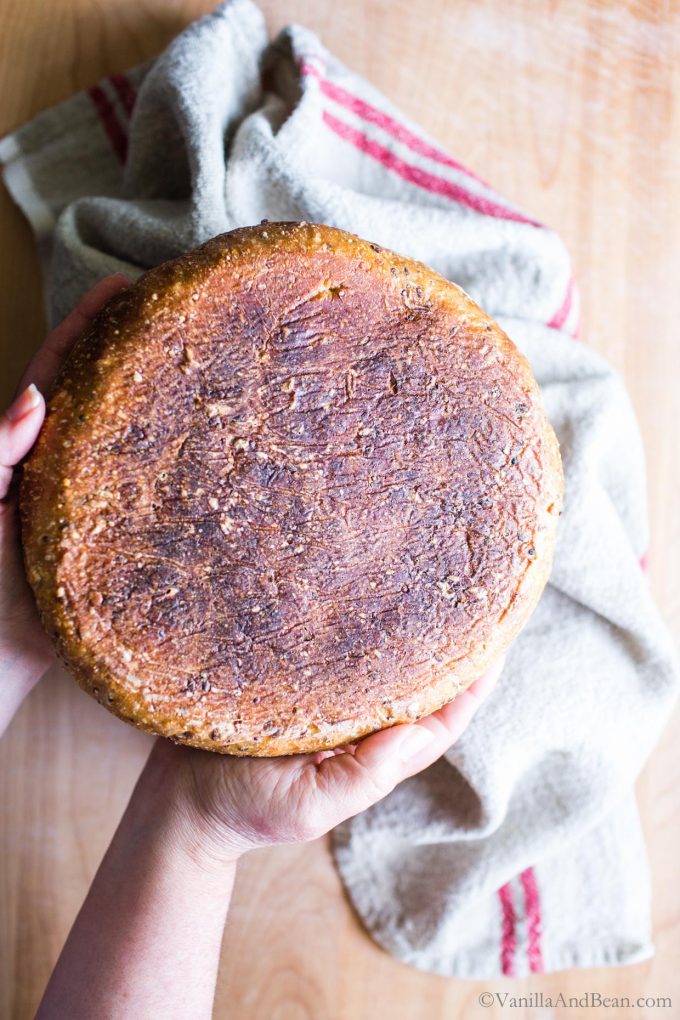
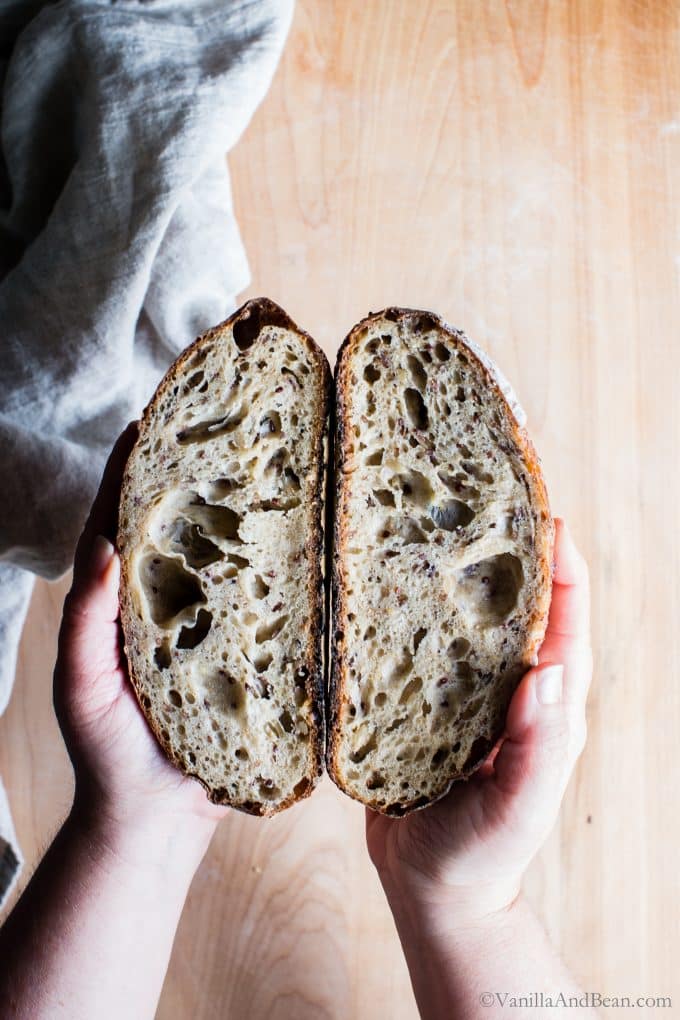
UPDATE (5/20) Burnt Sourdough Bottom: After testing various methods to remedy the too dark bottom problem, as commenters have mentioned on this sourdough recipe (and on many other non V&B recipes – this is not uncommon in the sourdough world), I’ve finally found the simplest solution ever (duh!). Simply place a sheet pan on the oven rack under the rack your baking vessel is setting on. This helps protect the vessel from the most intense heat of the oven. The two images below show one of the boules I baked using this method.
Prior to doing this, I used a method from The Perfect Loaf who suggests using a double layer parchment or a dusting of course cornmeal alone or under the parchment. Doing this offers a bit of distance between the bottom of the dough coming in direct contact with the base of the vessel. But I still had a bit of too dark bottom. Now, I exclusively use the sheet pan method.

Traci’s Tips
- Because kitchen temperatures vary, use the time suggestions in the recipe as such. Let the bread guide your process rather than the clock.
- Mini Boules? Yes please! This sourdough recipe can be made into one, 2 lb boule or two, 1 lb boules. The one-pound boules are fabulous for bread or dipping bowls, or if you’re baking for one or two and want to freeze or give away the second loaf. Both sizes make decent size sandwich bread.
- TIP: This recipe calls for 10 grain cereal. If unavailable, you can use 7 grain or even 6 grain cereal. Also, a combination of polenta, millet, quinoa, and/or amaranth can be subbed, but the flavor will be different.
- Whole wheat bread flour can be difficult to find. If unavailable, this recipe will also work using whole wheat flour with similar results. Whole wheat bread flour renders the dough a bit easier to work with, however (more stretchy).
- For a tutorial on how to make a sourdough starter, see my post on how to make a sourdough starter.
Makers Notes
So happy to read y’all are enjoying the bread in the comments below. Keep those tips comin’! Here are excerpts from the community:
- Emily Commented: “…used apf (all-purpose flour) instead of bread flour, but the result was still stunning, I got a gorgeous rise and soft moistness with a chewy crust.”
- Marilyn Commented: “I used a 5 qt DO for 1 loaf (without splitting the dough in half) and it was fine!”
- Dara Said: “I didn’t have all the ingredients the recipe called for so I used a combination of sunflower seeds, oats, hemp seeds, flax seeds, and millet.”
- Samantha Commented: “I did 3T each of quinoa, rolled oats, pumpkin seeds, sunflower seeds. I did 3 cups all-purpose unbleached white flour and 1 cup whole wheat bread flour and 1/2 cup spelt. I also subbed honey for maple syrup.”
- Robyn Said: “I made a few changes: all quinoa instead of cereal grains, hemp seeds instead of flax and added pumpkin seeds and sunflower seeds.”
- Nichole Said: “I’ve taken this one, and increased the proportion of whole grains and it’s so yummy. I use 60 grams whole wheat bread flour, 240 of bread flour, 130 whole wheat flour and 70 of buckwheat. I also halved the maple syrup.”
Looking for an easy sourdough bread recipe to start with? Check out my Everyday Sourdough post.
My Sourdough Toolkit (affiliate links):
-
- Glass Mixing Bowl
- 7 Quart Dutch Oven
- 10″ Cast Iron Skillet with Deep Dish Skillet for a lid
- Bench Scraper
- Parchment Paper
- Digital Food Thermometer
- Lame – for scoring the dough
- Banneton(s)
- Digital Scale
Soft and Crusty Seeded Multigrain Sourdough Bread
Ingredients
For the Soaker:
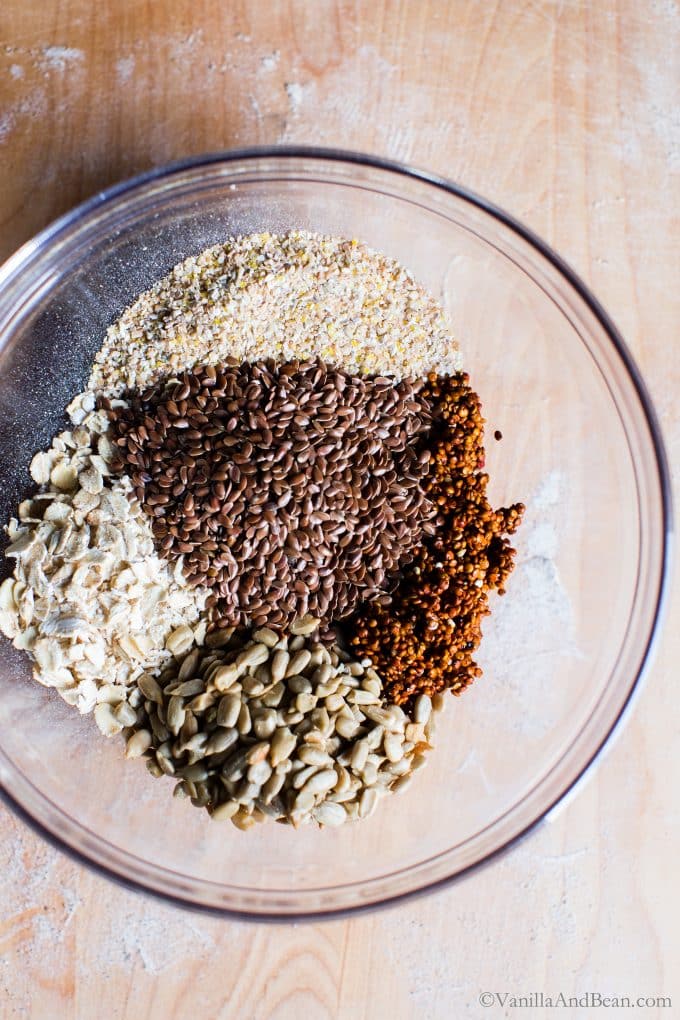
- 1/4 C (40g) 10 Grain Cereal *(see note)
- 3 Tbs (25g) Rolled Oats not quick
- 2 Tbs (25g) Quinoa red or tricolor, rinsed
- 2 Tbs (25g) Flax Seed
- 2 Tbs (25g) Hulled Sunflower Seeds unsalted
- 3/4 C (155g) Hot Water about 150F (65C), or soak the grains and seeds overnight in room temperature water
For the Dough:
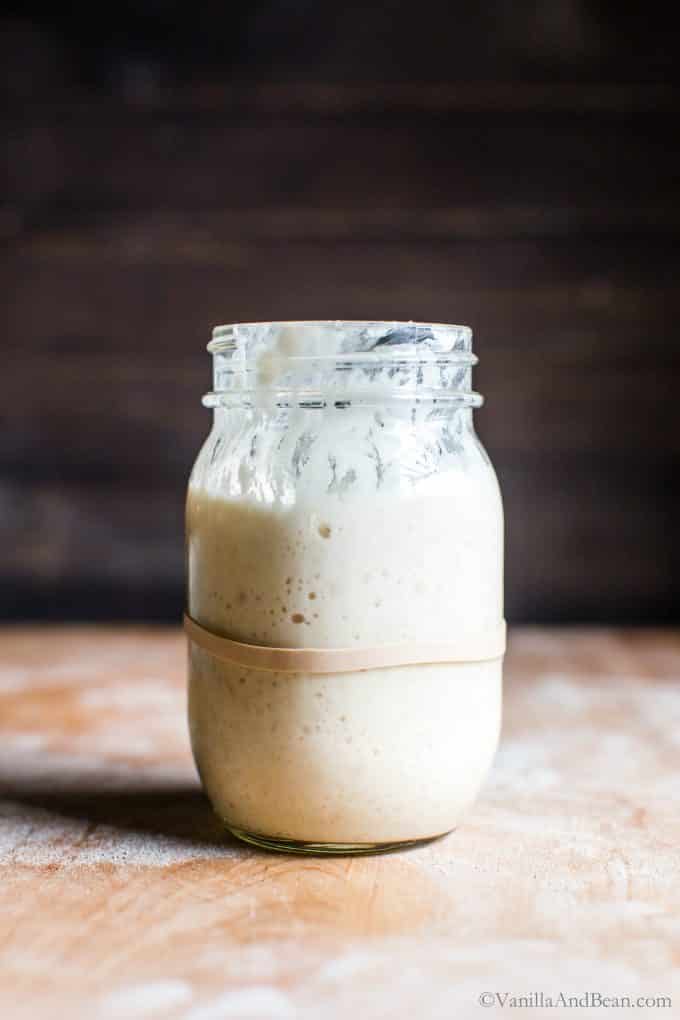
- 1/4 C (50g) Sourdough Starter previously fed, bubbly and active
- 1 1/3 C (300g) Warm Water about 80f (26c)
- 2 1/2 Tbs (50g) Maple Syrup
- 3 C (400g) Bread Flour
- 1/2 C + 1 Tbs (100g) Whole Wheat Bread Flour or whole wheat flour
- 2 tsp (16g) Fine Sea Salt
Instructions
For the Soaker:
- In a medium mixing bowl add the cereal, rolled oats, quinoa, flax seeds, sunflower seeds and water. Set aside.
For the Dough:
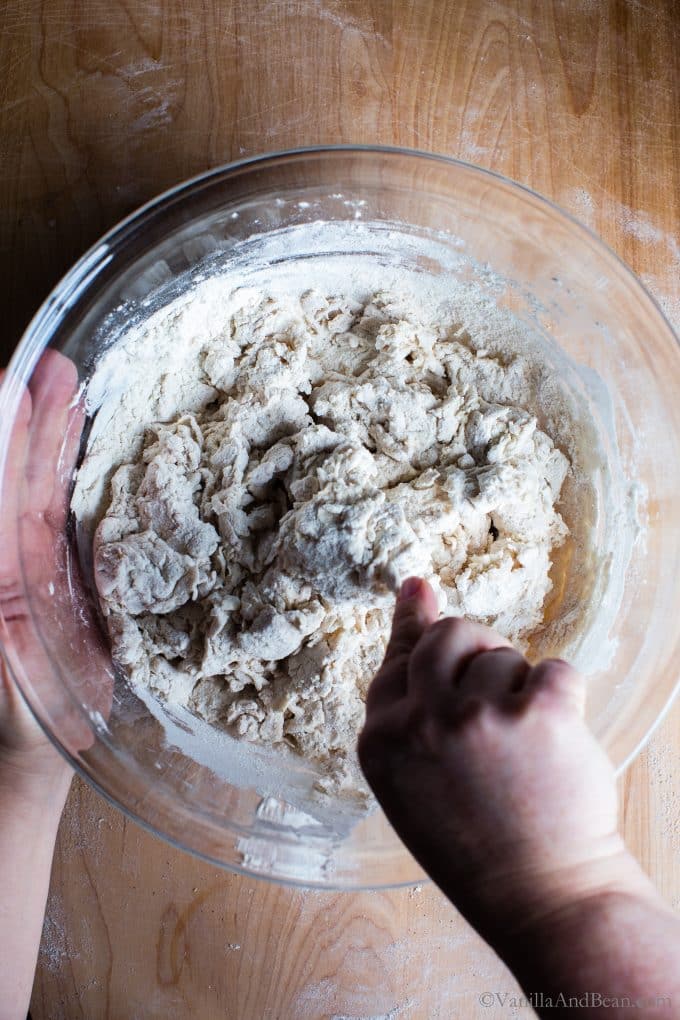
- Mix the Dough: In the evening, whisk the starter, water and maple syrup together in a large bowl with a fork. Add the flours and salt. First, mix with a fork, the dough will be shaggy. Then mix by hand, mixing, folding and pushing the dough until the flour is fully incorporated and no dry bits are present. It will seem dry at first, but the more you work the dough, the more hydrated it will become. The dough will feel stiff and it will stick to your fingers as you go. Do this for about 3-4 minutes. Use the fork to scrape off the dough on your fingers as much as you can. Cover bowl with a damp tea towel. Set a timer for for 30 minutes and allow the dough to rest for 30 minutes. Now is a good time to feed/refresh your starter.
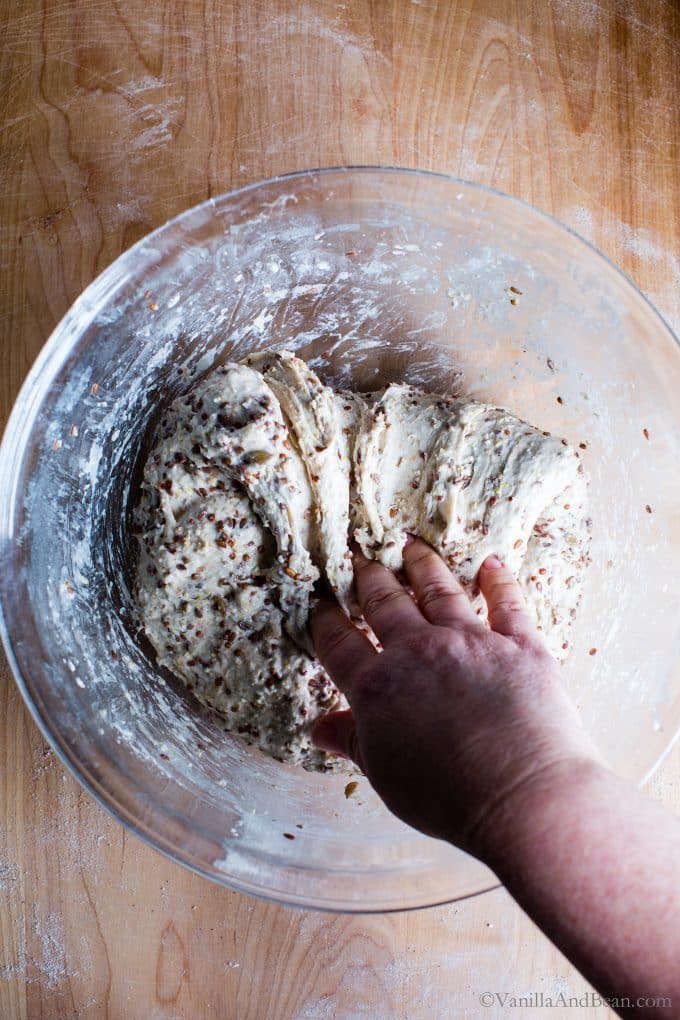
- Incorporate the Soaker: After the dough has rested, mix in the soaker. To do this, dump the soaker on top of the dough and begin kneading and folding the dough over and on top of itself, incorporating the ingredients of the soaker. Do this for about 1-2 minutes or until the soaker is evenly distributed in the dough. It will seem like a lot of added bits, but as you work the dough and as the dough develops through fermentation, the soaker will incorporate. The dough will be stiff, wet and sticky. If adjusting water or flour, now is the time to assess the dough and adjust as needed. Set a timer for 30 minutes and allow the dough to rest for 30 minutes.
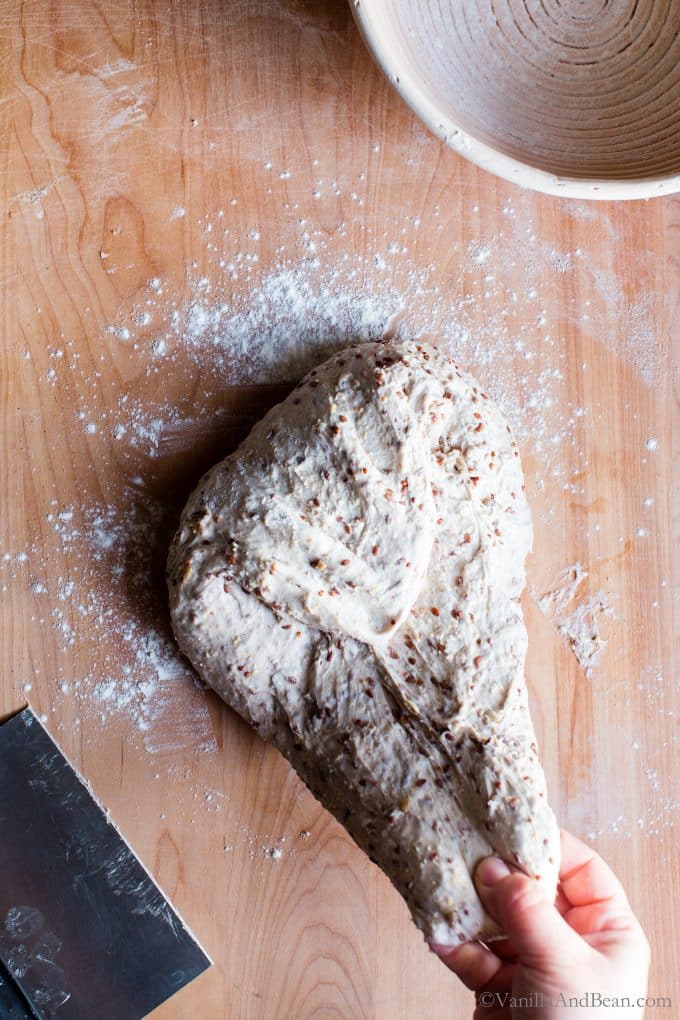
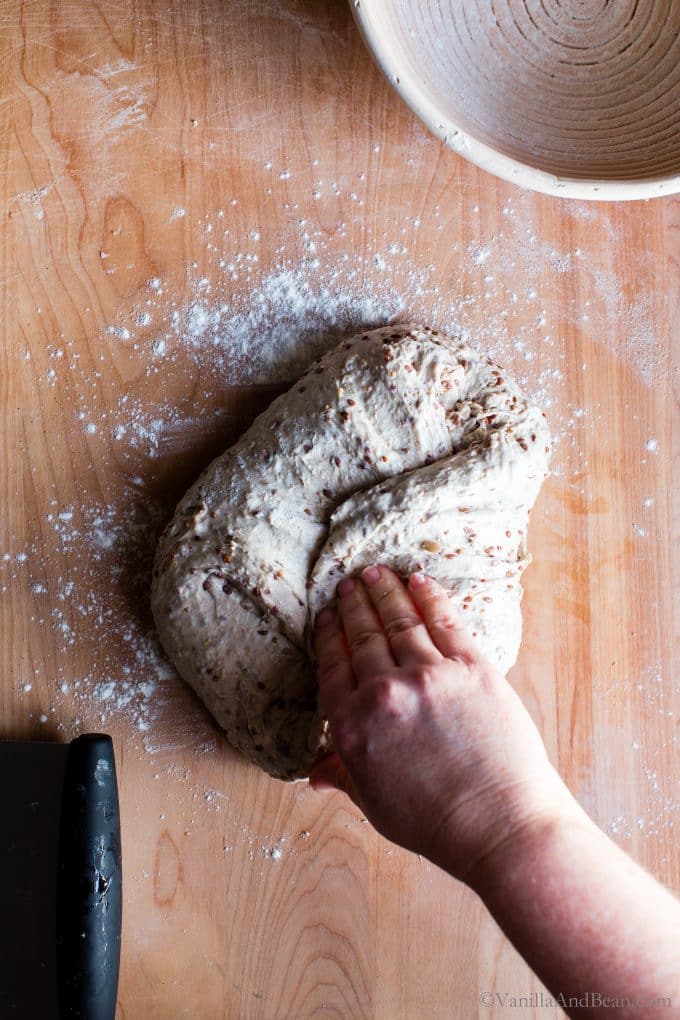
- Fold the Dough: After the dough has rested, fold the dough. To do this, grab a portion of the dough while it remains in the bowl, stretch it up and fold it over, pressing your fingertips into the center of the dough. You'll notice the dough is less stiff and more workable at this point. Repeat, until you've worked your way around the dough. This is the first fold, and you can stop here and begin bulk fermentation, but If time permits, and optimally, you'll want to repeat this fold two more times as it improves the final dough's structure and crumb. Allow for about 30-45 minutes each between folds.
- Bulk (fermentation) Rise: After the last fold, cover the bowl with two damp tea towels and allow to rise overnight at room temperature. This will take about 8-10 hours at 70F (21C), but in a cooler kitchen the dough can take up to 12-14 hours to rise - this is the norm in my chilly kitchen at 68F (21C) . The dough is ready when it no longer looks dense, is jiggly when the bowl is shaken, and has about doubled in size.
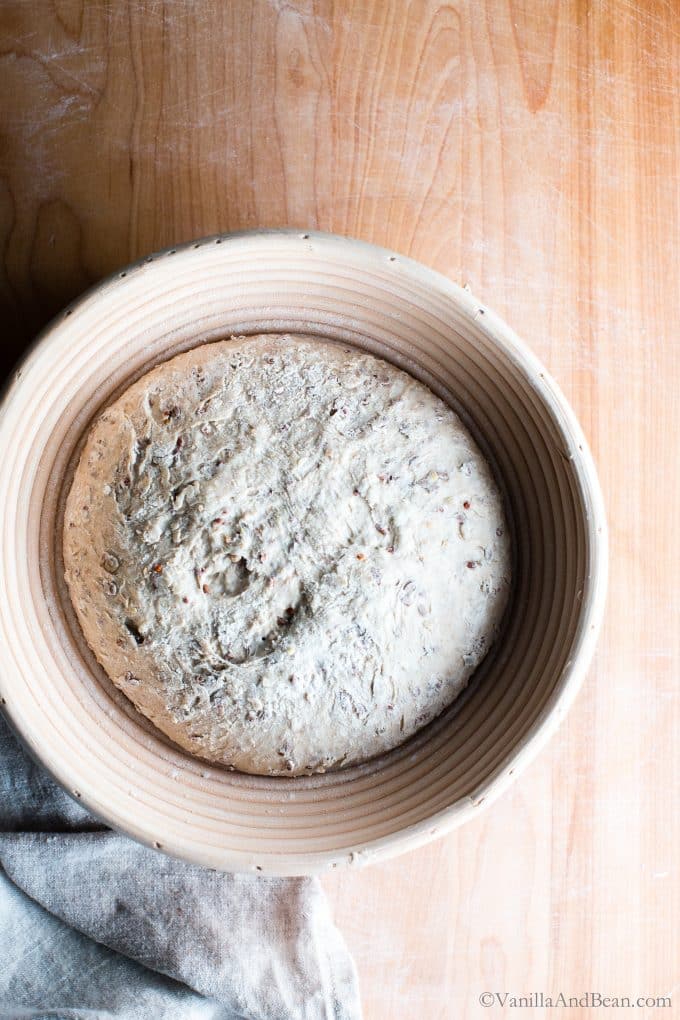
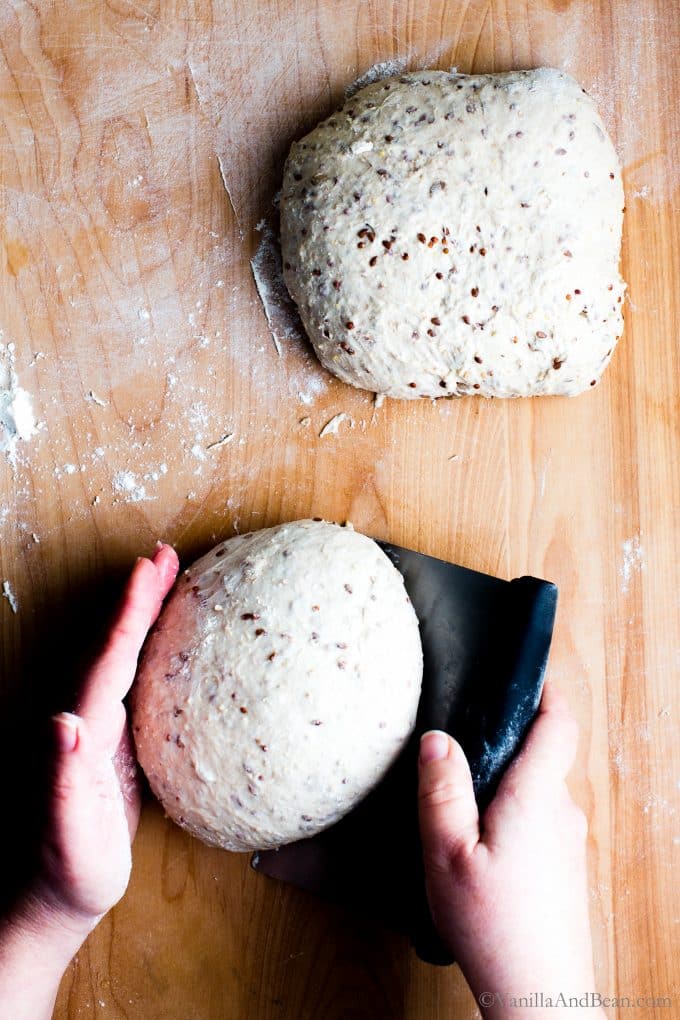
- Shape the Dough: In the morning, and with damp fingertips, coax the dough into a floured work-surface. If making two boules (1 pound / 453 grams - each), moisten the cutting end of the bench scraper and cut the dough in half. *Optional* Preshape: see recipe notes belowShape: with moist fingers, take a portion of the dough, gently stretch it towards you and fold it over towards the center and pressing it down gently. Repeat this process until you work the dough all the way around. Using a bench scraper flip the dough over and let rest for 10 minutes. Meanwhile, line an 8-inch (20cm) bowl with a towel or lightly flour a banneton (or two as needed). Scrape any excess flour away on your work-surface using the bench scraper and using a spray bottle with water, lightly sprits the surface of the work-surface. This will help the dough grip the surface and help create a taut dough. With lightly floured hands and using the bench scraper again as needed to help move the dough (the dough is sticky), cup your left hand around the dough and pull the dough toward you in a circular motion with the bench scraper in the right hand, to tighten its shape and create a taut outer skin. Use the bench scraper as needed to work the dough as this dough is sticky. Re-flour your hands as needed.Once the surface is taut, give it a good dusting of flour and smooth it over the top. With one swift move, use the bench scraper to scoop the dough up and, place the dough into the bowl/banneton, bottom side up. Sprinkle the bottom of the dough with a dusting of flour.
- Second (proof) Rise: Cover the bowl with a damp tea towel and let rest for 30 minutes to 45 minutes. The dough is ready when it looks puffy and has risen slightly but has not yet doubled in size. Preheat the oven to 500F (260C). Arrange a rack in the center of the oven, and another just below it. Place a sheet pan on the bottom rack (see UPDATE just below). Cut a sheet of parchment paper to fit the size of a 7 quart Dutch oven or other large baking vessel leaving enough excess around the sides to transfer the bread to the pot. UPDATE: Burnt Sourdough Bottom: After testing various methods to remedy the too dark bottom problem, as commenters have mentioned on this sourdough recipe (and on other non V&B recipes - this is not uncommon in the sourdough world), I've finally found the simplest solution ever (duh!). Simply place a sheet pan on the oven rack under the rack your baking vessel is setting on. This protects the bottom of the vessel from the most intense heat of the oven.
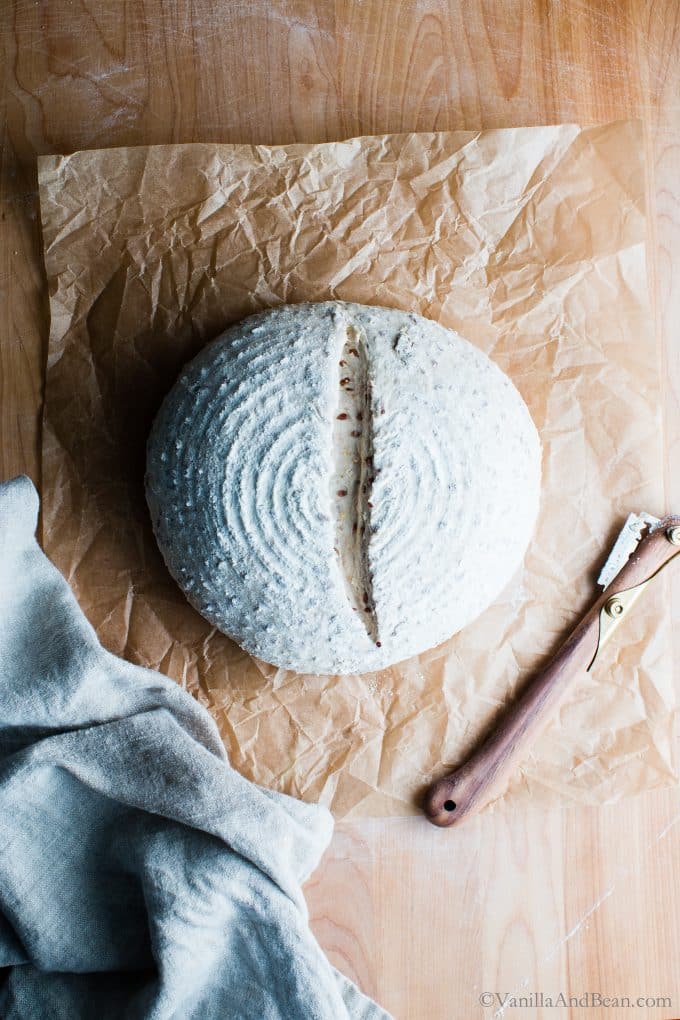
- Score: To turn the dough out of the bowl/banneton, place the parchment over the dough and invert the bowl to release. Using the tip of a lame or a razor blade, score the dough about 1/2" (8mm) deep and about 4" (10cm) long on the top or any way you like. Use the parchment to transfer the dough to your baking vessel.
- Bake: Place your lidded vessel on the center rack and reduce heat to 450F (232C). Bake, lidded, for 20 minutes. Remove the lid and continue to bake for 30 -35 minutes, for one, 2 lb boule. If baking two, 1 lb boules, continue to bake lid off for 15-20 minutes. To check if the bread is ready, check the internal temperature of the loaf. It should read between 190F-205F when done. When finished, transfer to a wire rack. Cool for 1 hour before slicing. Sourdough is best consumed on the same day it's baked, but it lasts for 3-4 days stored at room temperature. Store at room temperature cut sides down.This bread freezes beautifully. Store baked bread in a freezer bag either whole or sliced for up to two weeks. Thaw at room temperature. This bread can go from freezer to toaster to make the most delicious toast!


ambient


I made this bread for my husband and he LOVED it. Now he’s asking questions like, ‘How’s the starter looking?’. Question… if I want to incorporate more soaker, do I need to make any other adjustments?
Hi Coleen! That’s fantastic that it’s piqued his interest! More soaker will need more water, so then you’ll decrease the amount of water in the initial mixing of the dough. You may need to experiment with those adjustments.
Does the soaker need to cool down before I add it in? I tried this recipe and it turned out flat. It still tasted great but a huge disappointment to me. I want to try again and next time I will put in the refrigerator overnight for the 2nd rise before baking.
Hi Luann! By the time you add the soaker to the dough it will have had time to cool off since you’re making it before you mix and rest the dough.
On soaker do we strain water out or add water as well. Can’t wait to try
Hi John… the seeds and grains will soak up all the water, so there’s nothing to strain. Just add it right into your dough. Keep us posted!
Love this bread! But is the vessel pre heated with oven or is it cold and put into hot oven
Hi Holly! Thank you for your note. The vessel is not pre heated. Put the bread right in to a cold DO and into the oven.
This may be my best – and healthiest – boule yet! Beautiful mahogany crust – no bottom burn! Amazing open, supple crumb. And chock full of seedy goodness – I concocted my own mix of nuts and grains: sunflower, oats, flax, chia, sesame…coconut. Oh yeah! ~Thanks! I’ll be doing this again. (And I never leave comments…)
Hi Michael! Thank you for your comment and five star review ☺️ . That mix of nuts and grains sounds delish! Hooray for your best yet!
This is fantastic! Almost perfection!! It’s definitely a wetter dough than I’m used to but thank goodness for the helpful reviewer’s hints and to your helpful notes! Thank you for this recipe! It’ll be a rotation in my household!
SO excited, Marilyn. Thank you for coming back and sharing your success, 5 qt DO tip and giving the sourdough a go!
I have a 5 quart Dutch oven. Does this recipe have too much dough for that size?
Hi Donna… probably so. If you divide the dough in half, however, you could get away with a 5 quart easily. The dough needs enough room to expand. I use a 7 quart DO or a 10 inch cast iron skillet with a tall cast iron lid (double cooker).
Thank you so much.
I used a 5 qt DO for 1 loaf (without splitting the dough in half) and it was fine!
Hi Marilyn! Thank you for letting us know! That’s terrific. I’ll make a note!
does anyone know how long the soaker can be kept in the fridge
This recipe is amazing! It was really wet and sticky but oh boy did it turn out delish! Making another batch today!
Thank you for your note, Mary! So excited you’re enjoying the sourdough!
this was my first loaf in a loooong time and it turned out AMAZING. such a confidence booster as a beginner who’s only made plain loaves, with a so-so success rate. my kitchen was freezing cold so the bulk proof ended up being a little longer, but dough turned out gorgeous and puffy at around 16 hrs. rose beautifully and perfect ear and crumb. cannot thank you enough for this recipe!!
SO excited to read your results and that this sourdough is a confidence booster for you! Thank you for your note and five star review!
I’ve been making sourdough bread for a number of years, usually between 76 and 80 percent hydration. Your recipe is close to 90%; does the cereal absorb some of that water to reduce with actual hydration? I’ve been gathering ingredients – seeds mostly – to make this bread in the next few days. It seemed to me that 50 grams of starter is a pretty small amount for a fairly dense finished loaf. For a 500 gram boule I use 100 grams of starter. I’d appreciate any comments and I’ll let you know how the bread comes out. Thanks.
Hi Michael! You’ll notice the soaker (seeds + cereal) soaks up all its soaking water. 50 grams of starter is plenty to rise the dough. Feel free to check the comment section for maker’s notes. Also, if you’re concerned about the hydration, check the head note on the recipe card. Keep us posted!
Hi Traci, thanks for responding so quickly. First, I made the bread and it turned out amazingly well. The crust is great and the crumb is surprisingly soft. Delicious taste!
I did not change any of the ingredient amounts except for a slight reduction in the amount of salt. I did, however, adjust the method in two ways: first, I held out 20 grams of liquid during the initial flours mixing, then added that back in with the grains; I thought this would make mixing in the grains easier which it did. Second, I did multiple stretch and folds during the bulk fermentation rather than putting the dough in the fridge. When the bulk fermentation was complete I shaped the Boulle, placed it in the banneton and then put it in the fridge overnight. Baked it the following morning; really nice oven spring.
Second, 50 grams of starter worked just fine, making me wonder about using 100 grams for a non-grain sourdough loaf. I may try that just to see what happens.
Third, this is a heavy, wet dough but it comes together nicely. If you include all of the liquid from the soaker and starter – 155 grams soaker water, and 350 grams water/maple syrup dough – then there are 505 grams of total liquid. However, the total amount of flour and grains is 640 grams. That makes the hydration roughly 75%.
I’m really glad I found this recipe and I will be making it regularly. Thanks!
I followed this recipe and…oh baby, it turned out great! Beautiful rise and open crumb. Moist and delicious. My family loves it! Even my fussy grandkids.
This is an awesome recipe. Thank you for posting!!!! I make this bread at least twice a week and everyone loves it!!
SO happy to receive your note, Lori! Thank youuuu!
I pu e in the mountains of California, in the woods. This recipe requires more flour than stated. My girls absolutely love this bread! Even when we have a bit left, they are begging for more!
Hi Traci: there are no instructions to preheat your Dutch oven before baking your loaf? Do you place your loaf into a cold or preheated Dutch vessel?
Thank you kindly,
Lori
Hi Lori! There’s no need to preheat your Dutch oven. Place the sourdough into a cold Dutch oven.
I love the seed and grain blend for this bread! I usually play around with using different flours, but I use the seed blend and maple syrup all the time for my breads! Thank you!!
I made this bread and loved it! Now I’m making it again and wondering if I need to heat my dutch oven up in the oven before I transfer the dough into it or if I can leave the dutch oven out until the dough is in it (I heated it up last time, but I think the transfer would be easier if I could leave it out.) Thanks for sharing this yummy recipe!
Hi Arielle! Thank you for your note 🙌🏻 I never preheat. It’s not necessary. So excited you’re enjoying the sourdough!
I don’t know why it’s taken me so long to write a review, but I have made this bread so many times, I’ve lost count and it comes out perfectly every single time. It’s my go to and thankful you’ve posted this.
Loved reading your note, Alison! Thank you for sending a smile and your five star review!! So happy you’re enjoying the sourdough… it truly made my day!
Just made this yesterday and it turned out AMAZING. I did not have any issues with hydration, I used King Arthur whole wheat and bread flour. I’m so proud of this loaf! I didn’t sub anything in the recipe. I did do 3-4 stretch and folds before the bulk ferment. Ended up with the perfect crumb.
Best note ever! SO excited for you, Megan! Thank you for coming back and sharing your tips with us. Day made!
Love the recepie, ofcourse I didn’t have time to soak the seeds, but the outcome was fabulous. Beautiful ears for both the boules. I doubled the starter as I wanted the first rise to be quick.
Thanks again.
Hiii Sweta! Thrilled to receive your note, and that you created beautiful ears on both boules. Thank you for your tip on the starter :D
I was wondering how do you fold the dough when the dough is so wet and sticky it’s all sticking to my hands and I’m coming away with more dough than I’m leaving in the bowl is this to what should I I’ve already added a ton more flower I don’t quite know what to do
Hi Jean… I’m sorry you’re having trouble. Have you already added the soaker? If so, there’s still time to sprinkle in a bit more flour. Add a few more tablespoons then fold the dough several times all the way around the bowl. The dough will become more supple and tacky as you go through the series of folds and through bulk fermentation. Please keep us posted.
Hi Tracy just to give you an update I added flowers throughout all phases because it was so sticky and wet and then it wouldn’t rise so then I stuck it in the oven with the light on and left it and by 1130 last night it had risen but maybe too much and the dough was very warm and soft so I couldn’t take anymore I just made a loaf put it in the banneton then refrigerator. Got up today they looked like 2 heavy hockey pucks lol did not rise at all but I put them on the parchment paper put them on my ceramic platters that’s how I bake them and because I had such a bad problem with burning one time in cast iron I put tinfoil all over the bottom rack below and I baked them they look nice temperature inside is 205 but the bottom is not frisky I took them out anyway I will let you know how they taste but so far so good but have no clue how they are going to taste
That was supposed to mean the bottom was not crusty and it did not sound hollow but the temperature said it was done so I took it out
Hi Tracy OK last post I think the bread taste wonderful however I think it could have cooked a little bit more or maybe it didn’t rise enough I don’t have any big holes but you know there are a lot of little holes my husband likes it and it’s nice and soft and chewy and actually it’s really good we love it so once again thank you for the recipe and your help
I love your bread! I had a favourite I always made, but this now is my new favourite! I do bake at 450f on convection with lid on 30 mins and off 15-20 mins. Comes out beautifully!
So happy I found your recipe…thank you for sharing 🥰
Oh my gosh! Thank you for your note and giving the sourdough a go, Laurie! Yes on the baking with lid on for 30 minutes… I’ve a new to me range and it bakes HOT, so I’m leaving the lid on longer too, else the ear gets *super* dark (on the edge of burnt). I’m SO excited you have a new favourite!
I’m new to sourdough. This bread is the healthy choice I was looking for. WONDERFUL taste, texture and nutrition. I followed the recipe, but I used my dehydrator as a proofing bix and did the whole process in 9 hours. Is there a reason I shouldn’t be doing this? Thank you for sharing this wonderful recipe!
Hii Kathleen! Hooray! Thank you for your note, review and giving the sourdough a go! Super happy to hear you’re enjoying the bread. I don’t think there’s any reason why you shouldn’t be doing this, rather, it depends on what result you’re after. However, time = flavor. Some bakers retard their dough in the fridge for a long multi day fermentation to achieve the flavor they’re after. You’ve already discovered how you can manipulate temperature to achieve the desired result. Have fun with it… It’s a journey of discovery for sure!
Definitely my new favorite. I have many seeds and grains so made a random mix. I added less water than the recipe called for as is my habit. More is added as needed. Started with ~250 and added ~ 20 more (grams). My oven is hot so started at 475 down to 450. Used an oval clay baker, removed the lid at 30 min and because I love a crisp crust but not too brown I tented foil when it was brown enough for the last few minutes in the oven. Perfect! I will be making this recipe almost exclusively from now on. Thank you
Super pleased to read your note, Sheryl! Thank you for your star rating and sharing your tips. I find I have to tent this bread as well in my new to me oven (electric). It tends to bake hotter than my old gas oven. Hooray for a tasty loaf!
This bread is AMAZING. I’ve made it more times than I can count at this point and I don’t plan to stop making it any time soon. It’s delicious and filling and just so wonderful :)
Hi Leonie! Super excited to receive your note and star rating. Thank you so much! Keep the sourdough going!! Hooray!
This recipe uses less starter than my go-to, so I was skeptical that these loaves would turn out as well. But they did! Great oven spring, and a moist but light and airy crumb. And so delicious!
I followed the recipe mostly as written, though my bread flour (Hayden Mills Artisan) always requires more water, and I foolishly missed the instructions to adjust water AFTER adding the soaker. The dough was very wet, but these still turned out great despite (or maybe because of) the high hydration.
My kitchen is about 73F so the bulk fermentation time was shorter, about 6 hours. I also proofed my shaped loaves overnight in the fridge covered in plastic wrap, which I find makes the flavors more complex and works well in my baking schedule.
Like other commenters, I can appreciate the versatility of this recipe and look forward to experimenting with different grain mixes. Thanks, Traci, I have a new go-to!
Super happy to read your note, Julie! Thank you for sharing your tips. I’m amazed with how just a few degrees in temperature difference speeds the process of fermentation along. Hooray for experimenting with different grain mixes and having a new go-to! What fun!
This is the first Sourdough recipe that has turned out for me. I did not add the cereal I added 2 tablespoons of pumpkin, chai, and hemp instead. I bulk fermented it at room temperature, shaped and popped it into the fridge, and baked it in the AM. This is the bread of my dreams and I baked it. Take you so much!! My Starter is about 1.5 years old
Super happy to hear Dani! The added pumpkin and chai sound amazing. Thank you for sharing your tips and that your bread is a success!
I have made this recipe many times; it’s my go-to sourdough bread. This time I made it with 250g bread flour, 100g each whole wheat and spelt, and 50 g rye. I find this dough very wet and always have to add a lot of extra flour (way more than 1/4 cup). The dough sticks to my fingers unless I do, and I added flour with each stretch and fold. I did the bulk fermentation on the counter for abut 10 hours, shaped it, put into the banetton, and then in the frig overnight. I baked it in my new small Graniteware oval roaster, and I got fantastic rise and oven spring. And my scoring worked well too!
Hi Marlene! Thank you so much for your note, star rating and sharing your tips. Isn’t it SO exciting with scoring finally looks great?!
My go-to recipe. Love this one. I grind my own flour (usually red fife, some hard white sometimes) and mix in some vital gluten to make my whole wheat bread flour and this recipe works great with it. I do 50-50 whole wheat to white and have plenty of rise and great structure. I ferment on the counter for 13-16 hours as my kitchen is 15.5-17.5C room temperature. I also use the plastic lids to my mixing bowls, slightly ajar for gas flow, instead of tea towels as humidity is only about 18-20% here in winter and they’d dry out before I wake up. I bake in loaf pans and just add a cake pan with a few cups of boiling water to the rack underneath in the oven for extra steam and I also never get too dark or burnt bottoms. The dough is quite sticky, the fresh flour oils probably adding to that, and my shaping skills are still not great, so the loaf pan solves that. Thanks!
Thank you for your note, rating and sharing your tips, Michelle! Super happy you’re enjoying the sourdough!
I had a tough time with this one. My dough was very sticky and despite flouring, stuck to the proofing bowl and deflated before baking. Should I have added flour earlier? Also, do people warm up their baking vessel as the oven preheats?
Hi Kevin! I’m sorry to hear you had a tough time with the sourdough. After bulk fermentation, the dough shouldn’t be sticky, but rather tacky. It sounds like the dough could have used more flour during mixing, and also, on the dough before transferring it to the proofing vessel. There’s no need to warm the baking vessel prior to baking in this recipe. If you give the sourdough a go again, try adding a bit more flour during mixing if it feels too wet.
I had trouble with my Dutch oven getting the bottom too dark, too. It’s because the interior and exterior are black. I found using a light color sheet pan underneath and/or a couple layers of aluminum foil cut to the shape of the bottom of the pot are just reflective enough to give me a lighter bottom crust.
Beautiful site btw :-)
Hi Kristi! Thank you for your kind words and sharing your tips with us!
This bread was good! I followed the recipe exactly, and was hesitant that it called for just 50g starter but it turned out. Also, the recipe called it correctly that there is a lot of soaked seed mix to incorporate into the dough. It took a while as the seed mix wanted to stay together at first, but I was able to incorporate it. Oh, I used chia seeds instead of quinoa and pepitas instead of sunflower nuts. Seems like a recipe where the seeds could be changed out depending on what you have. The bottom did burn slightly (the burned part didn’t taste bad, honestly!) but I’ll take some of the recipe tips to correct that next time! Family gobbled it up and I’ll make again.
Hooray Jane! Thank you for your note and giving the sourdough a go. All those bits to work in is a workout! Happy to hear it was gobbled up!
This is my second time baking this loaf, and it’s lovely. One issue I’m not sure how to resolve is the dry crust it forms when proofing overnight. I folded it back into the dough. Any suggestions?
Hi Georgianna! Thank you for your note. You can use two very moist tea towels laid right over the dough, or place your dough in the proofing vessel inside a plastic bag. Keep us posted!
Love this recipe. Easy to make and delicious, I’ve swapped out some of the ingredients when I don’t have them and I find I need to add more flour so it’s not too wet. My fav topping is Nigella, sesame and hemp seeds.
Hi Marie! SO happy to hear. That’s what I love about this boule.. it’s versatile and easy to modify. I’ll have to find some Nigella and add hemp seeds next time. Thank you for your note and tips!
I’ve made this twice now using seeds/grains I had on hand. DELICIOUS! So flavorful! This last time I used poppyseed, flaxseed, a 5-grain cereal from bob’s red mill, oatmeal, and pumpkin seeds.
I love how flexible this recipe is! Thank you for sharing your tips and giving the sourdough a go. So happy to hear Laura!
Hi again Traci, I have made this recipe numerous times and it is my favourite, such wonderful flavour. Thank you so much for your detailed instructions..very helpful.
My question is: I have recently bought a small bread maker (I know, It is a cop out ha ha ) which makes only a 1 lb loaf. I would LOVE to learn how to adapt this recipe for a bread maker. I realize I could not achieve the same type of rise and certainly not the same crust, but I really want the flavour and grains. I am researching sourdough recipes that use bread machines, but wondered if you had any specific tips about the soaker (when to add, etc) and if you would recommend premixing and then letting it sit overnight (or something like that) I figured I would not be the first person asking about bread maker instructions since this is such a delicious recipe. I appreciate any insight you would have (or from any of your other readers) Many thanks in advance.
Hi Ann! Thank you for your note and sending a smile. I’m sorry to say I’m unable to provide any guidance here as I have no experience with a bread machine. I hoping another reader may be able to. If you do give this sourdough a go in a bread machine, can you share your experience with us?
Made this for the first time today and it was amazing! Thank you. Question: how would the ingredients change (if any and especially the liquid and starter components) if I wanted to make this with a 50/50 ratio of white bread flour to whole wheat bread flour?
Hi Rae-Anne! Thank you for your note and giving the sourdough a go. SO happy to hear of your success! If increasing your whole wheat flour, you’ll want to increase the time between folds to 45 minutes to make the dough a little easier to stretch. Also, you *may* need to increase the hydration a bit since whole wheat tends to be a bit thirstier. After adding the soaker, watch your dough. Does it feel a bit too dry? If so, add a tablespoon of water at a time until the hydration feels right to you. Keep us posted!
Hi, I find the spoon/cup measures do not equate to the scale measurements, they are quite a bit out.
Hi Christine! This isn’t unusual or uncommon. Cups (US measurements) aren’t standardized, reason why professional bakers weigh their ingredients. So, since you have a scale, use the weight measurements, always! As this is how my recipes are written, by weight (then I measure, using my cups). I offer volume measurement as a connivence.
I made this yesterday, really tasty. I was a bit unsure how it would work shaping after the overnight rise but it was fine.
Thank you for your note, Christine! SO happy to hear!
I am an experienced sourdough baker so i played arojnd with these ingredients a lot (replacing a little of the bread flour with spelt flour, etc), messing with which seeds specifically were in there, but i wanted a basic hydration guide, and this turned out great. I soaked my seeds for a lot less time (like an hour) and they turned out fine since i used boiling water.
Hi Danielle! Thank you for your note and sharing tips. I’ve been playing a bit with spelt too… it’s such a lovely flour. Boiling water over the soaker is a good way to get the job done!
Having no 10-grain cereal, I used a combo of chia seeds, toasted sesame seeds and masa harina. The aroma of the corn is divine. For flour I used 250g AP Bread, 100 G spelt, 100 G whole wheat and 50 G rye. Used half molasses and maple syrup. This bread is fantastic. Long fermentation in the fridge makes it even better. Chewy, nutty and crusty.
Molasses, me too!
Sounds so good Connie! Thank you for sharing :D
I do a bulk ferment , then place the bread in the fridge overnight to firm it up. I bake it 12 to 24 hours later. I bake mine in a pantry chef clay pot by putting the cold dough in the covered pot pot in a cold oven. I bake it 55 minutes at 450 degrees F. Remove the lid and bake it 7 to 10 more minutes to an internal temp of 209F. I used 400gms of whole wheat to 100 gms of bread flour. It rose well and was not burned, but nicely browned. It is my husband’s favorite sourdough recipe.
Last thing. Under step 5 (shape the dough), this recipe says, “If making two boules (1 lb – 453g – loaf each), moisten the cutting end of the bench scraper and cut the dough in half (592g ea).”
I am perplexed by 592 grams. what am I missing here?
ohhh… thank you for that, Camille. It’s an error. It should be the 453g ea. I’ll fix it!
Throughout my late-to-the-game pandemic baking experience, I have one clear favorite, for it is above and beyond any other loaf. This seeded multi-grain sourdough has proven to be fool-proof in my kitchen.
I wish I knew how many times I’ve made this loaf. It has given me confidence as a baker and I am quite proud of how it has stolen the hearts of family and friends.
I find that the soaker works great with various seeds and/or grains: pumpkin seeds, poppy seeds, sesame seeds, rye flakes, parboiled brown rice, bulgur, and barley, as well as the recommended ingredients and the optional ones in the notes (polenta, quinoa, millet, amaranth).
I’d like to increase the fiber content of this bread but I don’t have the experience as a baker to mess with a recipe. Has anyone attempted to do this, either successfully or unsuccessfully?
I find that the rise and texture of dough mixed in a wooden bowl is superior to the dough mixed in a glass bowl. Anyone else?
I’ve baked these loaves in a lidded ceramic roasting dish starting in a cold oven, and on silicone baking mats over regular baking sheets starting at 500*F. I have not tried my cast iron pans and I don’t own a Dutch oven. I’m completely happy with the results every time.
Deliciously foolproof.
Oh my gosh, I’m so thrilled to read your notes and happy that you’re enjoying this loaf. It’s the ONE I make over and over again here too! THANK you for sharing! I LOVE how you’ve taken the base recipe and experimented after becoming more confident! This is how we GROW in the kitchen, especially with sourdough! Increasing the whole grains is a great idea. Whole grain is thirstier than regular BF or AP, so it’ll need more water, and more time to fully hydrate. Allow the dough to rest longer between stretches and folds, 45 min to an hour at least. The dough will benefit too from a long fermentation in the fridge. 100% whole wheat is denser for sure, so big airy holes are not really possible, but if that’s not the goal, I get it! Would love to hear about your experiments! Keep on baking Camille!
Thanks so much, Tracy! I will incorporate your recommendations and share my experience.
And can I just ask a question – I see that lots of clever ladies are putting their dough overnight into the fridge, then straight into the oven. Does it still rise as it should being cold?
Yes! The bread does still have good oven spring if proofed in the fridge. Keep us posted!
Hi Traci, I have read through your notes, but can’t see the answer anywhere and I apologise because I am sure you would have it noted somewhere – question is – why do we need to put maple syrup in please? kind regards Michelle 😊 3/10/21
in reference to an earlier question regarding a not so dark crust, I have found leaving my lid on longer gives me a lighter loaf and the bread still rises beautifully and is moister!
Thank you for your reply to the fridge proofing question!
Hi Michelle! Thank you for your note! The maple is to add interest, a bit of Earthy flavor and a very light hint of sweet. You can leave it out if you like. Thank you for your note on lidding the sourdough for a lighter crust! I’ll give it a go!
I love the taste of this sourdough. I use a 5 grain cereal and add Badia Trilogy that I picked up at Walmart. It has chia, hemp and flax seeds. I bake mine after it has has risen at room temp, then placed in the fridge overnight. I bake it in a clay pot starting in a cold oven set at 450 for 55 minutes, take off the lid and bake 8 more min. No burnt bottom. Less electrical usage. It is nicely browned.
Hi Debra! Hooray for a tasty sourdough, no burnt bottom and less electrical use! Thank you for your note and sharing your tips.
thank you for your recipe 😊 I love seeded sourdough and this recipe works really well! I am very pleased with how mine came out of the oven. As I prefer a lighter crust (as in, not dark brown) I would try to change that – not sure how – I did leave the second term for 30 mins so maybe I will turn the oven down a touch more?!
Hi Michelle! Thank you for your note! Turning down the heat is fine, just keep an eye on the internal temperature, checking for when the bread is ready. You can also opt to tent the bread with foil. I hope this helps!
Hi Traci! thank you for your reply – I am cooking another today and have left the lid on longer and got a better rise. I use whatever seeds I have in the cupboard and today I used pine nuts, sunflower seeds and pepitas as well as oats. I suspect these seeds are heavier. Would you tent the bread through the whole bake? 😊 I love experimenting and am beginning to get a good feel for how the loaf will turn out. 18/9/21
Hi Michelle! Thank you for your note and sharing about your experience making the sourdough! The nut subs sound fabulous. While I’ve never tented the bread through the whole bake, you could certainly give it a go. I think it may change the character of the crust however.
I live at high altitude so I always expect to have to bake a little bit longer than a recipe says but this one ended up burning the crust before the timer even went off. But the flavor is fantastic, I’ll definitely be making again and checking the loaf a little earlier next time. Thanks for such a great recipe!
I love the taste of this bread. I use a 5 grain mix because I could not find 10 grain. I bake mine as one loaf in a clay pot covered starting in a cold oven at 450 for 55 minutes and then 10 min. With lid off. It is nicely browned but not burnt. The clay pot is so much lighter than Dutch ovens and it gives a more elongated loaf. I let my bread bulk ferment during the day , then put in the fridge over night. It can be baked 8 to 15 hours right out of the fridge. This gives you more flexibility. I have used sesame seeds too. I am going to try honey the next time.
Hi Debra! Thank you for sharing your tips with us and especially about proofing in the fridge overnight. I love how flexible sourdough is! I think sesame seeds and honey would be a delight!
Hi i was wondering about the soaker ingredients relating to the Multigrain bread, does it give some gluten to the bread?
I just made the bread, but switched some ingre as i did not have some. I did added 2 tbsp Apple cider vinegar, for millet flour i used Ragi millet flour
for the soaker i ran out of quinoa, added millet grains instead
No rise in the bread at all waiting to slice and eat.
Please let me know – thank you
Hi PG! Thank you for your note. The soaker isn’t meant to add gluten to the bread, rather, it’s for texture and flavor. I’m not sure about the millet flour, however, as this recipe does not call for millet flour. As for the rise in the bread, are you referring to bulk fermentation or oven spring?