
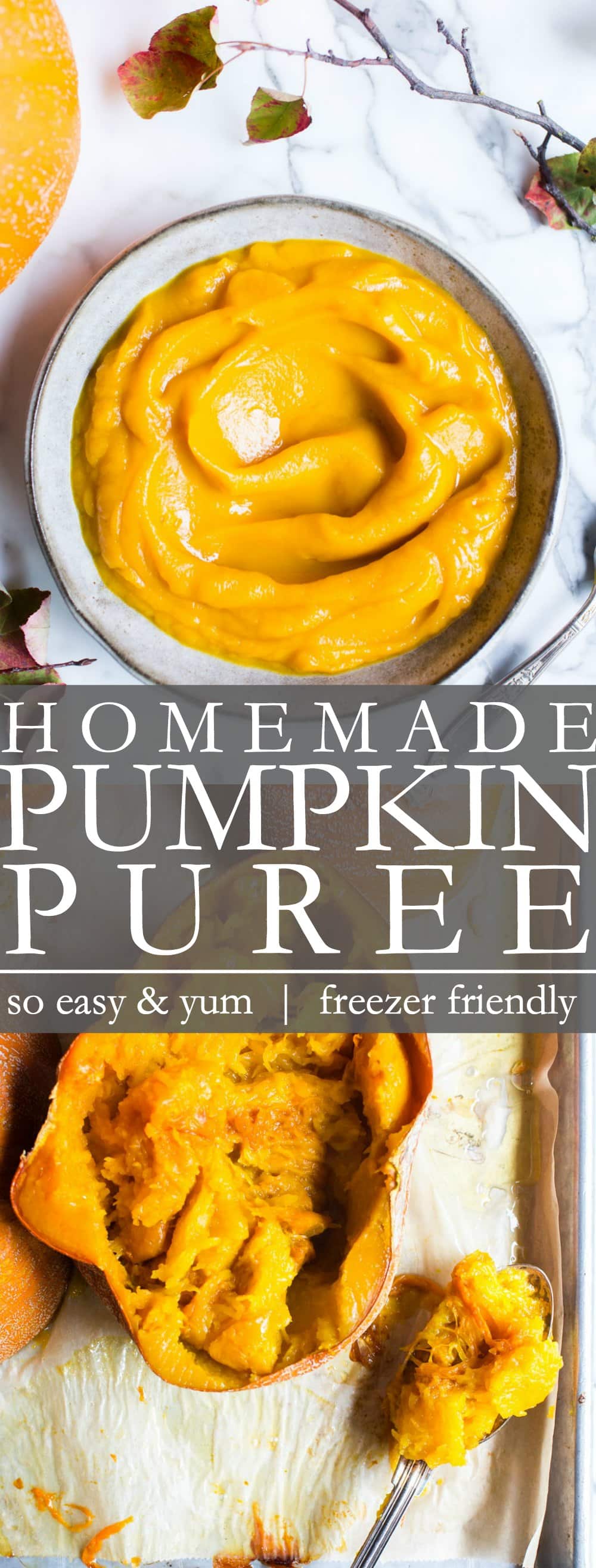
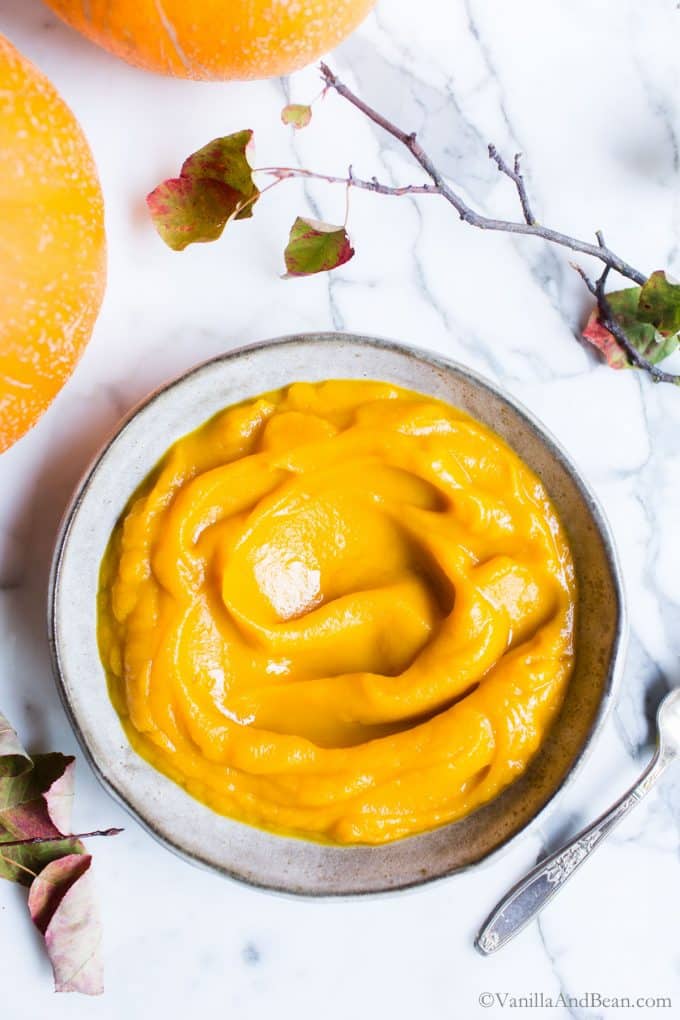
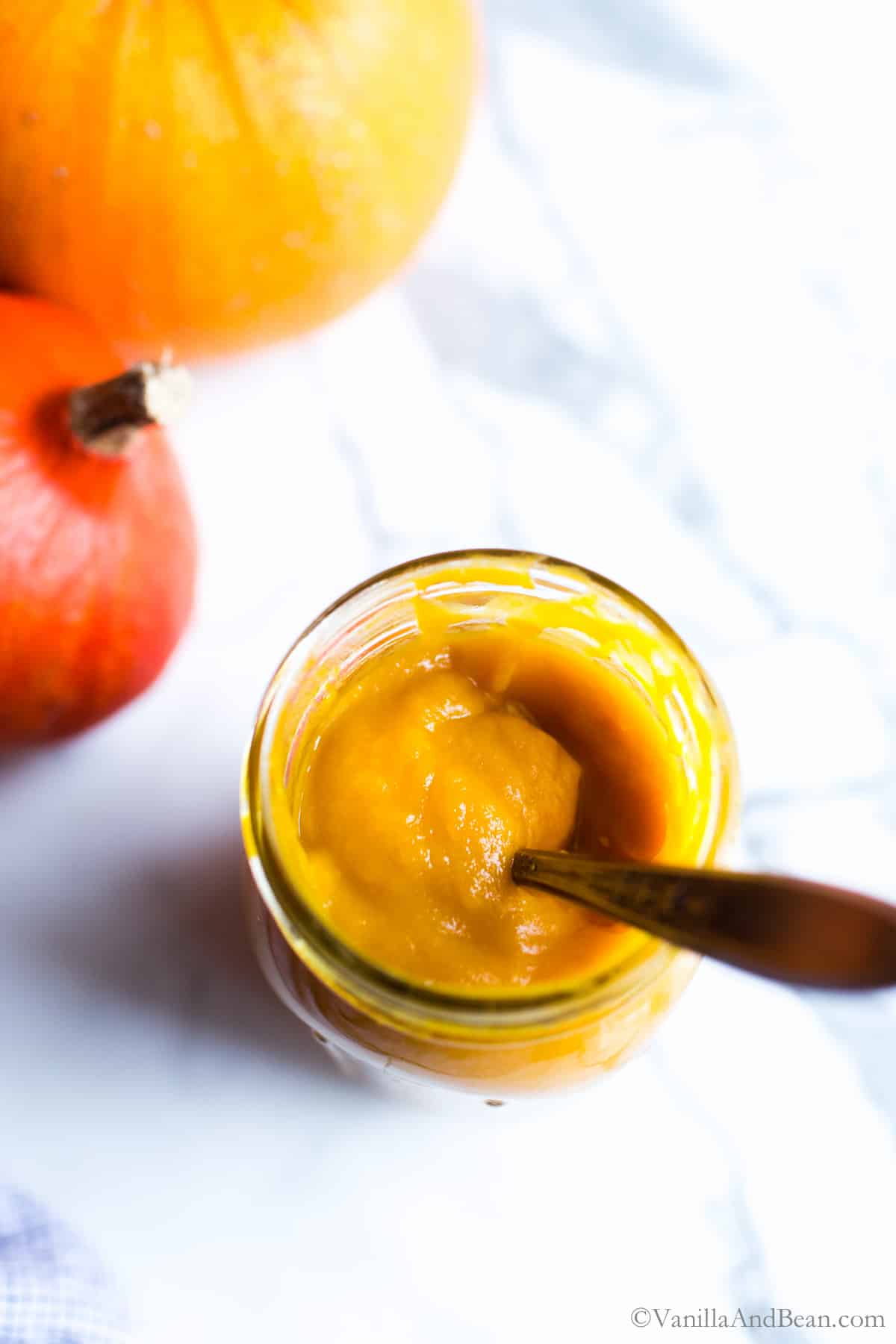
Making Homemade Pumpkin Puree from scratch is simple. The puree can be used in baked goods or in savory recipes. Pumpkin is roasted with its seeds in or out, depending on if you’d like to eat or toss the seeds, then the flesh is pureed to a creamy consistency. Pumpkin puree takes little hands-on time to make and it can be frozen for later.
You will receive recipes and kitchen tips, along with information about our partners and offerings. For more details, review the Vanilla And Bean privacy policy.
Time to Roast the Pumpkins!
It’s that time of year when we crave that fabulous pumpkin flavor. Roasting and pureeing pumpkin couldn’t be simpler! Homemade pumpkin puree tastes better than store-bought anyway, so why not whip some up for those special pumpkin recipes?
In this recipe, I’m sharing how to roast pumpkins, which pumpkins to choose, and how to make pumpkin puree including all my storage tips.
_____________________
How to Make Pumpkin Puree
step by step
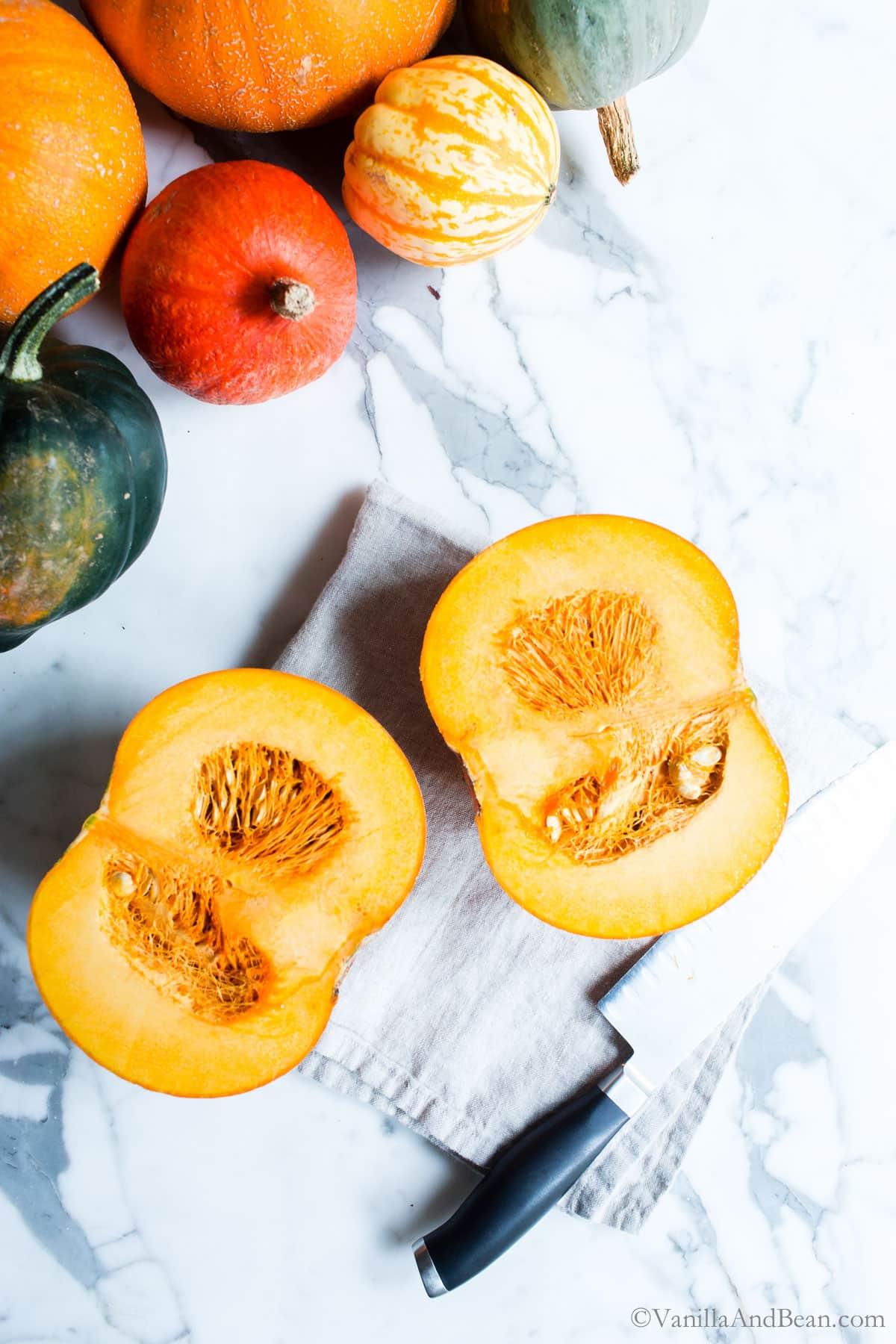
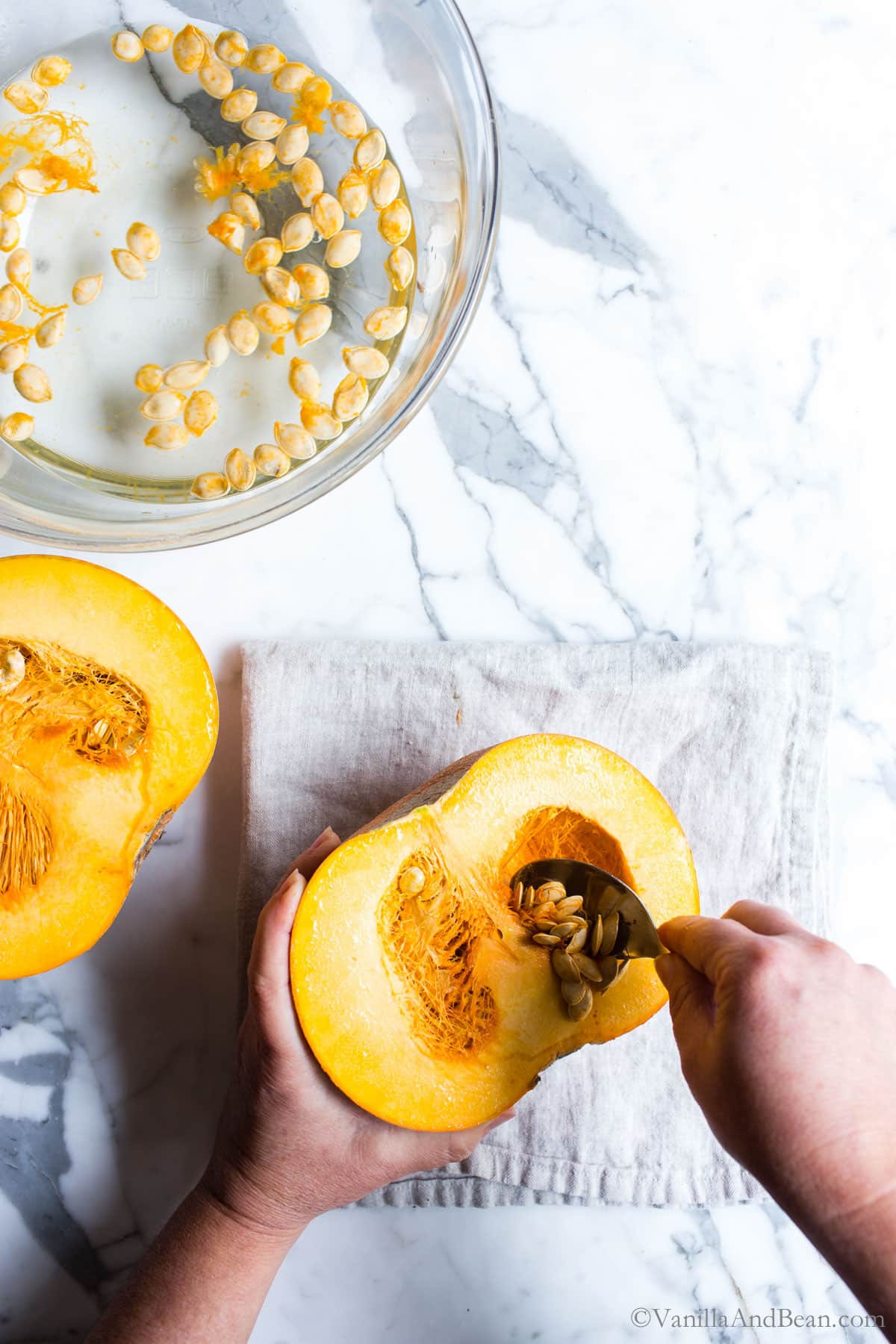
Tip: If the seeds will not be saved for making roasted pumpkin seeds, roast the pumpkin with the seeds in, then scoop them out after roasting. It’s much easier!
If saving the pumpkin seeds, roast up a tasty snack! Try my sweet and savory Homemade Roasted Pumpkin Seeds.
What Kinds of Pumpkins to Roast
Look for the smaller variety of pumpkins for manageability and flavor. They’re easier to slice, roast and have good pumpkin flavor. There are several different kinds of roasting pumpkins to keep your eye out for:
- pie pumpkin
- sugar pumpkin
- winter luxury pumpkin
These varieties are smaller than the jack-o-lantern carving pumpkins and are suitable for cooking in sweet and savory recipes.
My favorite pumpkin to roast is winter luxury. It’s so sweet and perfect for pumpkin pie.
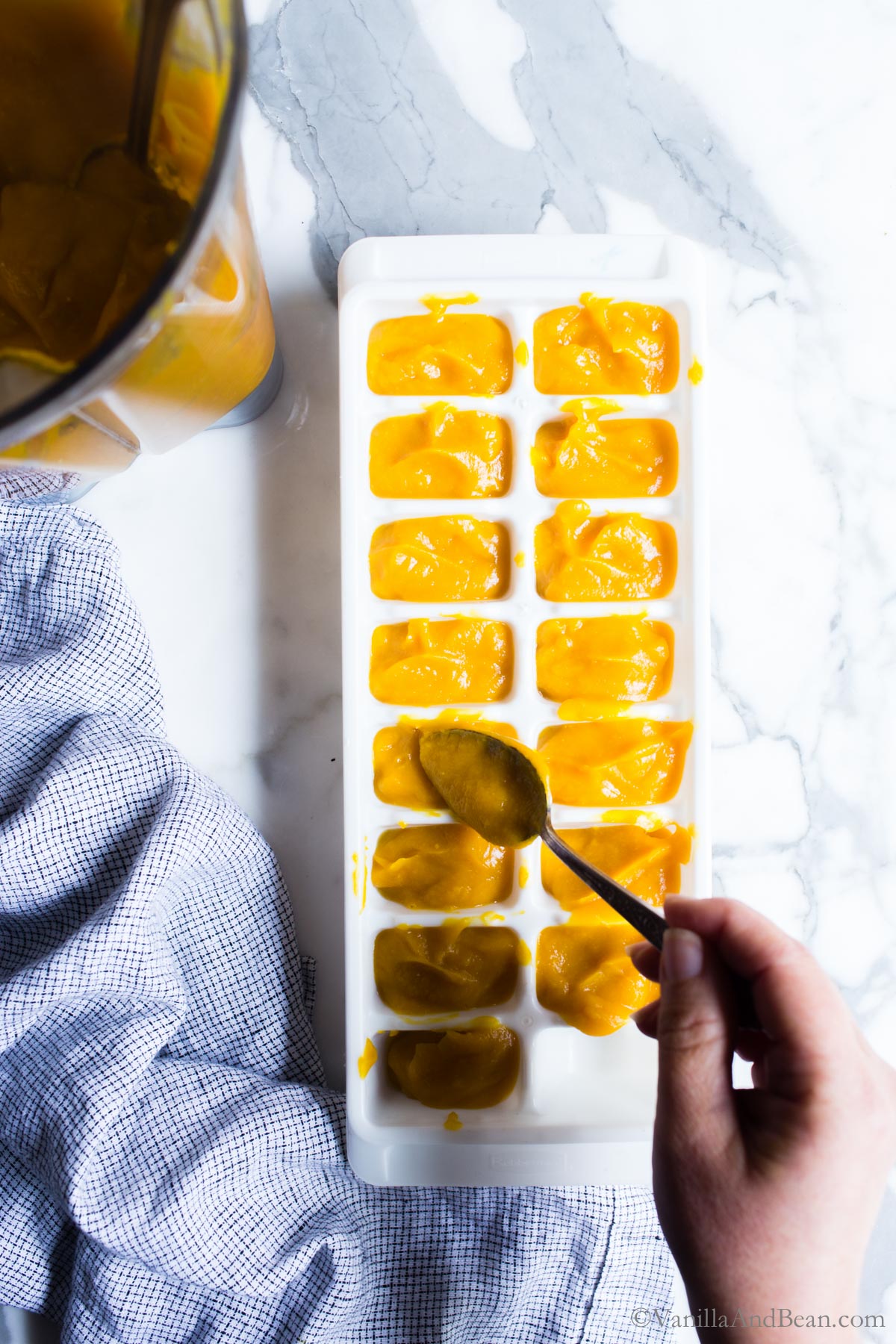
Small Portions: A freezing method I find helpful is to freeze the puree in ice cube trays. Pop the puree out when frozen and place in a storage container in the freezer until ready to use. This is convenient when making smoothies or when a smaller quantity of pumpkin is called for. It’s perfect for oatmeal or porridge.
Pumpkin Puree vs Canned Pumpkin
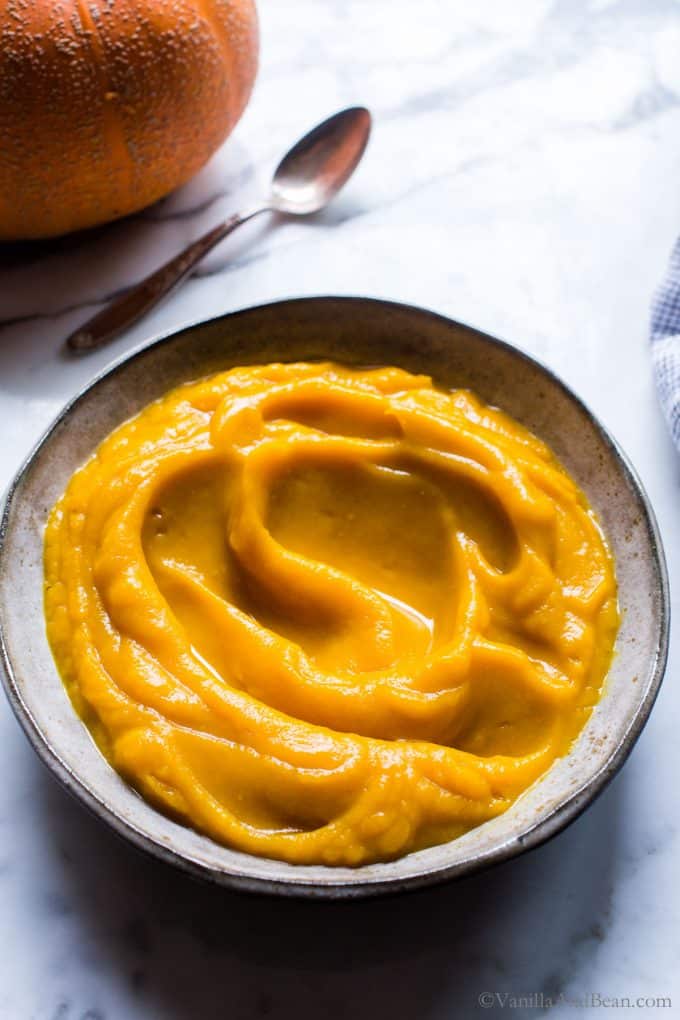
Pumpkin puree is a silky smooth mash of cooked pumpkin. If purchasing from the store, canned puree can be a variety of winter squash such as butternut or Hubbard.
However, if using homemade pumpkin puree in a recipe, it tends to contain more water than canned. You can strain the puree through a fine mesh strainer, cheesecloth or coffee filter when using it in pie or other baked recipes to drain off excess liquid. I find 30-45 minutes of draining creates a comparable consistency to canned pumpkin.
What to Make With Pumpkin Puree’ (sweet & savory!)
- Pumpkin Butter
- Thai Pumpkin Curry with Mushrooms
- Pumpkin Two Bean Chili
- Gluten Free Mini Pumpkin Pies
- Pumpkin Scones with Candied Ginger
- Pumpkin Granola
- Pumpkin Porridge
Traci’s Tips
- One sugar pie pumpkin makes about 2 cups of puree – about what you’d find in a can of store bought pumpkin puree. However, this can vary depending on size of pumpkin.
- Note that if using homemade pumpkin puree in a recipe, it’s different than pumpkin pie puree. Store bought pumpkin pie puree is typically sweetened and contains spices.
Homemade Pumpkin Puree Recipe
Ingredients
- 2 Sugar Pie, Winter Luxury or Pie Pumpkin
Instructions
- Preheat oven to 375F. Cut the pumpkin in half. If the seeds will not be saved, roast the pumpkin with the seeds and scoop them out after roasting. It's much easier! If saving the seeds, using a metal spoon, ice cream scoop and/or your hands, scoop out the seeds and strings. Place the seeds in a bowl of water, then see my recipe for how to roast pumpkin seeds. Set aside.
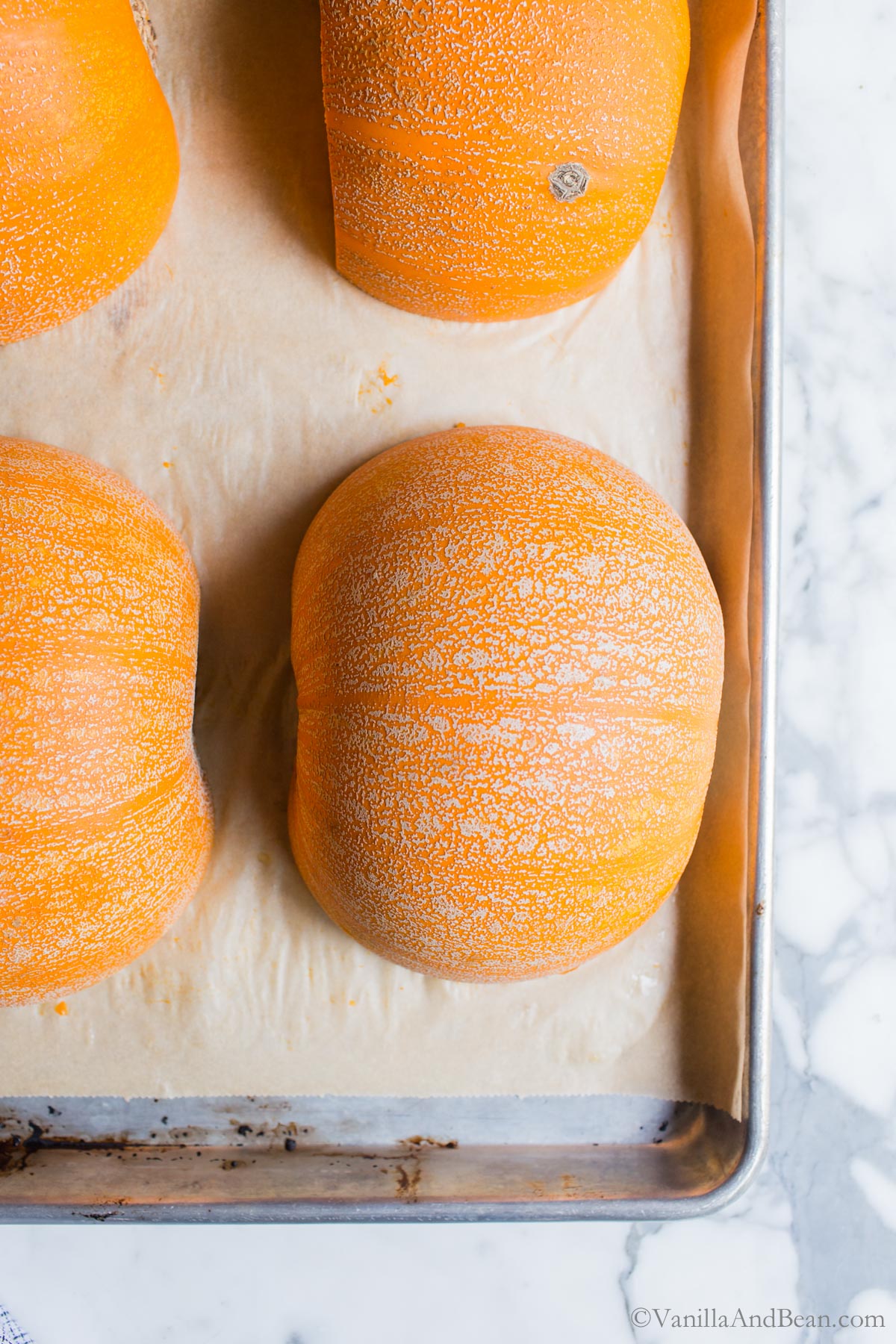
- Place pumpkins skin side up (flesh side down) on a parchment or silpat lined baking sheet. Roast for 50-60 minutes or until flesh is soft and fragrant and the skin is collapsing. Remove from oven and allow to cool until they can be safely handled.
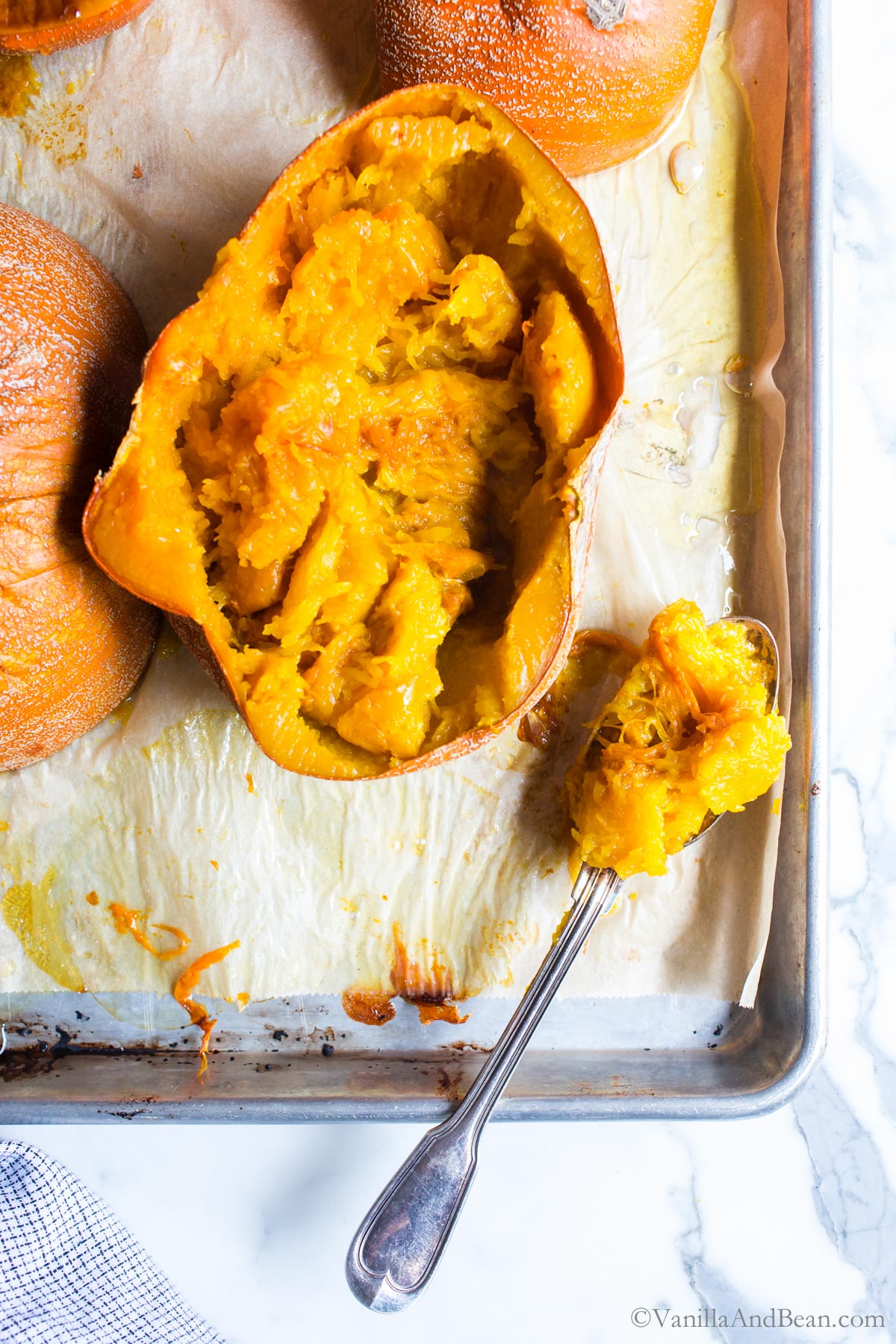
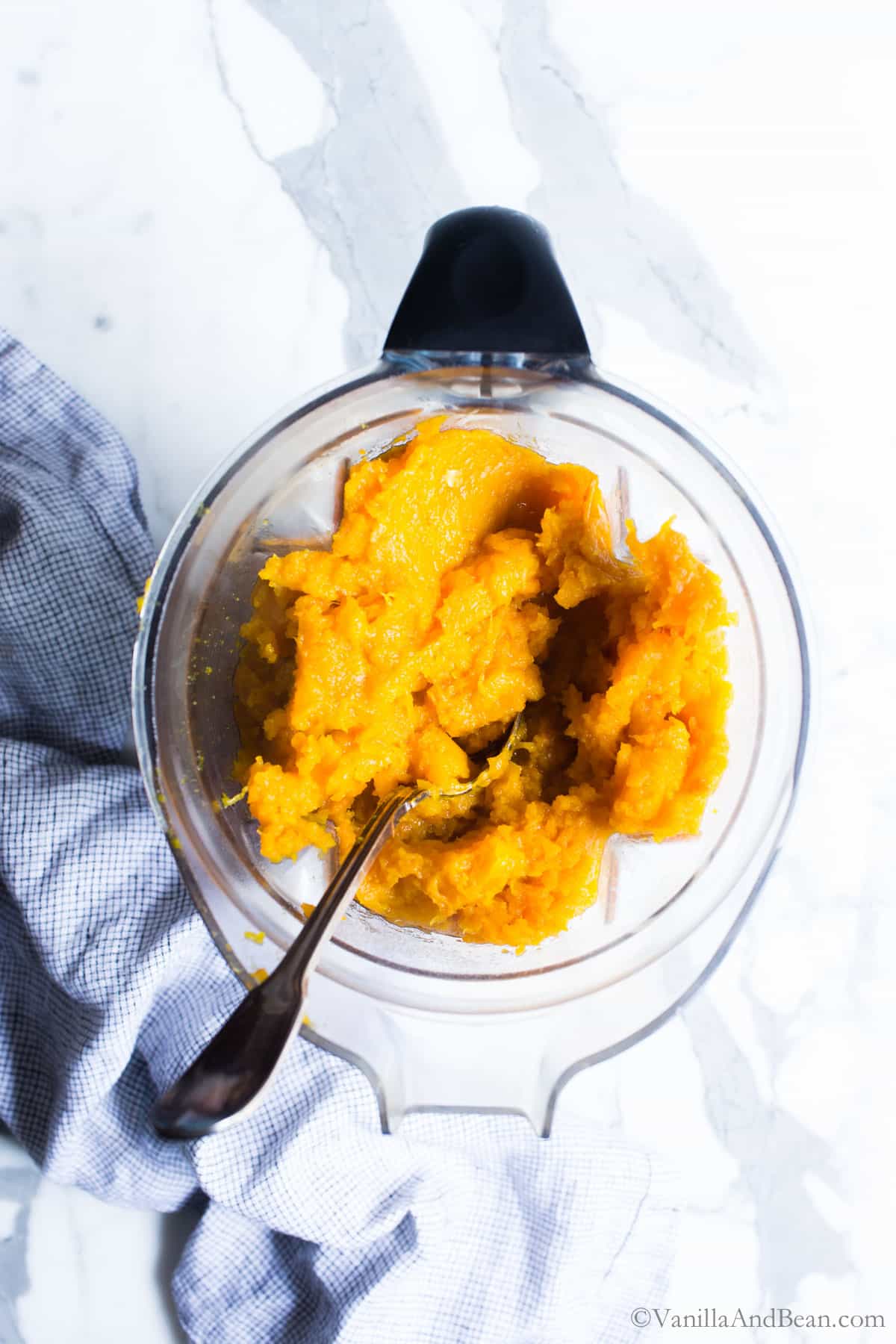
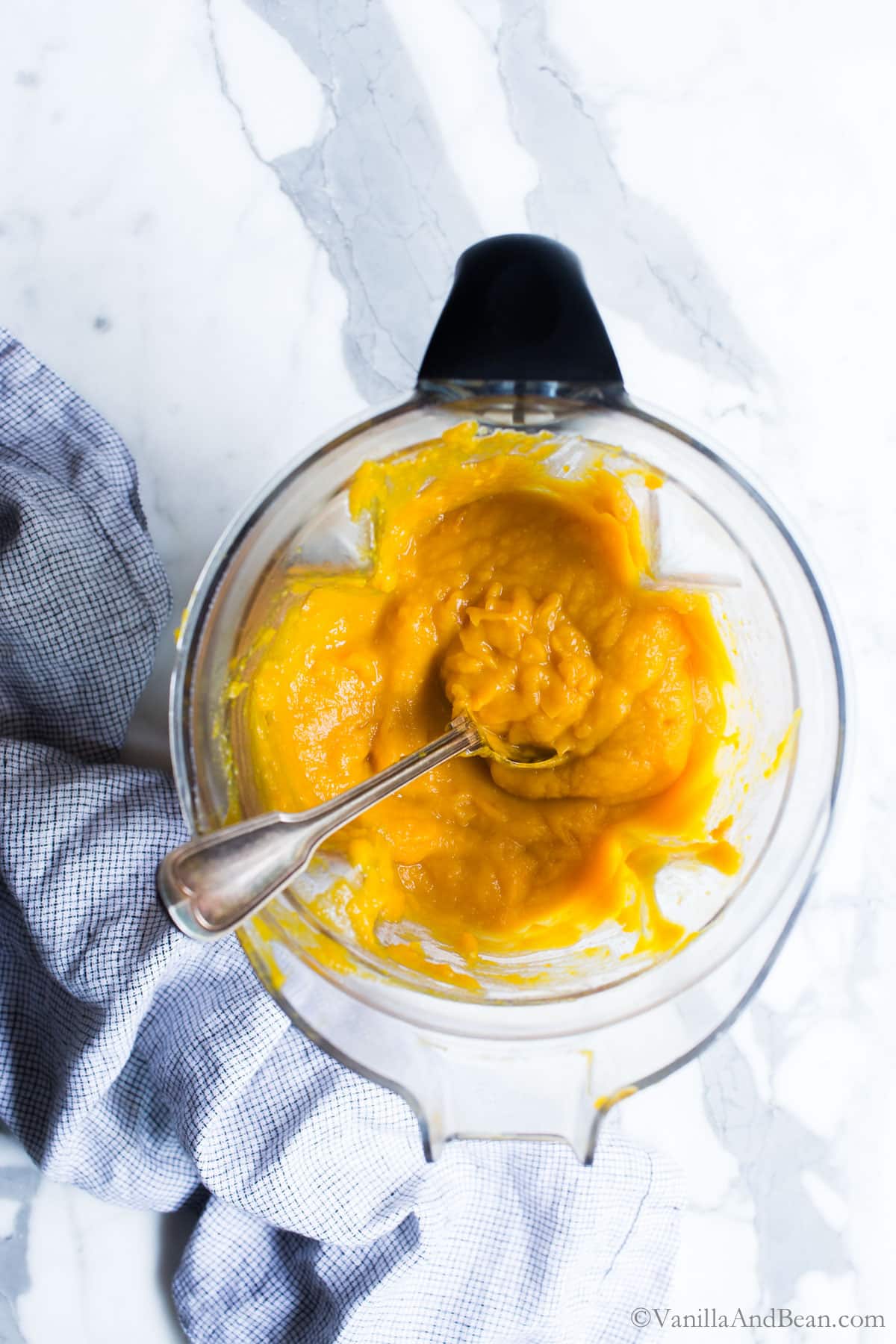
- If you roasted the pumpkin with seeds, use a metal spoon to scoop out the seeds and discard. Otherwise, scoop out the flesh.Puree the flesh in a high speed blender (I use VitaMix). Puree' on low speed, then increase to high for about 20-30 seconds using a tamper if needed. Periodically, scrape the container down as the pumpkin really sticks to the side. Blend again for 30-40 seconds, stopping to scrape when needed. Blend until silky smooth or desired consistency is reached. Pumpkin can be pureed using a food processor as well.
- I like to store my puree in Mason jars at 15 oz each. This is the same amount found in a can of pumpkin puree'. I've frozen my puree up to one year with good results.An alternative freezing method I've used is to freeze the puree' in ice cube trays, pop the puree' out when frozen and place in freezer storage containers. This is convenient when making smoothies or you need a smaller quantity of pumpkin.
Video
Notes
Nutrition
Nutrition is provided as a courtesy and is an estimate. If this information is important to you, please have it verified independently.
Made it? Leave a comment below!
The most helpful comment may include recipe rating, feedback, any modifications or helping other commentors.



My kabochas came out really dry. I had two and both were the same. I added a little water to get them to purée, and they’re probably work fine, but I’ll probably add a bit of canned for texture. Wondering how to avoid this in the future? Is there a trick for selecting a decent squash or did something go wrong with the roasting? Hard to imagine it’s the latter, given how simple the recipe is.
Hi Lauren! Thank you for your note. Good call on adding water to puree the squash. I’ve not experienced dry kabochas (or other roasted winter squash) before, however a quick google search led me to a couple of possibilities. 1. from how the squash was grown (soil/water/temperature) to how it is stored/cured can impact texture/dryness. 2. a way to retain moisture during the roast is to coat the exposed flesh with oil before roasting. South Dakota University has a guide on Storing Winter Squash that may be helpful.
Your Pumpkin Puree Looks Great!!! I Am A Pumpkin fan, Love Pumpkin…
Hi Nathan! Isn’t it so lovely? So versatile and delicious.
That’s right up my alley. I adore that fab pumpkin flavor and everything pumpkin-y. This recipe is very easy to follow. Seriously, it couldn’t be any easier to make. Not only is it delicious, it looks lovely and inviting. Thank goodness I never have to buy this in the store again. Once I tried homemade pumpkin puree, I knew I wouldn’t go back to store-bought puree.
Thank you for such an informative recipe Traci! Learned so much new info. You’ve ALREADY answered all of the possible questions. I really appreciate all of your hard work and effort.
Thank you for your note and rating Ann! Hooray for homemade pumpkin puree! Happy to hear you’re enjoying those fall pumpkins… their season is short!